One law, three classes of citizen
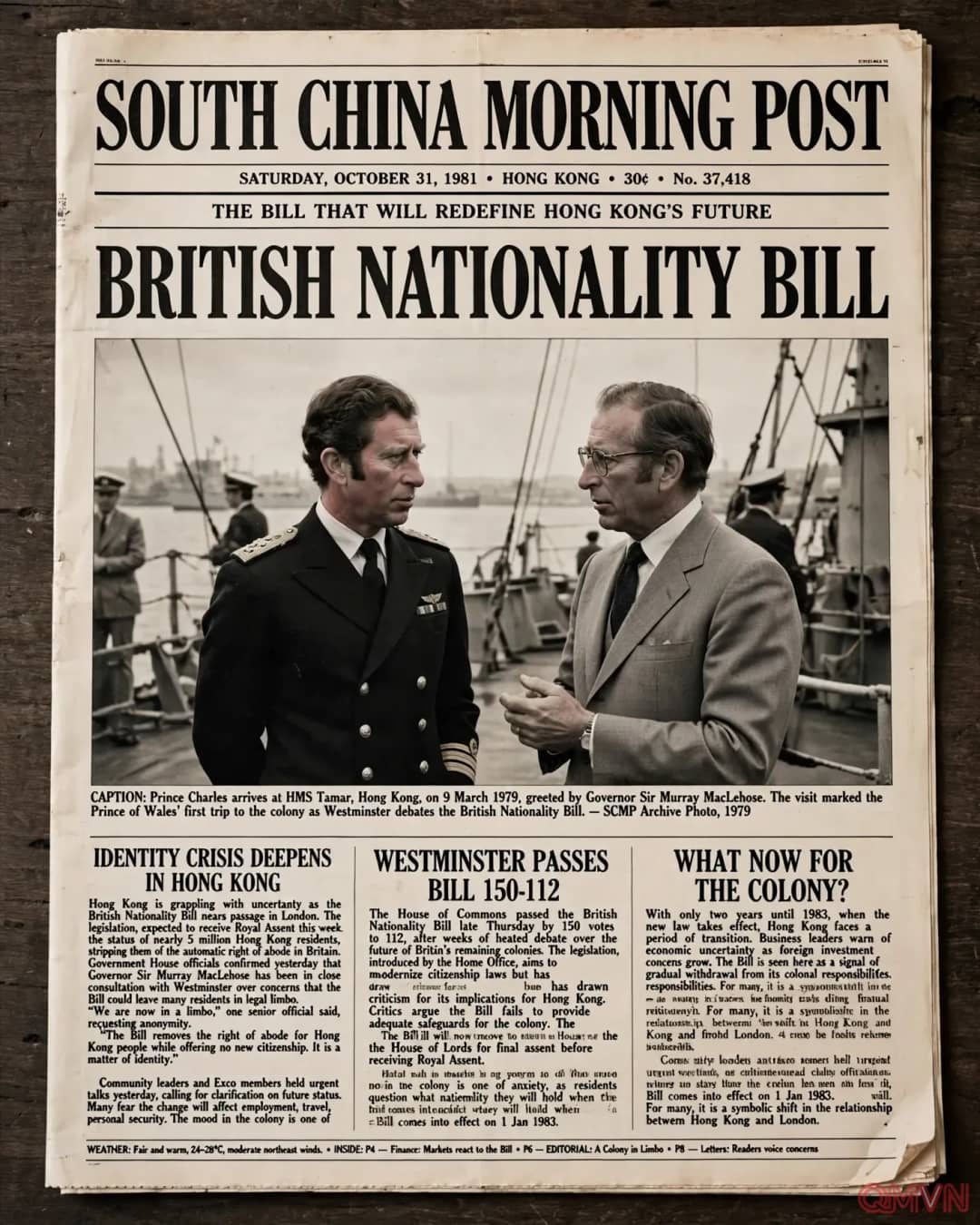
According to an article by journalist Christopher Wood published in the SCMP on October 31, 1981, the bill's passage proved an emotional issue for Hong Kong, sparking fears that the colony was sliding into political limbo. Since Hong Kong-born British subjects had lost their right of residence in the UK back in 1962, the strength of opposition surprised many, probably including the British government. But the central issue for most critics, including the Hong Kong government, was the question mark the bill placed over the territory's special relationship with Britain.
“To put an end to the subterfuge whereby we describe people as citizens of the UK and Colonies while not permitting them to enter freely either the UK or the Colonies.” — Timothy Raison, Home Office Minister of State, explaining the need for new nationality laws
A White Paper laid before Parliament in July 1980 first set out three new categories: British citizens, citizens of British dependent territories and British overseas citizens. Many saw the second category as designed with Hong Kong in mind, as its 2.6 million British nationals were the largest group in it.
Hong Kong speaks up
When the bill was published in January 1981, anxious Urban Councillors flew to London while Government House lobbied behind the scenes. In British politics, the bill was already a hot potato, with Labour MPs slamming it as racist; Hong Kong's alarm at being fobbed off with second-class citizenship added fuel to the flames.