MAIN REPORT
A morning commute becomes an emergency
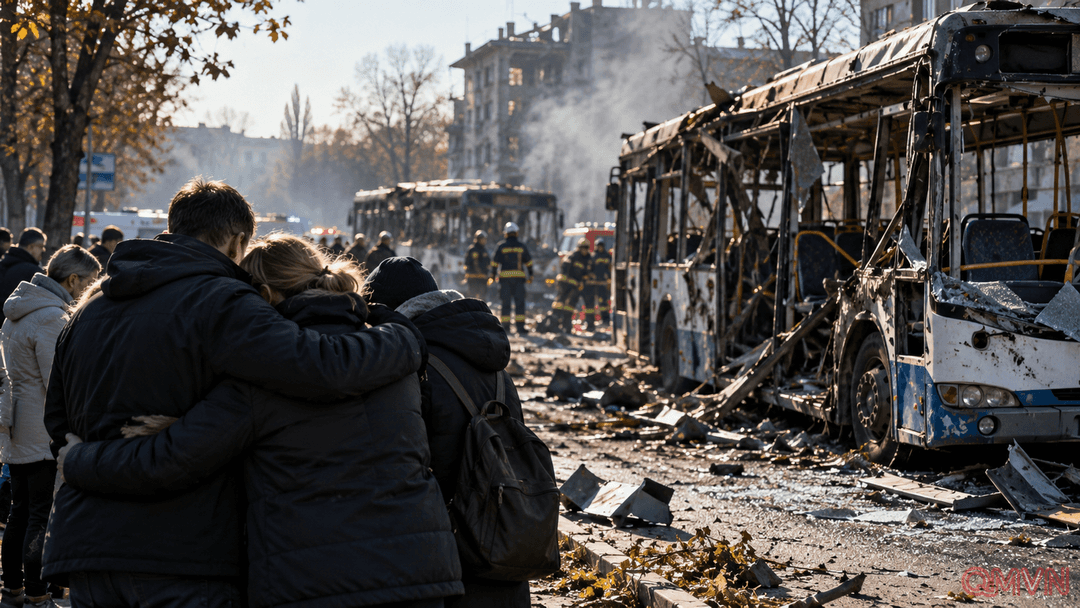
At about 10 a.m. on October 8, according to Ukrainian police and emergency officials, a guided aerial bomb struck a street in Kramatorsk where two scheduled passenger buses were operating. Both vehicles caught fire, fragments covered the roadway and a nearby apartment building was damaged. People attempting to help faced the fear that another strike could follow even as rescuers worked through the wreckage.
The reported death toll climbed as crews reached the scene: initially 12, then 30, and eventually 33. Accounts also revised the number of injured from 18 to at least 20. These figures refer to the bus attack itself. Reuters separately reported that two more people died in a drone strike elsewhere in Kramatorsk that evening; combining those events would obscure what happened to the bus passengers.
The damage was so extensive that identifying some of the dead proved difficult. The Kyiv Independent reported that drones remained a danger around the rescue area, forcing personnel to seek cover at intervals. Emergency treatment, the collection of evidence and the painful work of informing families consequently unfolded under pressure. For a city already familiar with air-raid alarms, the buses marked a further rupture in daily life.