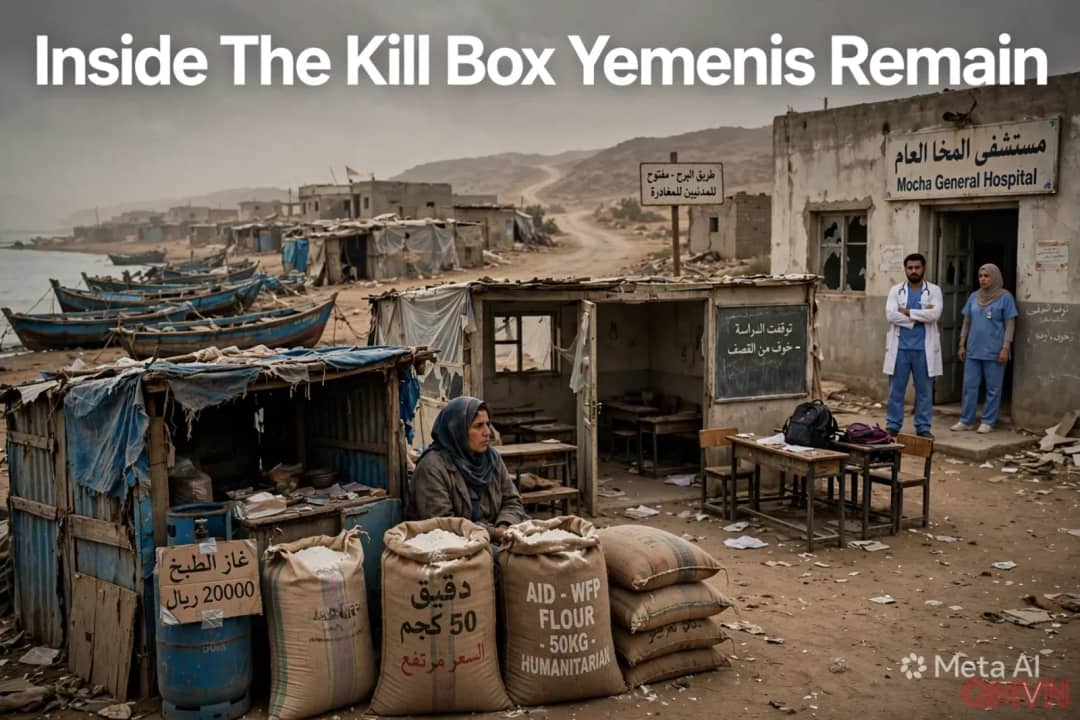
Staying inside the “kill box”
At dawn on September 10, Nabil watched from his balcony as a column of displaced people passed by, hours before Houthi forces entered Mocha. The daily wage labourer in his 40s chose not to join them; he still lives in Yakhtul, a village north of the city, alongside relatives, none of whom has left.
Displacement is humiliation and homelessness. I haven’t done anything wrong, so I have nothing to be afraid of, and I don’t belong to any side.
No one knows how many people remain in Mocha; according to Yemen’s last census in 2004, the city had 62,500 residents. The government has declared Mocha a military zone and accuses the Houthis of forcing residents to demonstrate in their support or to join their ranks. Residents who spoke to Al Jazeera did not describe forced demonstrations, but one, speaking anonymously, said three of his neighbours had been recruited, armed by the Houthis and sent to the front lines.
From refuge to battlefield
Mocha’s port lies about 75km north of the Bab al-Mandeb strait. After government-aligned forces recaptured the city in 2017, it became a refuge for people fleeing Houthi-controlled territory. In early September, fighting moved down the coast and families fled again towards Aden, Taiz and Lahij.