MAIN ARTICLE
The streets speak, but the crowd has changed
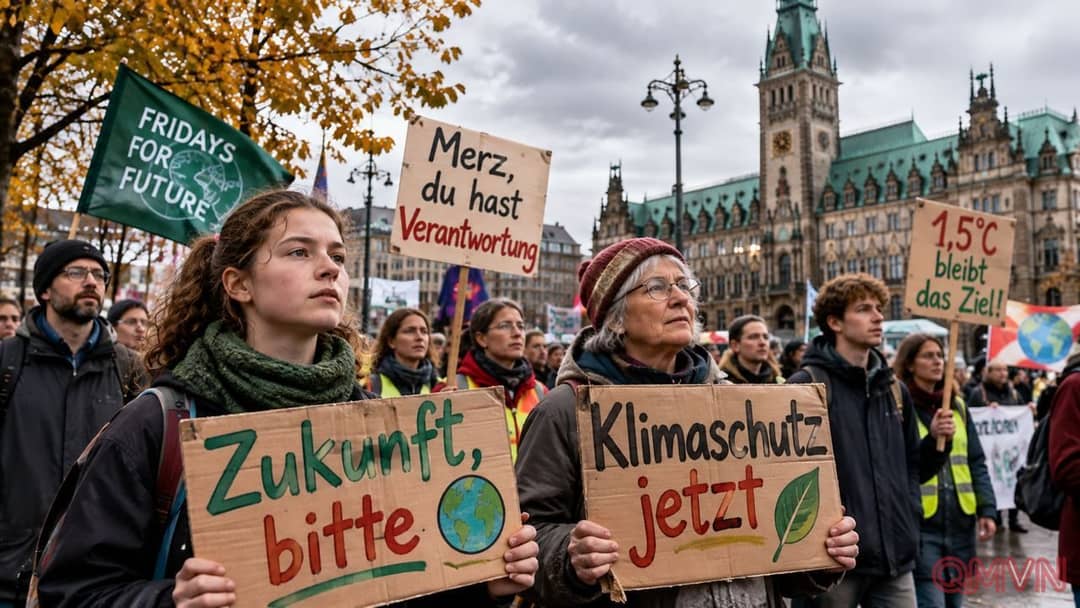
Hamburg was a focal point of the national day of climate action. Demonstrators set out from Ballindamm carrying demands that the federal government uphold its emissions commitments. Organizers planned a human formation addressed to Chancellor Friedrich Merz, reminding him of his responsibility. Regional broadcaster NDR reported a police estimate of approximately 2,800 participants, compared with organizers’ figure of 3,000. The difference between those counts is modest; both describe a mobilization far smaller than the crowds associated with the movement at its peak.
Bremen presented a quieter picture. A little more than 200 people assembled in the central market square in chilly, windy weather; according to taz, roughly 3,500 had joined a climate strike there in 2023. Organizers rolled out a long sheet of paper inviting residents to record hopes for the city’s future. Suggestions ranged from planting trees to growing food and maintaining optimism. The gathering resembled an intergenerational civic conversation as much as a show of political strength.
From polite appeals to sharper demands
The tone of the movement is also changing. In Hamburg, a marine biologist questioned whether marching on Fridays and politely asking elected officials to act remained sufficient. Several speakers referred to the human rights situation in Gaza, illustrating how different causes are intersecting at these demonstrations.