MAIN ARTICLE
Three locations, and a forensic investigation
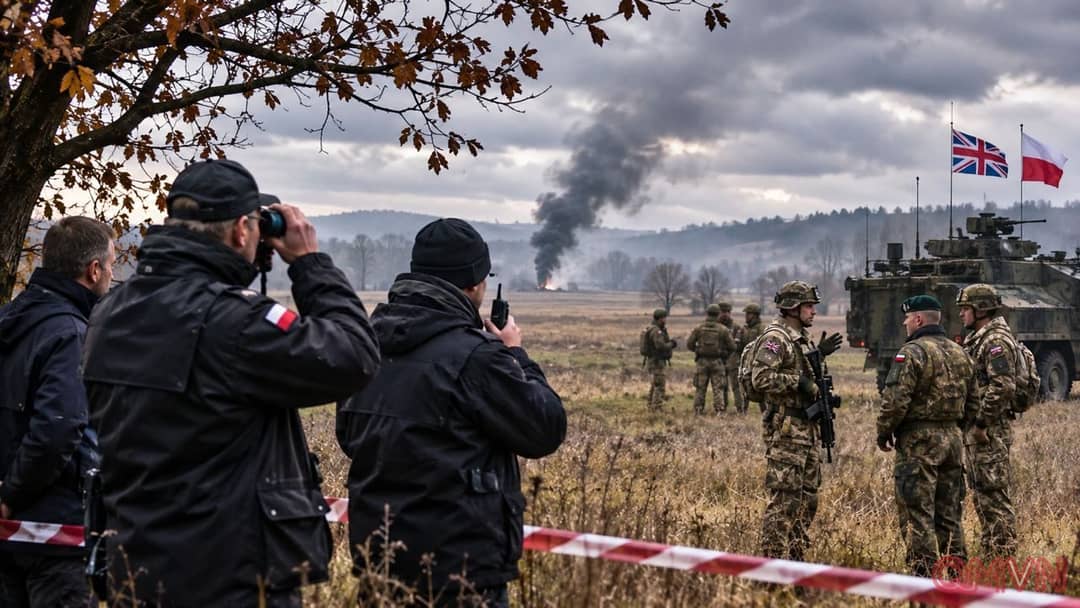
Polish teams investigated debris at Nowy Lipowiec, Rudnik nad Sanem and Mołodycz, all in the country’s southeast near Ukraine. Defense Minister Władysław Kosiniak-Kamysz said preliminary findings pointed to a Russian Kh-101 cruise missile at Nowy Lipowiec, another missile at a second location and a likely jet-powered drone at the third. Investigators are gathering wreckage and examining technical evidence, rather than treating early identification as a completed forensic report.
Authorities reported no injuries at the sites. Yet the absence of casualties should not obscure the risk: an unexpected object crossing a wartime border can disrupt civilian aviation, trigger air-defense alerts and place residents under immediate threat. Reliable public communication is particularly important when incomplete photographs or unverified claims circulate faster than investigators can reconstruct events.
Allied troops train as the alarms sound
On the same day, troops from 11 countries were taking part in an exercise in southeastern Poland under the “coalition of the willing,” a group supporting Ukraine. The Times reported that approximately 300 British military personnel participated, while Defense Secretary Wes Streeting and armed forces chief Richard Knighton observed. The scenario concerns cooperation after a potential ceasefire, not an announcement that an international force has already entered Ukraine.