MAIN CONTENT
A nationwide expansion under scrutiny
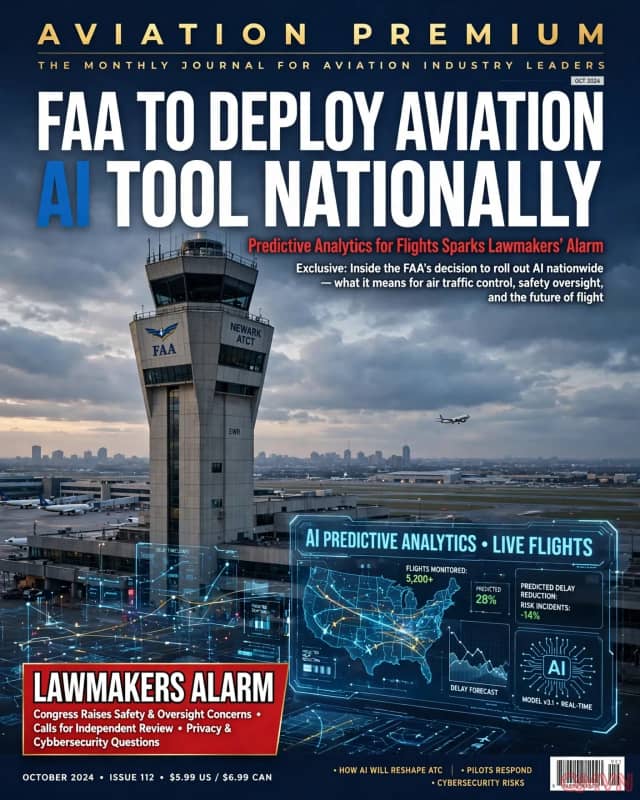
The letter to FAA Administrator Bryan Bedford was led by Rick Larsen, the senior Democrat on the House Transportation and Infrastructure Committee, and other Democratic lawmakers. According to the committee's November 24 statement, SMART began reaching air route traffic control centers nationwide before the completion of a planned 90-day validation period in the National Capital Region. The lawmakers also said Congress had not received advance notification of the expansion.
Their concern is less about whether aviation should use advanced software than about the basis for deciding that it is ready for wider deployment. They sought measurable safety and performance evidence, an explanation of the decision-making process, and information about continuity arrangements. Reuters reported that the FAA declined to comment on the letter publicly and intended to answer the lawmakers directly. The questions should not be mistaken for a finding that the platform is unsafe.
What SMART actually does
SMART stands for Strategic Management of Airspace, Routes, and Trajectories. According to the FAA's announcements about the project, it combines information such as airline schedules, weather, flight paths, airport capacity and staffing conditions. Its predictive models are intended to identify pressure points before traffic demand overwhelms available capacity. More than 200 streams of information feed the platform, which presents the results in visual displays and scheduling recommendations.
That distinction matters: the tool works at the level of traffic planning rather than autonomously issuing instructions to individual pilots. The FAA says staff review the recommendations and local facility leadership can decide whether to use them. Transportation Secretary Sean Duffy has emphasized that controllers retain authority. The operational value, in principle, is to give specialists a clearer picture of likely congestion while they still have options to manage it.
A disruption that sharpened the debate
On November 13, three days after the nationwide expansion began, an FAA telecommunications problem triggered a ground stop lasting almost five hours. The lawmakers' account, cited by Reuters, estimated that flight cancellations affected about 1.5 million passengers.
That estimate is attributed to the letter rather than presented as an independently verified passenger count.
The proximity of the two events is politically significant, but chronology alone does not demonstrate causation. The reported cause of the ground stop was a telecommunications problem, not a confirmed malfunction of SMART. Nevertheless, the disruption illustrates why operational resilience matters: airports, airlines and controllers depend on interconnected services, and a failure in one part of the network can impose substantial costs on people far from the original fault.
From performance promises to evidence
The FAA awarded Air Space Intelligence a 12-year contract worth $875 million and began using the new platform in the Washington area in September. A procurement of that scale makes it particularly important to distinguish advertised capabilities from demonstrated operational results. A useful evaluation would examine how accurate forecasts are in different conditions, whether recommendations create unnecessary work, and how well specialists can recognize incomplete or unreliable information.
The lawmakers also raised reports of possible retaliation against employees who expressed safety concerns. Those allegations have not been established by the material available here. Still, a reliable reporting culture is an important feature of safety management: staff must be able to flag potential problems without fear, and managers need procedures for assessing concerns before they become operational failures.
Modernization without surrendering accountability
The FAA presents SMART as a way to reduce avoidable delays through earlier planning. That objective has practical benefits for passengers, airlines and airport personnel. Yet a predictive tool should be judged not merely by how efficiently it handles normal conditions, but also by its behavior when information is late, systems fail or unusual weather changes the expected traffic pattern.
The November 30 response deadline offers Congress an opportunity to clarify what was tested, what safeguards are in place and what remains to be improved. Transparent evidence could help distinguish justified criticism from fears based solely on the AI label. In a system serving millions of travelers, the central challenge is to modernize without weakening the human responsibility and institutional accountability on which aviation safety depends.