A humanitarian ceasefire for Oleshky
Valery Gerasimov, chief of staff of the Russian armed forces, said on the Defence Ministry's Telegram channel that Russian troops would halt fire from 4 a.m. local time on October 27 to allow the humanitarian operation to begin. Ukraine's General Staff issued a statement agreeing to observe the ceasefire from the same time and pledging to do everything possible to help Oleshky's residents.
According to Ukraine's human rights ombudsman Dmytro Lubinets, the operation will include:
- Demining the roads leading into the town
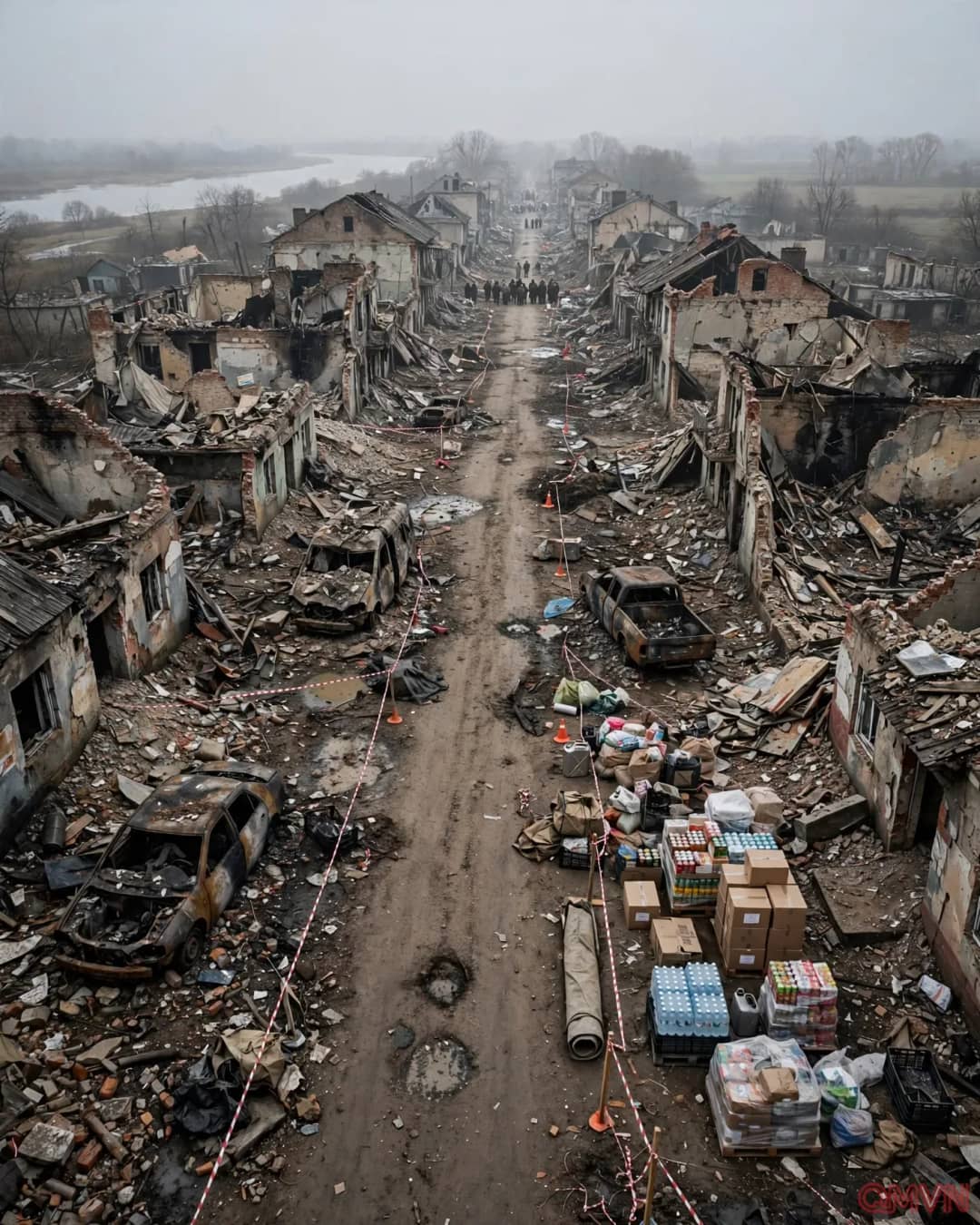
- Delivering food and relief supplies to Oleshky
- Evacuating civilians through a designated safe corridor
Residents of Oleshky have reported facing a worsening food crisis, and Ukraine says it has already used drones twice to drop food into the town. According to the White House, Oleshky, located across the Dnipro River from the Ukrainian-held city of Kherson, now has only 1,700 to 2,000 residents, down from 24,000 before the war.
Melania Trump's imprint
Both sides credited Melania Trump with an important role in coordinating the agreement. The US first lady has been active in seeking the return of Ukrainian children taken by Russia during the war to their families. In a statement, she wrote:
Oleshky is a front-line war city on the brink of disaster.
She said the town's remaining population consists mainly of elderly people in urgent need of medical care, medicine, food and clean water.
Over the past week, Pope Leo had also spoken with both President Zelenskiy and Russian President Vladimir Putin about the plight of Oleshky's residents.
Peace talks resume
Zelenskiy said negotiators from Ukraine, Russia and the United States had agreed to hold technical-level meetings in Abu Dhabi in the first half of November, and he hoped a leaders' meeting would follow. A US official said the next three-way round could take place within a couple of weeks in Abu Dhabi or Switzerland. The announcement came after US envoy Steve Witkoff met Zelenskiy in Norway early in the week and then met Putin in St Petersburg.
Zelenskiy stressed that any peace agreement must include strong security guarantees for Ukraine and funding to sustain its army for 10 years, and that Europe must also take part in the talks. He acknowledged, however, that much depends on Russia, noting that a meeting expected this month had not materialised. Earlier US-led rounds stalled in February, as Moscow continues to demand that Kyiv cede the entire Donbas region, including areas Russia has not captured, while Ukraine firmly rejects giving up territory it holds.
Cracks between Washington and Kyiv
The new peace push follows a period of strain in US-Ukraine relations. A major source of friction has been speed limits placed on SpaceX's Starlink communication system, which Ukraine uses to defend against incoming attacks. Ukrainian officials said the restrictions in place since October 13 remain, even though Trump had earlier said the service was fully restored. Trump said he had not spoken to billionaire Elon Musk but would do so if necessary and would fix any remaining problem.
Another point of contention is the deal allowing Russia to supply diesel to the United States and global markets, which Ukraine has denounced. On the same day, Russian Deputy Prime Minister Alexander Novak said the first three tankers carrying Russian diesel were on their way to North America.
Amid these tensions, the two sides still swapped 270 servicemen each, the first prisoner exchange since August, which Zelenskiy called a very important result. According to Ukraine's acting prosecutor Anton Kovalskyi, more than 19,000 Ukrainian civilians, including 762 children, have been killed since Russia launched its full-scale war.