MAIN ARTICLE
A post at the heart of military planning
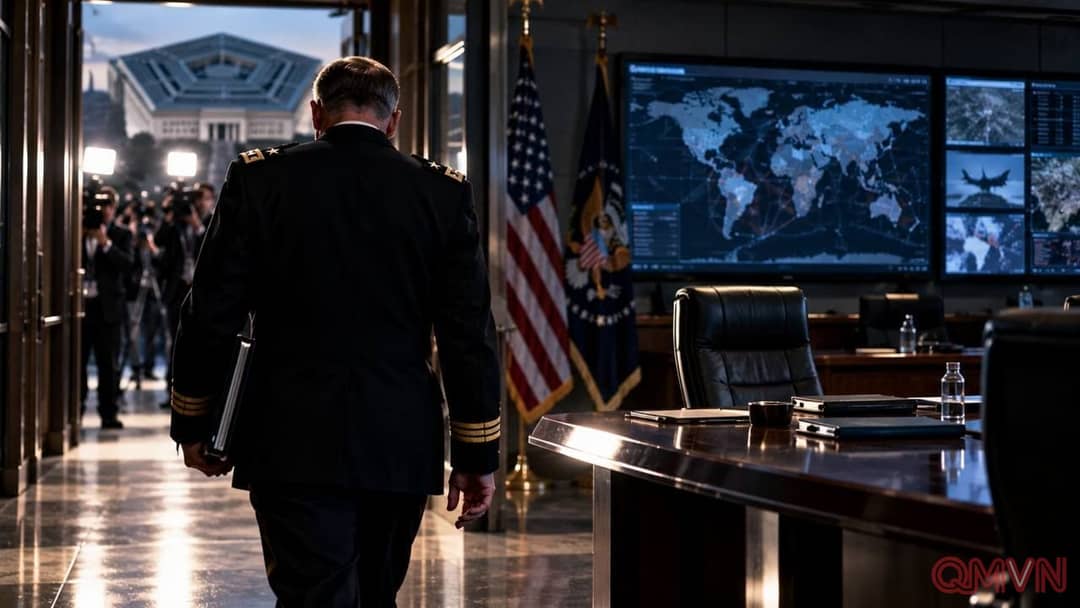
Sylvia led the Joint Staff Directorate for Strategy, Plans and Policy, known as J5. The office connects strategic assessments, military plans and policy recommendations for Chairman of the Joint Chiefs of Staff General Dan Caine and civilian leaders. Removing its director therefore affects more than one individual: it touches the machinery that helps coordinate national-security decisions.
Before serving in that post, Sylvia commanded the 101st Airborne Division and accumulated roughly 32 years of military service. Associated Press reporting indicates he is the second J5 chief to be removed under Hegseth. Authorities have not provided a full public account of succession arrangements or how responsibilities will be reassigned.
Serious allegations are not proven findings
An unnamed Pentagon official told Reuters that Sylvia was suspected of sharing classified information with the media and had failed three polygraph tests. Spokesperson Sean Parnell linked the personnel action to an inquiry by the Air Force Office of Special Investigations and said the case had been referred to the Justice Department. A referral is not an indictment or a judicial determination of guilt.
Accounts of the investigation also differ. CBS reported that two Pentagon sources disputed the truth of accusations connected to the tests. The underlying evidence has not been publicly disclosed in full, making it essential to distinguish allegations, internal investigative assessments and any eventual legal findings.
Security, journalism and institutional trust
Hegseth has made identifying suspected leakers a priority, using a dedicated task force, polygraph examinations and tighter media-access rules. Earlier Pentagon press policies drew objections from news organizations concerned about the independence of defense reporting.
Protecting operational plans is vital in wartime. But a credible oversight process must distinguish unauthorized disclosure of classified material from legitimate press contact and policy disagreement. Without transparent procedures, suspicion can erode trust inside the very institution charged with maintaining national security.
A sensitive moment in the Iran conflict
Sylvia’s departure arrives while the Trump administration weighs possible renewed attacks on Iran. Reuters reports that Pentagon concerns have included disclosures of operational planning and ammunition consumption. Questions about the cost of replenishing weapons underscore both the sensitivity of the information and the public interest in accountable decisions.
For the armed forces, the practical challenge goes beyond identifying the origin of media disclosures. Commanders must also preserve continuity in strategic planning. An abrupt vacancy in such a senior post during regional instability makes a clear handover and uninterrupted military advice especially important.