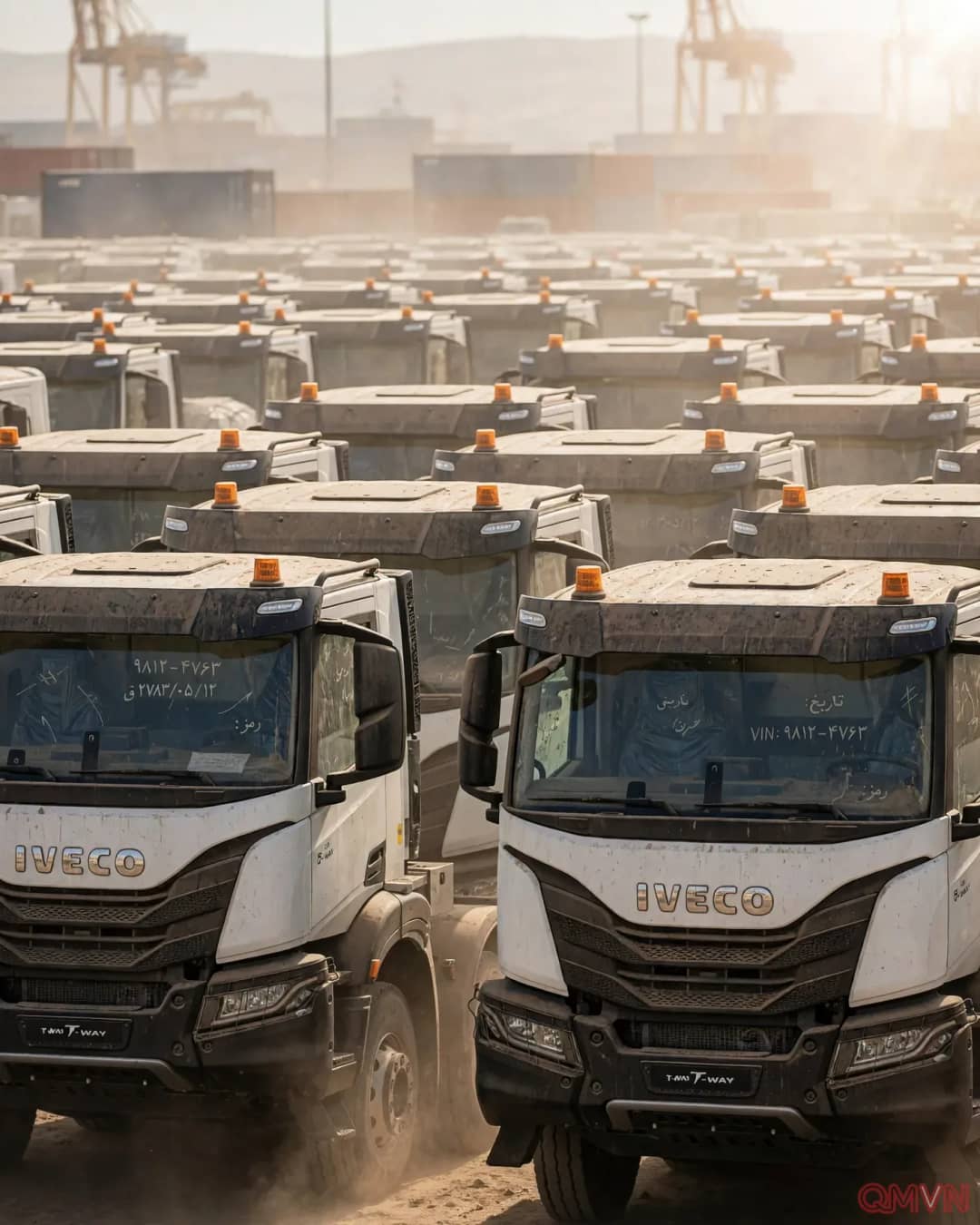
More than 5,000 “ghosts” at a single address
Every one of these agencies is registered at the same Tehran address as Iran’s Ministry of Defense and Armed Forces Logistics (MODAFL), and each lists its founding date as February 11, 1979 – the day Ayatollah Khomeini took power after the monarchy fell. In reality, most were created in 2013, as sanctions sent Iran’s oil exports and the rial into freefall. Their names consist of the Farsi acronym VODJA followed by a five- or six-digit number spelled out in words rather than numerals, a quiet layer of camouflage.
The network was uncovered in June 2025 by Noam Binstok, an economist at 240 Analytics, as he uploaded thousands of leaked pages from the state-run Bank Sepah, which pays the salaries of the Islamic Revolutionary Guard Corps (IRGC). According to those records, just 36 of the agencies held $1.2 billion in foreign-currency accounts at the end of 2024, while the rest of the network had about $1.8 billion in local currency. Strikingly, Reuters found no evidence that any of the numbered agencies had ever been sanctioned by Western governments.
This is the complete ecosystem of the Iranian military’s trade business.
Maleki, a former senior US Treasury official who helped design the American sanctions program against Iran, sees the network as the regime’s military lifeline both during the conflict and for years before it. In his view, it is a foreign-trade system running parallel to the formal global economy, allowing Tehran to turn illicit oil money into military hardware.