MAIN ARTICLE
The extension has two specific end dates
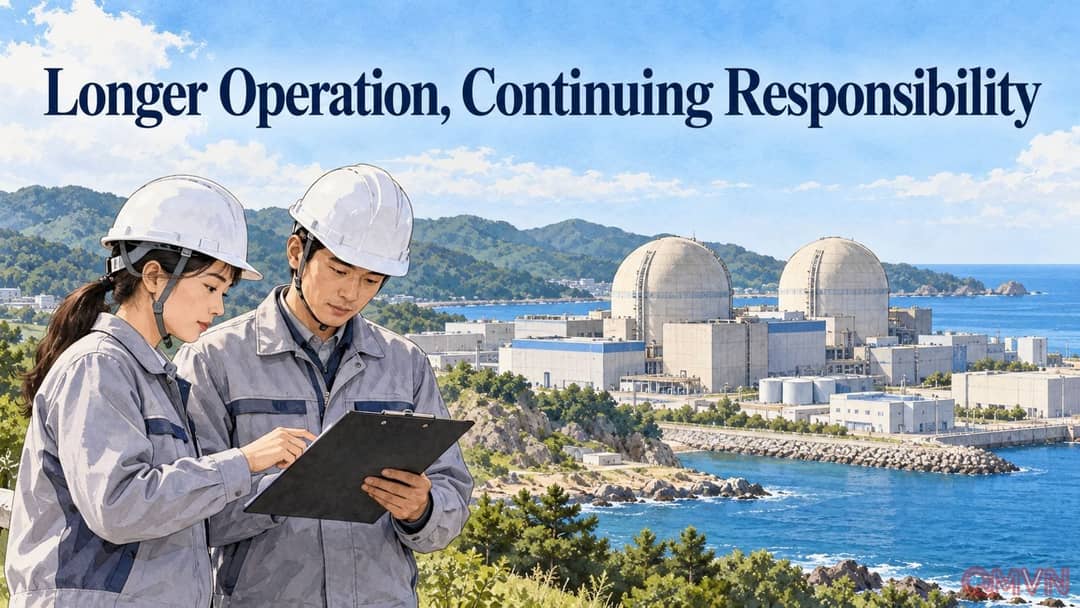
The Nuclear Safety and Security Commission approved the request from state-run operator Korea Hydro & Nuclear Power, Yonhap reported in The Korea Herald. The reactors are located on South Korea’s southeastern coast. Each has its own authorised endpoint: September 2034 for Kori-3 and August 2035 for Kori-4. Those dates are central to understanding the decision. Treating the two units as having a single new deadline would obscure the different periods attached to their operating histories.
The ten-year extensions follow the earlier design-life expiry dates rather than creating ten full generating years from October 27, 2026. Because the reactors had stopped operating, the amount of time they can actually produce power also depends on preparation and restart. The supplied report does not establish a restart date. Distinguishing the authorised period from the years of generation that may occur within it prevents a licensing decision from being read as a completed operational event.
Accident management is part of the process
Before approving the extensions, the commission approved an accident-management programme for the two units in October. The document outlines preparations and strategies intended to maintain safe conditions, prevent accidents and mitigate consequences if an accident occurs. Programme approval and permission for continued operation are connected decisions, but they address different questions. Understanding that sequence helps readers see how a major operating decision can involve several related assessments rather than a single document serving every regulatory purpose.
At the level of general guidance, the International Atomic Energy Agency places ageing management within the safety assessment for long-term operation. That is not a finding of a particular defect at Kori. It explains why longer use requires attention to whether systems retain their safety functions over time. Permission therefore carries continuing responsibilities. The work of assessing condition and maintaining performance matters during the authorised period as well as when an application is first considered by a regulator.
Rated capacity is not delivered electricity
Yonhap gives each pressurised-water reactor a gross electrical capacity of 1,025 megawatts. Together, that represents 2,050 MW of gross rated capacity, an arithmetic sum of the two units’ scale. It is not a statement that this output is currently reaching the grid or an estimate of annual generation.
Megawatts express power capacity; the amount of electricity produced also depends on operating time and conditions. Those quantities need to remain separate when describing the potential contribution.
For households and businesses, the useful question is how actual electricity supply will be maintained. An extension decision alone cannot establish a fall in bills or guarantee a fixed amount of future production. Assessing the contribution requires following published operating plans and the results that subsequently emerge. That approach makes room for the importance of existing infrastructure while keeping claims about its benefits tied to evidence. A reactor’s authorised lifetime is one input into that assessment, rather than the full answer.
Public confidence needs continuing information
People living near a nuclear station have reason to ask how safety conclusions are explained. Understandable information about the scope of assessment, the operator’s responsibilities and the regulator’s oversight makes a technical decision easier to follow. Questions about the conditions for safe operation need not imply rejection of the approval. They are part of the information communities need when an industrial facility is expected to remain in use for longer and the next operational steps are still ahead.
Responsibility also rests with the people carrying out inspections and maintaining procedures at the site. The story of an extension should therefore include the organisational capacity and continuity needed to perform that work. A longer permission has practical value only when its responsibilities are carried through consistently. Updates after licensing matter alongside the original announcement, because communities and workers experience operation over time. Confidence depends on the quality of that continuing relationship, rather than on an expiry date alone.
The history behind the October 27 decision
Kori-3 and Kori-4 began commercial operation in 1985 and 1986 respectively. Regulatory records distinguish those dates from operating licences issued in 1984 and 1985, with design-life expiry in September 2024 and August 2025. The operator submitted its continued-operation application in 2022. Kori-2 received a ten-year extension the previous year. These milestones show why the new decision belongs to a longer review process. The relevant dates cannot be reconstructed simply by counting from the beginning of commercial electricity sales without considering the regulatory timeline.