MAIN STORY
A rare halt across a vast air network
On Friday afternoon, November 13, the FAA instructed departing aircraft at US airports to remain on the ground, invoking extraordinary circumstances and safety concerns. Transportation Secretary Sean Duffy said the communications problem affected the regional centers that oversee flights traveling between airports. Aircraft already airborne were managed according to safe operational conditions, while international arrivals received case-by-case treatment. The order primarily prevented new departures; it was not an instruction for every aircraft in the sky to land immediately.
The FAA lifted the nationwide stop shortly after 8 p.m. Eastern, more than four hours after departures had been halted. Yet reopening the airspace did not restore normal schedules. A plane prevented from departing one hub may be unavailable for the next leg, while its crew can run into legally mandated duty-time limits. A local technical fault can therefore become a national timetable crisis through the interdependence of connections, aircraft rotations and airline staffing.
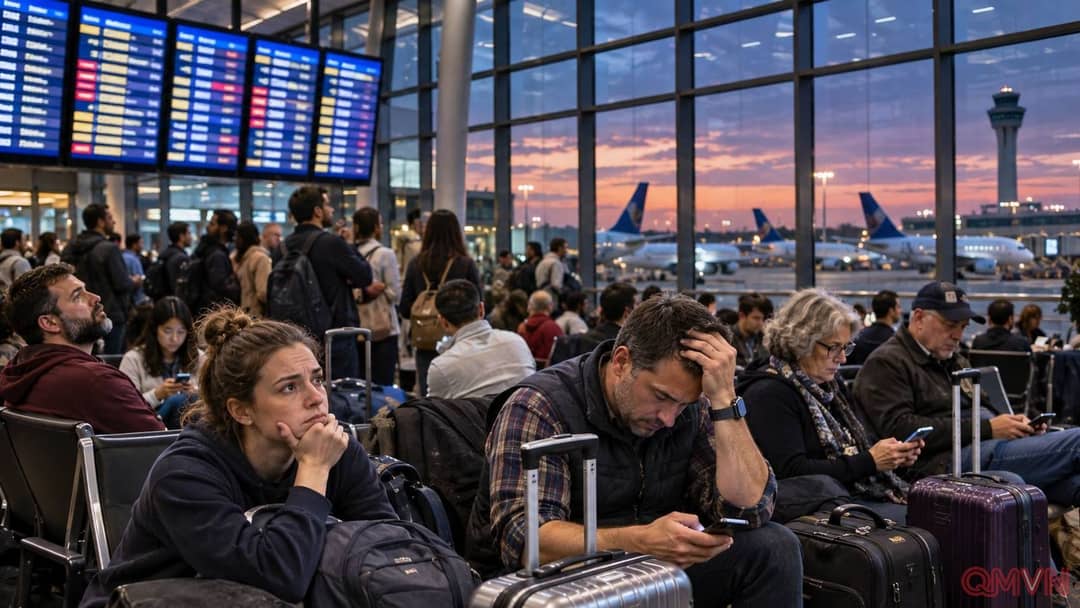
Flight disruption figures changed from hour to hour. The Times reported an early count above 7,800 delays and around 350 cancellations, while later news reports placed the totals much higher. The figures represent different reporting moments and may cover different categories of flights; adding them together would be misleading. Their direction, however, was unmistakable: a communications failure lasting only hours had consequences for an aviation network handling tens of thousands of daily flights.