An ancient stage for a contemporary argument
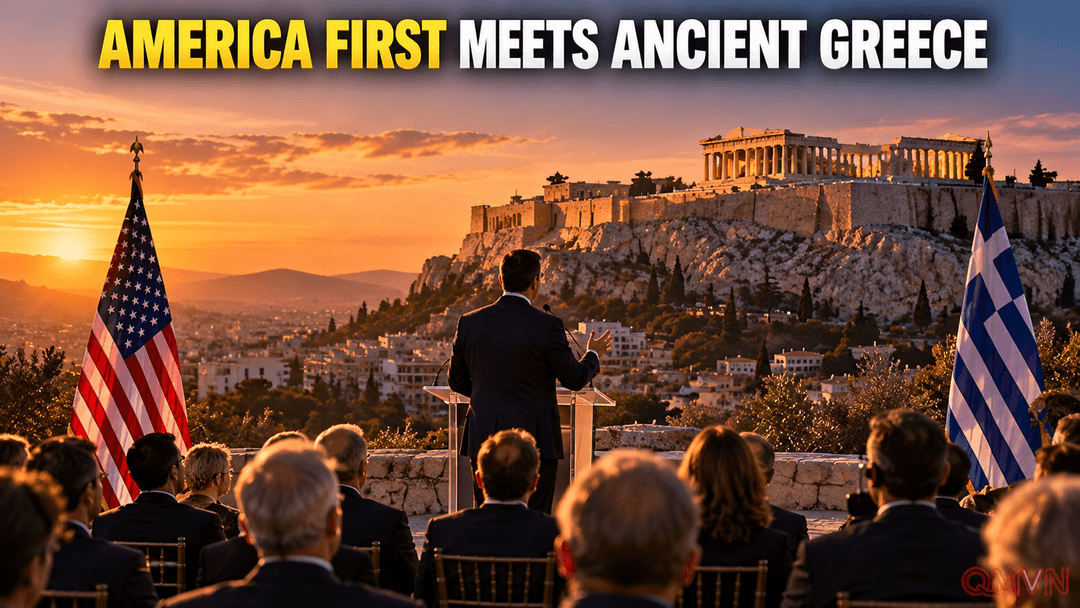
The setting was deliberate. The Pnyx, once a meeting place for the citizens of Athens, offered Rubio an evocative platform, with the Parthenon visible behind him. Before an audience of roughly 250 foreign officials, military officers and Greek Orthodox clergy, he proposed a sweeping intellectual lineage linking ancient Greece, Rome, Christian Europe and the United States. He invoked Socrates, Julius Caesar, Charlemagne and Hernán Cortés as part of a narrative about intellectual ambition, duty and expansion, even though the historical records and legacies of these individuals differ profoundly.
Rubio was not presenting a neutral survey of classical scholarship. The objective was to place Trump’s muscular nationalism inside a long Western tradition, rather than portray it as a break from established diplomacy. His central claim was that loyalty to one’s own country need not be incompatible with lasting alliances. Such references give a political argument emotional resonance, but they also invite scrutiny: the history of the West encompasses democratic experiments and intellectual achievement alongside conquest, empire and resistance to concentrated power.