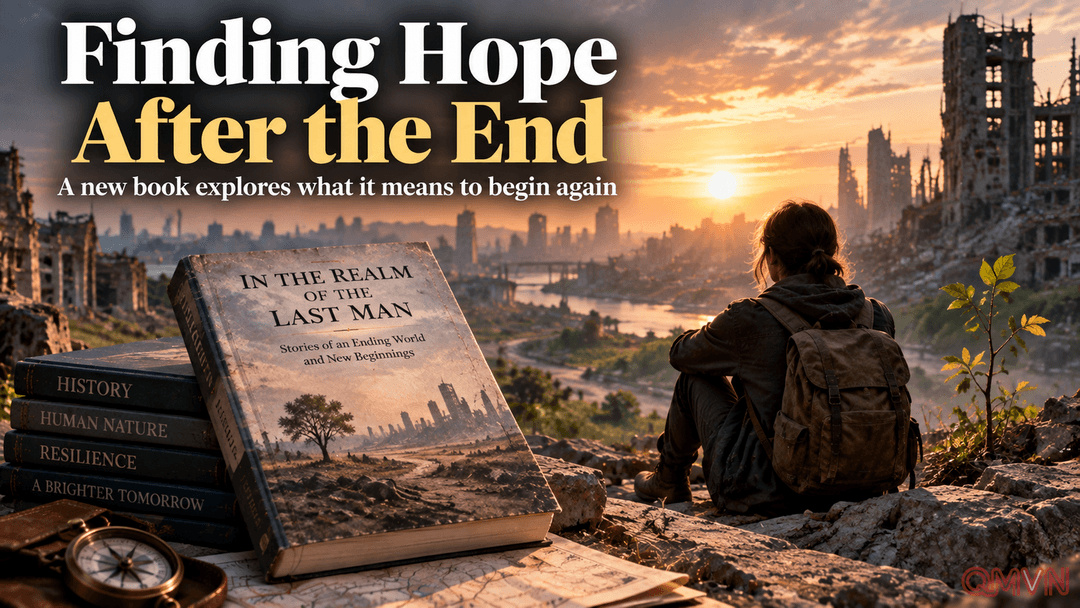
A memoir rather than a prophecy
Francis Fukuyama’s In the Realm of the Last Man was published in the United States on September 8, 2026. Farrar, Straus and Giroux lists the memoir at 304 pages. It revisits the intellectual development of a political scientist whose work became central to debates about democracy after the Cold War. The book is not a novel about a ruined world, nor a declaration that political conflict has ended. It is an account of ideas, personal experience and the difficulties of revising one’s understanding of history.
The memoir connects Fukuyama’s Japanese-American family background with his commitment to liberal institutions and his awareness of their fragility. His academic journey took him from literature and political philosophy toward security studies and political science. Those experiences matter because political theories do not emerge in isolation from the lives of their authors. Readers can approach the book as an invitation to examine how convictions are formed, tested and sometimes changed. The distinction between autobiography and political argument also helps avoid treating every recollection as independent historical proof.
What the end of history actually meant
Fukuyama’s famous argument first appeared in a 1989 essay and was developed in The End of History and the Last Man in 1992. Its central claim concerned the long-term contest among forms of political organization, not the disappearance of events, wars or suffering. He argued that liberal democracy had emerged as a particularly powerful answer to the problem of legitimate government. The proposition was controversial from the beginning and remains open to historical and philosophical criticism.