MAIN ARTICLE
An uncommon diplomatic ceremony
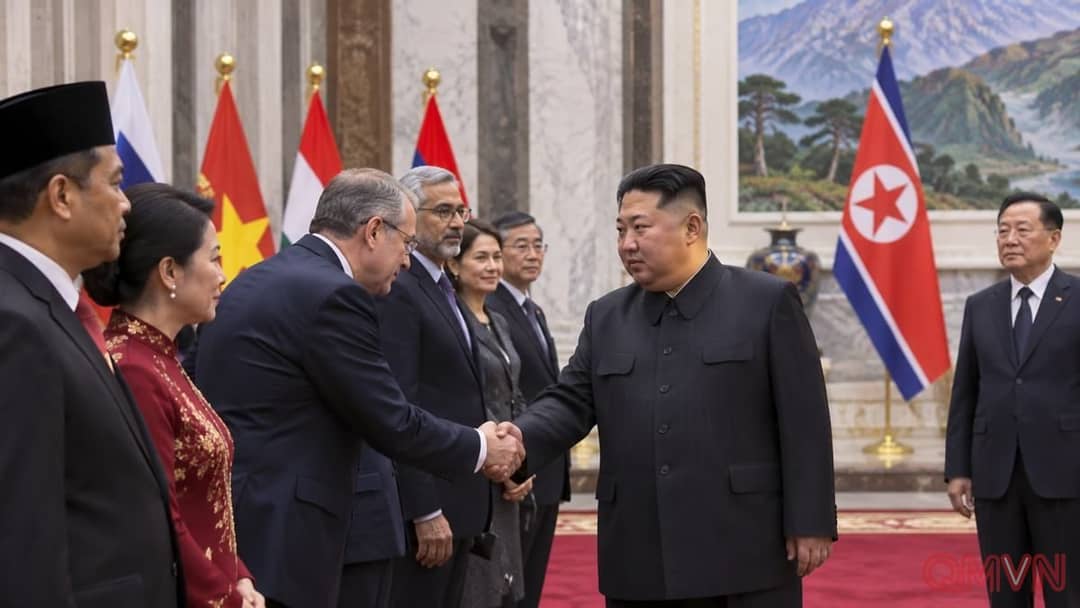
On November 22, Kim welcomed ten ambassadors to the Workers’ Party headquarters, according to KCNA and Yonhap. They represented Russia, Sweden, Indonesia, Vietnam, Brazil, the Czech Republic, India, the Philippines, Thailand and Bangladesh. Kim accepted their credentials, posed for photographs and outlined priorities for foreign relations. A senior official normally performs the ceremony, making the leader’s direct participation noteworthy.
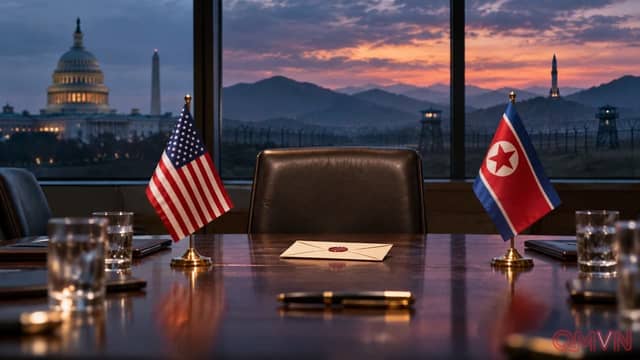
The symbolism may matter as much as the substance. Addressing envoys from several regions, Pyongyang presented itself not merely as a party to a standoff with Washington and Seoul, but as a sovereign state seeking diplomatic relationships on its own terms. The ceremony alone does not prove that any attending country has changed its policy toward North Korea.
Security rhetoric and what it does not prove
Kim argued that the security environment on the Korean Peninsula and across East Asia required North Korea to develop the capabilities necessary to feel secure. He insisted it sought neither supremacy nor expansion. That is consistent with Pyongyang’s longstanding claim that its weapons are instruments of deterrence.