MAIN ARTICLE
One Security Council meeting, two accounts of the conflict
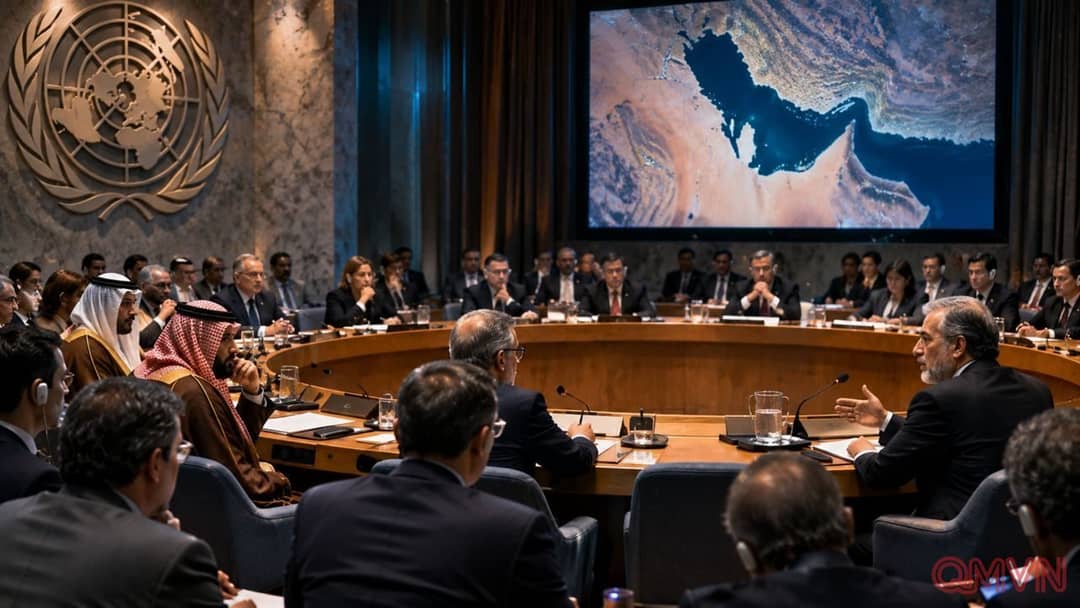
On November 13, 2026, the Security Council met at Bahrain’s request to discuss the regional conflict and its consequences for international shipping. GCC Secretary-General Jasem Mohamed Albudaiwi described attacks affecting civilian infrastructure, energy facilities and ports, and urged accountability and reparations. The GCC’s official account emphasized sovereign equality, navigational safety and an end to strikes on its member states.
Iran offered a sharply different account. Its representative Gholamhossein Darzi argued that attacks by the United States and Israel were the origin of the crisis and that Iran acted under the self-defense provision of Article 51 of the UN Charter. That is Tehran’s legal position, not a finding issued by an international court. Equally, identifying a target as a military installation does not, by itself, establish that every strike complied with international law.
What Resolution 2817 does—and does not—establish
Adopted on March 11 by 13 votes in favor, with China and Russia abstaining, Resolution 2817 condemned Iranian attacks on Bahrain, Kuwait, Oman, Qatar, Saudi Arabia, the United Arab Emirates and Jordan. It called for an immediate end to the attacks, protection of civilians and respect for navigation through the Strait of Hormuz.