MAIN CONTENT
Two countries, a shared grievance
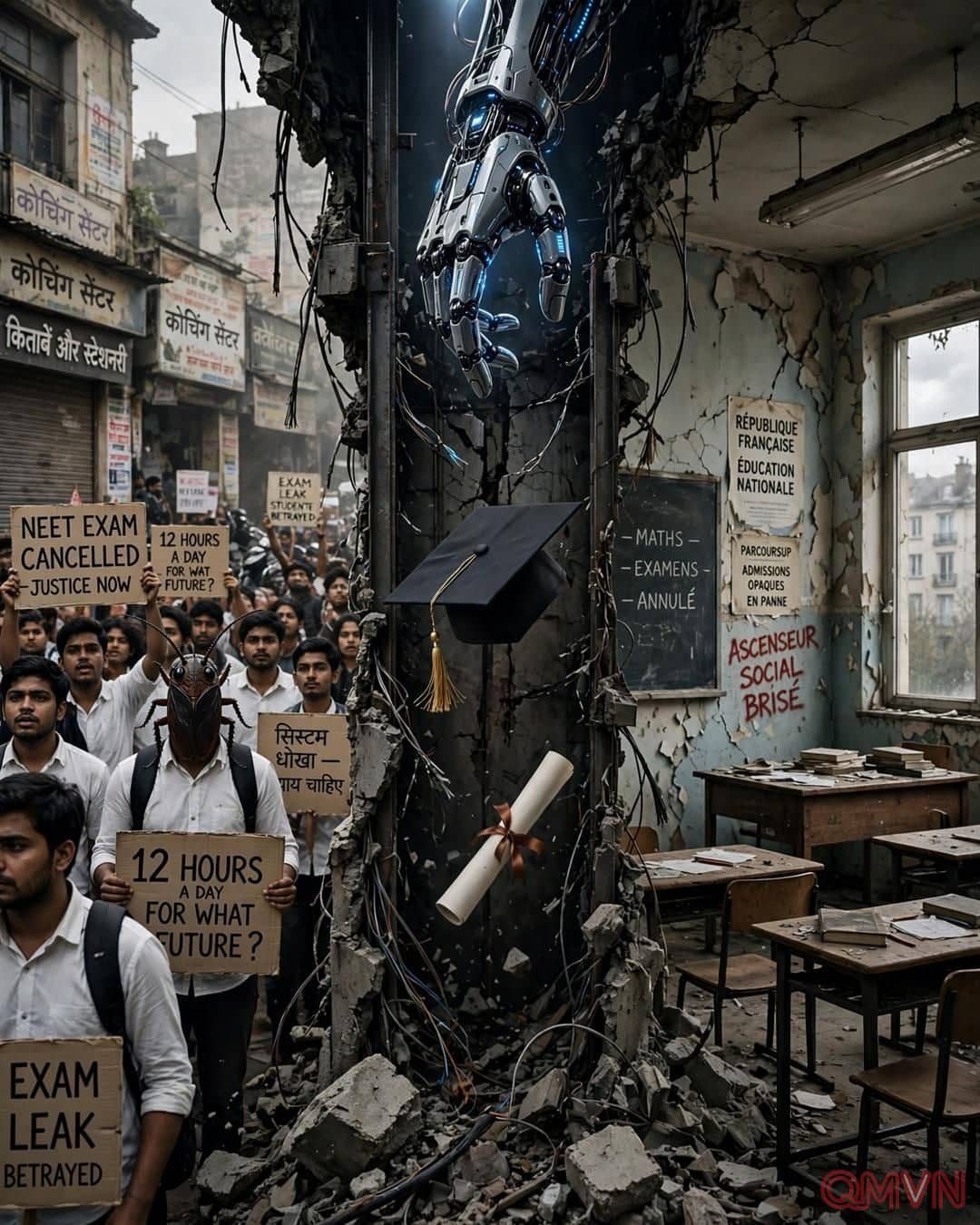
In India, the immediate spark was an admissions examination scandal: leaked questions led officials to invalidate medical-school results. Students who had spent years preparing were told to sit the examination again. For families investing time, money and hope in one of the country's most competitive career paths, the reversal raised a question larger than the integrity of a single test.
In France, students from disadvantaged suburbs around Paris protested poor school buildings, teacher absences and a university admissions process they considered difficult to navigate. As demonstrations spread, the phrase 'social elevator' — a traditional description of public education — became less a reassuring ideal than a demand for proof.
Neither dispute establishes that every examination is unfair or every degree worthless. They show how quickly public confidence erodes when young people experience the route to advancement as unpredictable, expensive or tilted in favor of those already secure. A fair competition must be fair not only on examination day, but also in the years preceding it.