A day in late June
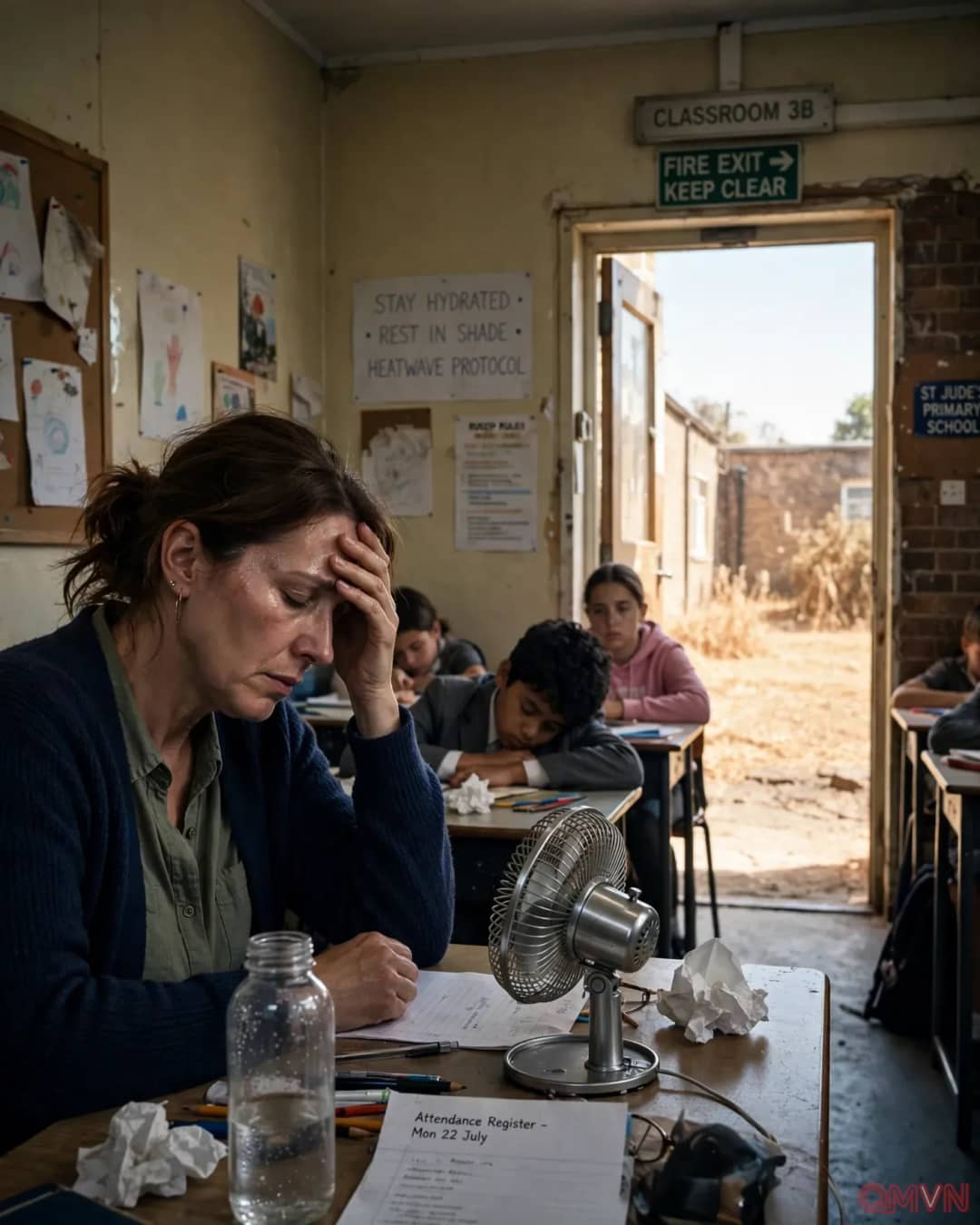
By late June, Gill said, weeks of mounting heat had left her unable to sleep properly; she would wake feeling short of breath, with a rising sense of panic about how she would get through the day. Fans and water brought little relief. Colleagues shared her anxiety, worrying about the children and about themselves. One morning she arrived at school exhausted to find her classroom, a small room with no windows or ventilation that had been converted from a photocopier room to meet demand for space, at 30C.
No one was really learning.
As the day wore on and she dealt with challenging behavior, she became dizzy and feverish, with a bad headache and an inability to concentrate. Her experience echoes warnings from teachers' unions and health experts that many British school buildings, designed for a cooler climate, overheat in summer, and that high temperatures impair concentration and learning.
When heat reaches health
Gill was diagnosed with epilepsy about 20 years ago, and after roughly a year the condition had been extremely well controlled. That day, during her lunch break, she experienced what she described as a pause, like hitting pause on a television remote, before restarting a few seconds later. Her ordeal unfolded as follows: