A Rare Cancellation
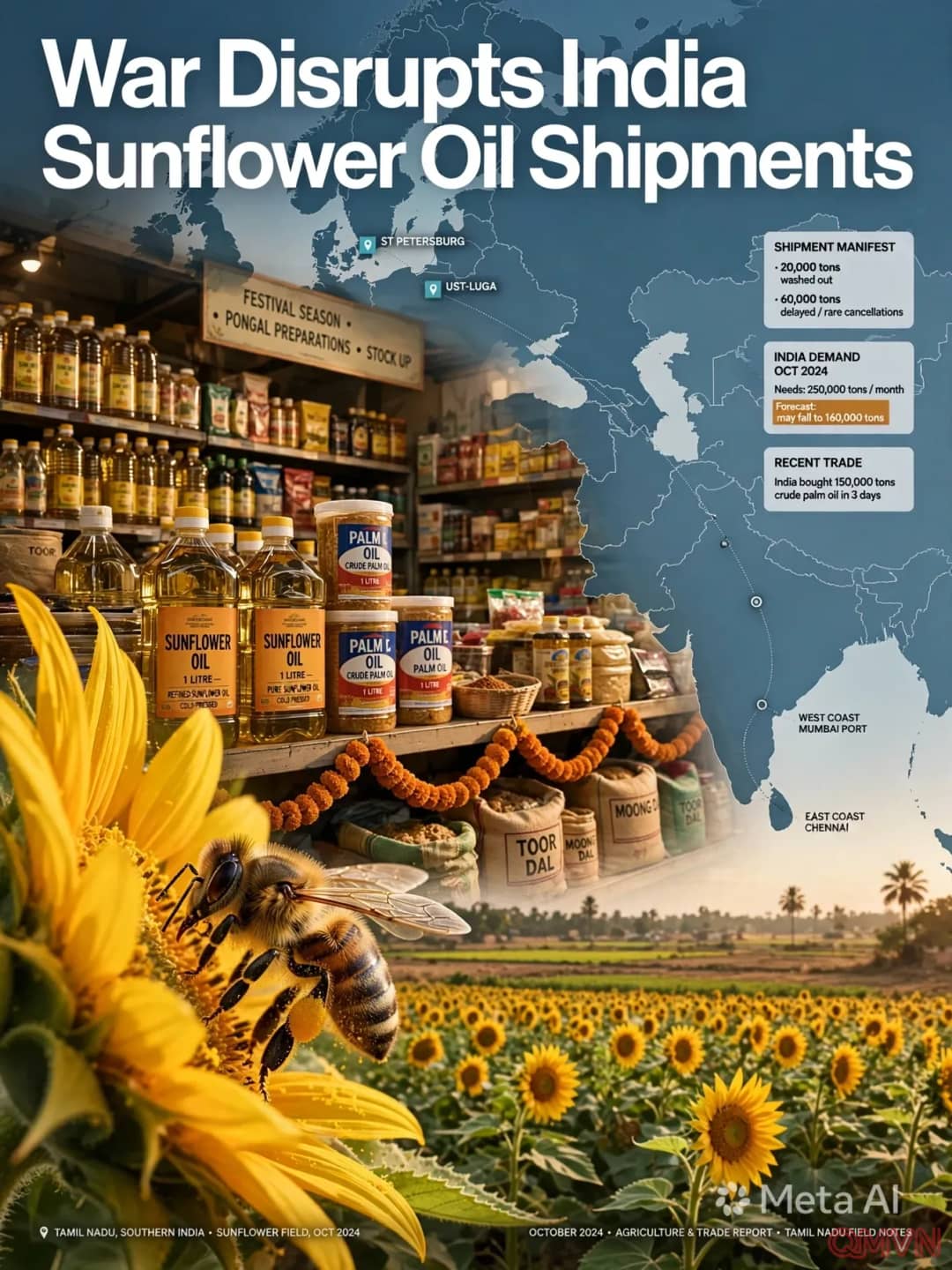
According to Sandeep Bajoria, president of the International Sunflower Oil Association, a 20,000-ton shipment of Russian sunflower oil bound for India was cancelled because the supplier could not deliver it due to damage to port infrastructure in the Black Sea region. Such cancellations, or washouts, are rare in the sunflower oil trade and have not been reported for many years.
In addition, about 60,000 tons of sunflower oil bound for India have been delayed by the Russia-Ukraine conflict, according to trade sources.
The disruptions come just as demand for edible oils in India is set to climb during the festival season.
Diverting to Baltic Ports
With shipments from the Black Sea becoming more difficult, Russian suppliers are seeking to ship sunflower oil from Baltic Sea ports such as St Petersburg and Ust-Luga. But the solution brings significantly higher costs and longer transit times.
Shipping from Baltic ports means higher freight costs and an additional 10 days of voyage time. But there is no other option, as Black Sea infrastructure is crumbling because of the war.
Bajoria, who is also chief executive of Mumbai-based vegetable oil brokerage Sunvin Group, highlights how global supply chains are adapting to the war through longer and costlier routes.
Tightening Supplies
India’s sunflower oil supply situation is becoming strained:
- India meets almost all of its sunflower oil demand through imports, needing about 250,000 tons a month.
- According to a New Delhi-based dealer, October imports could fall to about 160,000 tons because of loading delays in Russia and Ukraine.
- Sunflower oil stocks have already been depleted by below-average imports in recent months.
With demand for edible oils expected to rise during the upcoming festival season, the shortfall could push up prices and force consumers and food manufacturers to look for alternatives.
Palm Oil Steps In
To make up the shortfall, India is buying more palm oil. According to sources, it bought 150,000 tons of crude palm oil in just three days this week for November and December shipment to both its east and west coasts. In the year to October 2025, India imported an average of about 632,000 tons of palm oil a month.
Higher Indian purchases could help draw down stocks in Indonesia and Malaysia, the world’s top palm oil producers, and support benchmark Malaysian palm oil futures. It is a textbook example of how turmoil in one region spills over into global commodity markets.