‘Ghostly messengers’ from space
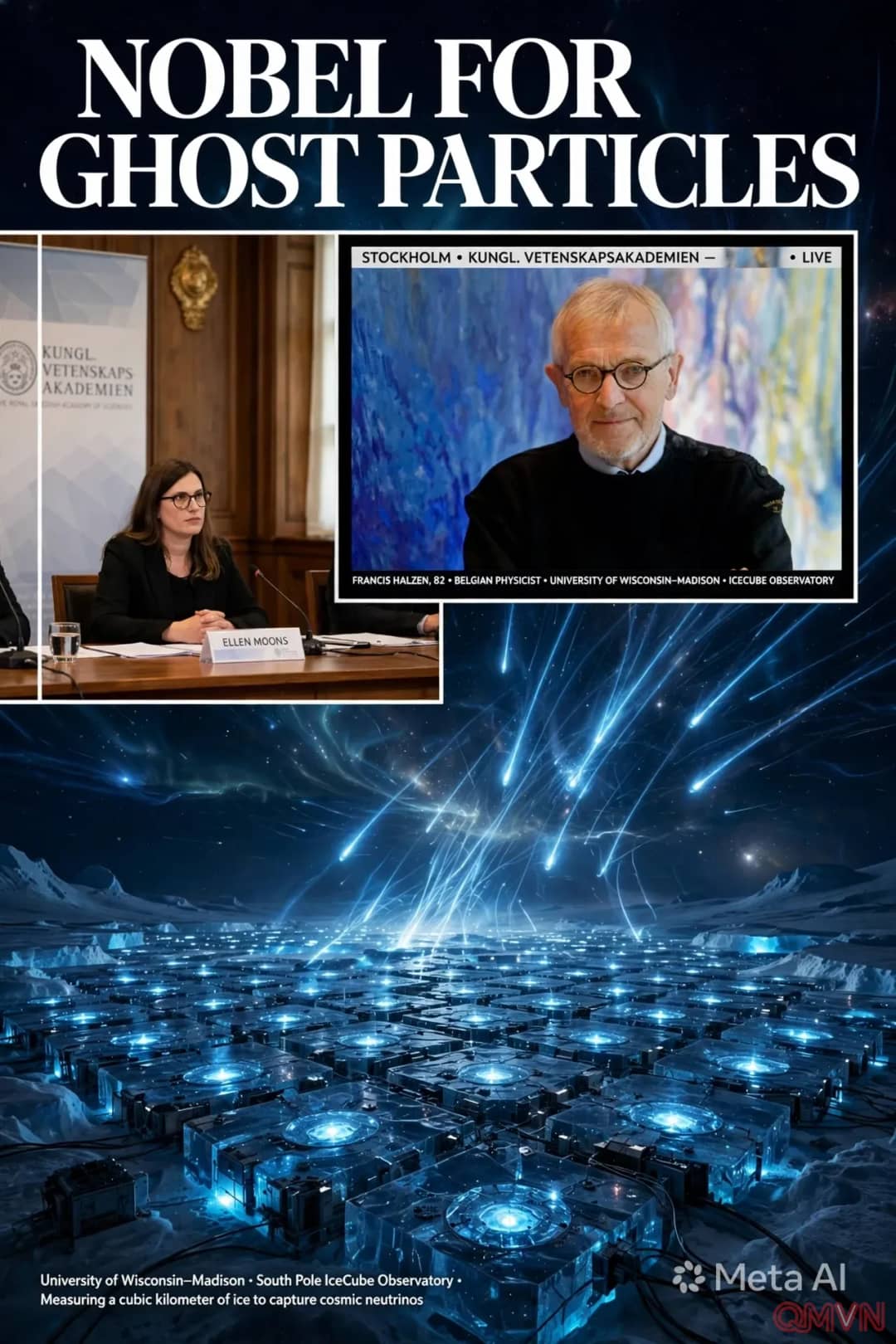
According to Le Monde and AFP, the jury honoured Halzen for decisive contributions to the IceCube Neutrino Observatory and the discovery of high-energy neutrinos of astrophysical origin. At a press conference in Stockholm on October 6, Ellen Moons, secretary general of the Royal Swedish Academy of Sciences, said this year’s prize was about ghostly messengers from space.
Neutrinos are tiny subatomic particles that barely interact with matter and can pass right through the Earth without a trace. That is why they carry intact information from the most distant and violent regions of the universe, but are also extremely hard to catch.
A giant block of ice at the South Pole
IceCube is a unique scientific facility, which the Academy described with these key features:
- The observatory is a cubic kilometre of ice beneath the Antarctic ice sheet, equipped with light sensors.
- It allows researchers to capture neutrinos from extremely energy-rich processes in the distant universe.
- According to the Academy, Halzen’s vision and scientific leadership were fundamental to the observatory.