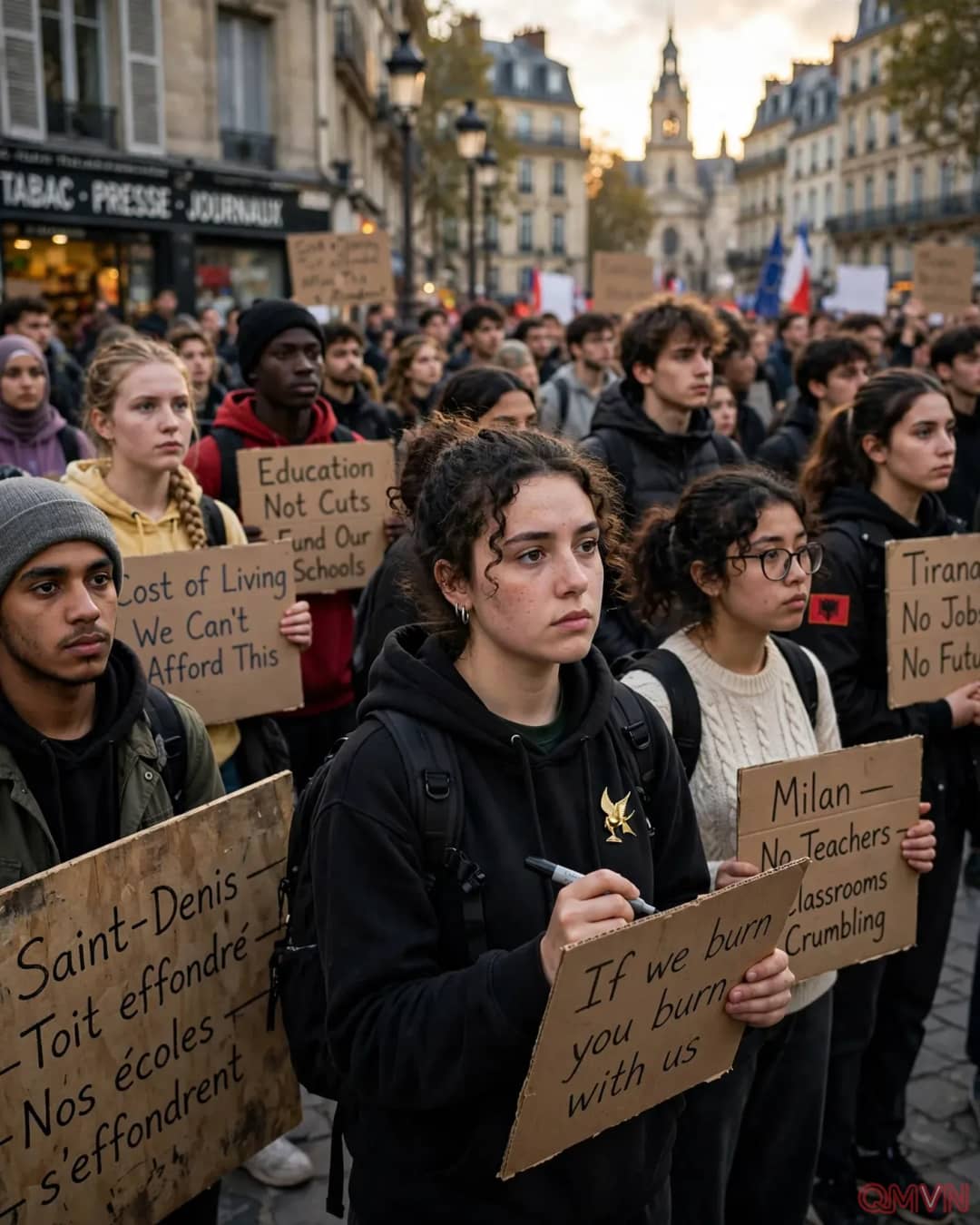
‘Nobody heard us’
At a desk in Brussels, 19-year-old student Maya Gourdel writes slogans borrowed from The Hunger Games, a film series whose defiant language has been adopted by youth movements worldwide. She has joined protests demanding better conditions in Belgian schools, and she describes a lesson that many young Europeans say they learned the hard way: polite protest went unnoticed.
“We tried to do it passively. Nobody heard us.” — Maya Gourdel
Only when bins began to burn, she says, did the cameras arrive. Her words capture both the frustration and the dilemma at the heart of the movement. Across Europe, demonstrations have at times turned violent: in France alone, thousands of shops have been damaged or looted in recent weeks, and police have used water cannon and stun grenades. Authorities have condemned the destruction, while many young protesters insist that the violence of a few should not drown out the demands of the many.
Serbia: from the streets to the ballot box
In Serbia, youthful anger turned into political power. The protests began after the collapse of a railway station canopy in Novi Sad in November 2024 killed 16 people, an event that became a symbol of alleged corruption and negligence. For almost two years, students organised blockades and marches, and on Sunday the Student List, a movement-backed slate led by cardiologist Ilija Srdanovic, won snap parliamentary elections, taking about 51% of the vote according to the monitoring group Crta, against roughly 40% for Vucic's coalition, on a turnout of nearly 70%.