MAIN CONTENT
When ordinary objects stop making sense
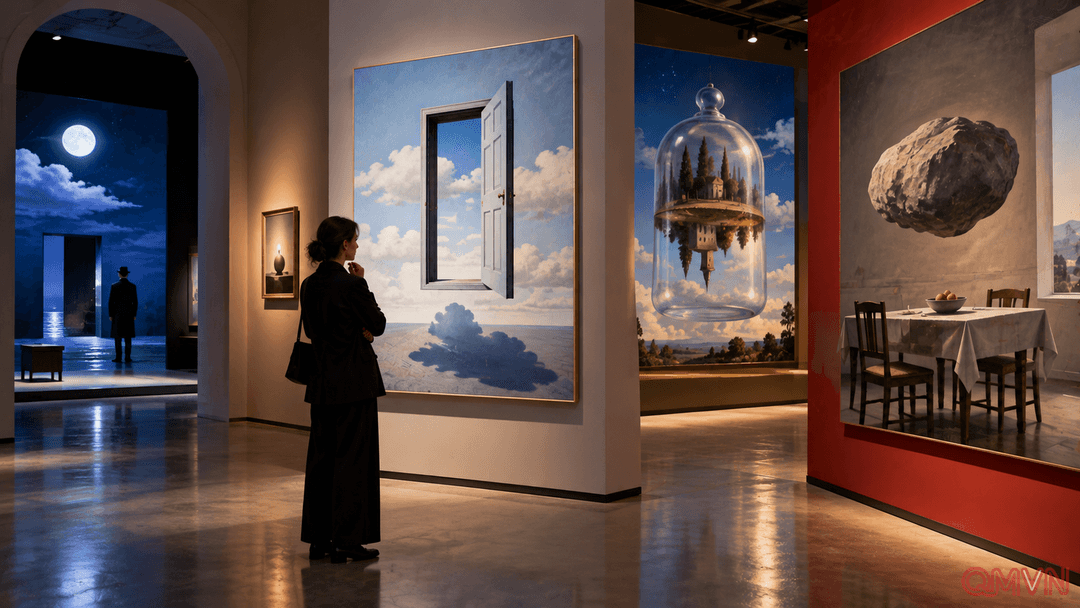
A pipe in a picture is not a pipe one can hold. A sunny sky may appear in a place where it has no logical right to exist. René Magritte (1898–1967) built an unmistakable artistic language from precisely such dislocations, painting everyday objects with almost disarming clarity while disrupting their relationships. His images are not difficult because they hide intricate codes; they trouble viewers because sight and habitual interpretation suddenly part company.
Magritte resisted attempts to reduce his art to a single symbolic explanation. A moment of bewilderment was, for him, potentially more productive than a tidy answer. The Gagosian exhibition therefore treats his legacy as an active way of thinking, rather than as a settled collection of visual motifs reproduced endlessly in popular culture.
A conversation across generations
According to The New York Times, curators Jasper Sharp and Bernard Lagrange have brought roughly 50 Magritte paintings and works on paper together with contributions from 46 artists. Their common ground is not necessarily a shared style, but a desire to unsettle what seems obvious.