MAIN CONTENT
The island behind the postcard
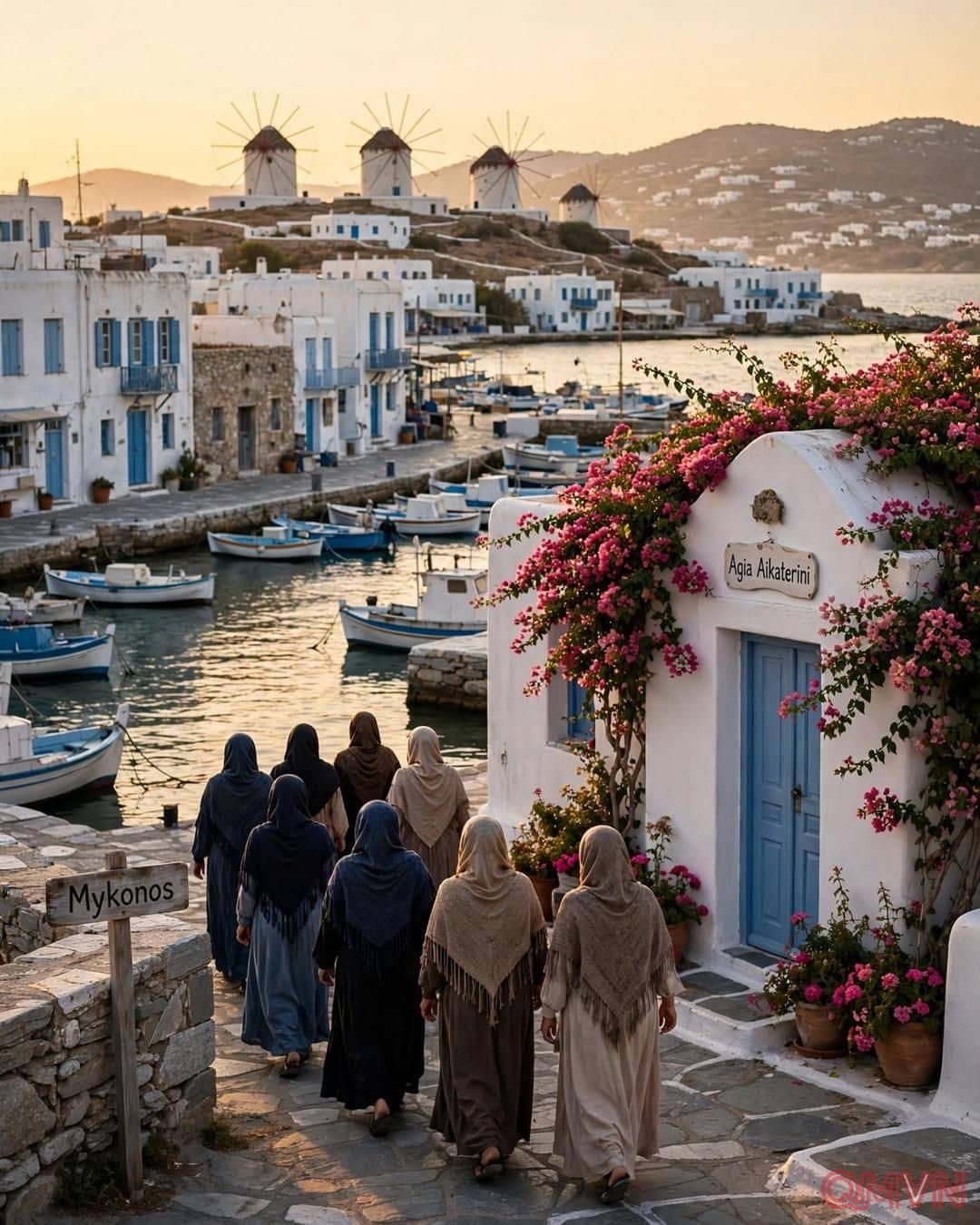
Mykonos is commonly associated with whitewashed architecture, windmills and expensive holidays. Yet its international reputation tells only part of the story. For residents, the same streets are places of worship, family memories and ordinary encounters. The November celebration demonstrated how those meanings can endure even as the commercial landscape changes. According to AP, the procession passed hotels and entertainment venues, while women distributed chocolates to people along the way.
The presence of visitors did not turn the religious observance into merely a tourist attraction. Its organisers belonged to a community with its own reasons for gathering. This distinction matters: a destination may be marketed internationally, but the everyday lives of its inhabitants cannot be reduced to the experiences purchased by outsiders. A festival can provide a space where the priorities of residents are visible again.
Women who built an economy
The island's maritime past helps explain the importance of its women. When fishing and commercial shipping took men away from home, women assumed substantial responsibilities for families and local affairs.
AP's reporting describes how they later offered accommodation and sold woven goods to travellers. Such work turned existing skills and resources into opportunities for income, long before the luxury tourism industry reached its present scale.
Anna Athymariti, who leads the local women's cultural association established in 1979, identifies Saint Catherine with female wisdom and resilience. Her description of Mykonos as historically matriarchal reflects a local understanding of women's influence, rather than a formal claim about every household or institution. Recognising that influence adds a neglected dimension to the island's economic history and makes visible the labour behind its reputation for hospitality.
Faith as a living inheritance
Saint Catherine occupies a distinctive place in Orthodox tradition as a figure associated with learning, conviction and courage. Her story, transmitted through Christian tradition, links intellectual accomplishment with steadfast belief. For the women participating in the procession, these qualities offer a model that extends beyond the religious ceremony itself, connecting personal responsibilities with collective memory.
Father Petros Marangos and the women's association helped lead the celebration, according to AP. Katerina Xydaki also described a particularly close family connection to the saint. Such relationships explain why religious heritage is not simply a collection of old buildings or objects. It is sustained through repeated acts of participation, through the stories families tell and through the meanings people attach to familiar places.
Prosperity and belonging
Luxury tourism offers economic opportunities, yet it can also change how a place is perceived and used. When the international image of an island becomes dominated by consumption, its quieter forms of cultural life may receive less attention. Mykonos's November feast illustrates the possibility of a different balance, in which residents welcome outsiders without surrendering the significance of their own traditions.
Preserving that balance does not mean freezing a community in the past. Younger generations need opportunities to adapt inherited practices to their lives, and visitors can contribute by respecting local customs. The celebration of Saint Catherine shows that heritage can remain relevant precisely because people continue to practise it, rather than treating it as a decorative reminder of an earlier age.