MAIN CONTENT
A stronger figure and an unresolved allegation
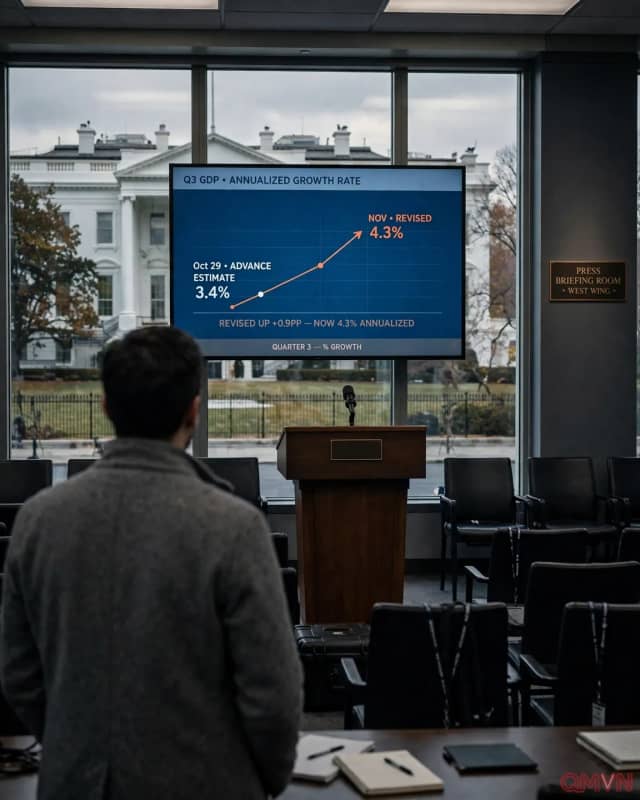
The November 25 release offered a more favorable picture of US economic activity during July through September than the advance estimate published on October 29. Reuters reported that Trump demanded an immediate inquiry the following day, linking the lower preliminary figure to Republican losses in the congressional elections. He characterized the discrepancy as intentional, but the available reporting did not establish evidence of deliberate falsification. The Commerce Department had not immediately responded to requests for comment, according to Associated Press reporting.
The distinction matters because the two figures describe the same quarter, not two consecutive periods of economic growth. An upward revision of 0.9 percentage points is a change in measurement. It does not mean that the economy suddenly grew by an additional amount overnight, or that the earlier release was necessarily dishonest. An investigation, if undertaken, would need to examine the underlying records, publication procedures and evidence of any improper intervention rather than infer intent from the direction of the revision alone.
How economic estimates evolve
The BEA explains that its first quarterly GDP estimate is produced before every relevant statistical series is complete. Later releases incorporate fuller information, allowing economists to replace assumptions and preliminary observations with more comprehensive evidence.