MAIN CONTENT
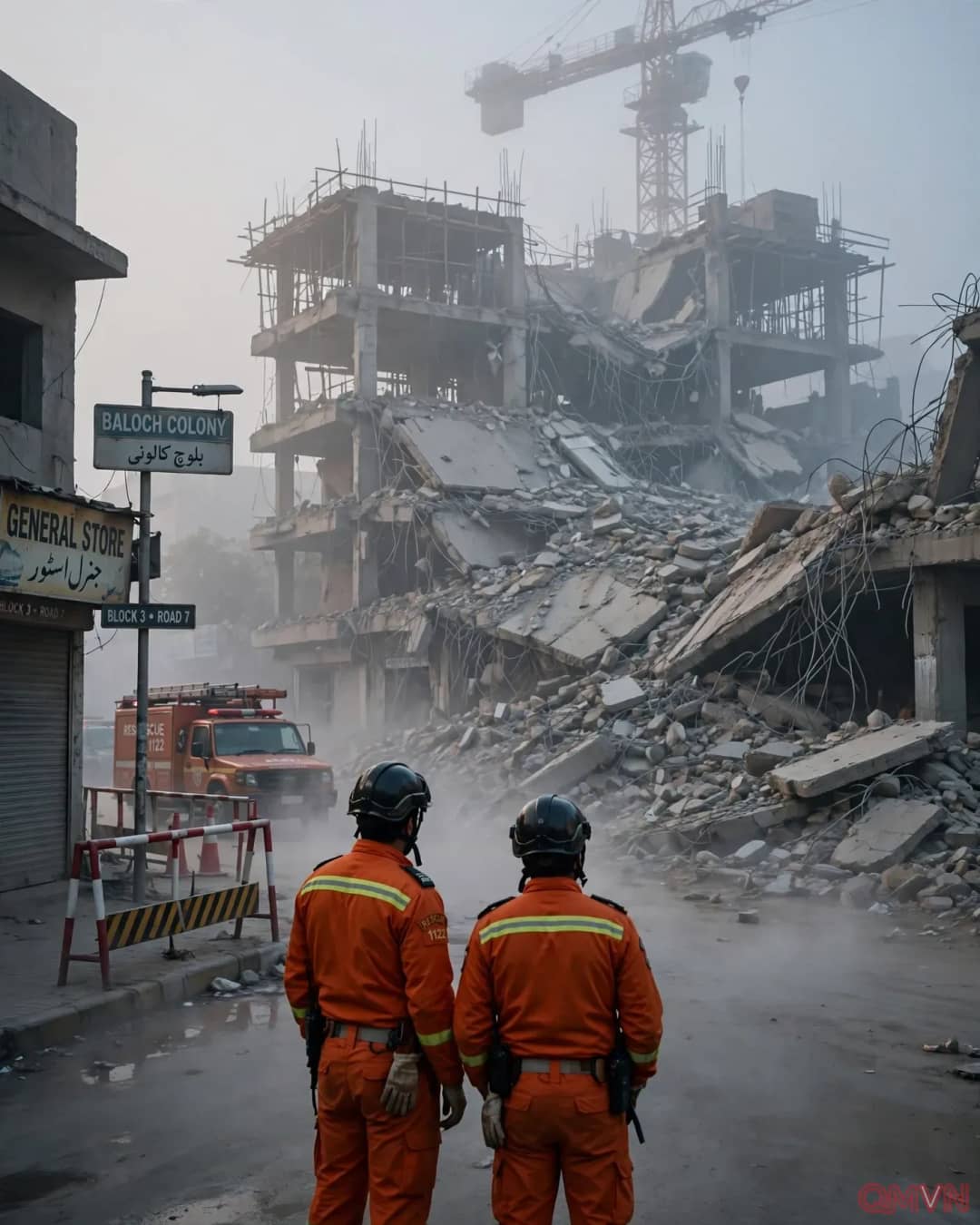
A race against time in Baloch Colony
Television footage from the scene showed rescuers in orange uniforms and helmets standing on enormous slabs of concrete, surrounded by broken masonry and twisted construction supports. Heavy machinery and bare hands worked side by side as teams tried to create openings through which trapped people might be reached.
Police official Ammar Awan said 14 injured people had been rescued from the debris and taken to hospital. The death toll rose overnight as three more bodies were recovered, bringing the confirmed number of victims to at least four by Thursday morning.
Government official Nasrullah Abbasi said families had reported 17 people missing since the collapse. Relatives gathered near the site through the night, waiting for news, as rescuers warned that the dense layers of concrete made progress slow and dangerous.
Officials promise accountability
Karachi Mayor Murtaza Wahab said the immediate priority was to rescue anyone still alive beneath the debris, though he did not give a figure for the number of people missing. Emergency teams from several agencies were deployed to the site to support the operation.
In a sign of mounting pressure, the authorities dismissed more than a dozen officials on Thursday over alleged negligence, according to a government statement. The move suggests that investigators suspect failures in the approval or supervision of the construction project.
Questions are likely to focus on whether the building had the necessary permits, whether its design and materials met safety standards, and whether inspectors had visited the site. Similar inquiries after previous disasters have often led to dismissals, but critics say lasting reform has been slow to follow.
A pattern of preventable tragedies
Building collapses are tragically common in Pakistan. Construction standards are often weakly enforced, and builders frequently use cheap materials, add unauthorised floors or ignore safety regulations to reduce costs, particularly in fast-growing urban neighbourhoods where demand for housing is intense.
Karachi has suffered repeatedly. In July 2025, a five-storey residential building collapsed in the Lyari district, killing 27 people. In February 2026, a gas explosion brought down part of a residential building in Soldier Bazaar, killing at least 15, weeks after a fire at the Gul Plaza shopping centre claimed more than 70 lives.
According to data from the Sindh Building Control Authority reported in local media, more than 80 people had died in building collapses in Karachi between 2020 and mid-2025. Reports have also identified hundreds of buildings in the city considered dangerous, many of them occupied by low-income families with few alternatives.
Beyond Karachi, a national challenge
The problem is not limited to Karachi. In the north-western city of Peshawar, the roof of a private school collapsed, killing 34 children and a teacher, a tragedy that shocked the country and raised fresh questions about the safety of buildings used by the most vulnerable.
Experts point to overlapping causes: rapid urbanisation, informal construction, corruption in the approval process and limited resources for inspection. In densely populated districts, narrow streets also hamper rescue operations, making each collapse harder to respond to.
For the families waiting in Baloch Colony, such analysis offers little comfort. Their hope rests on the rescuers working through the rubble, and on the possibility that this disaster might finally prompt the enforcement needed to prevent the next one.