MAIN REPORT
A precautionary move with a much larger strategic message
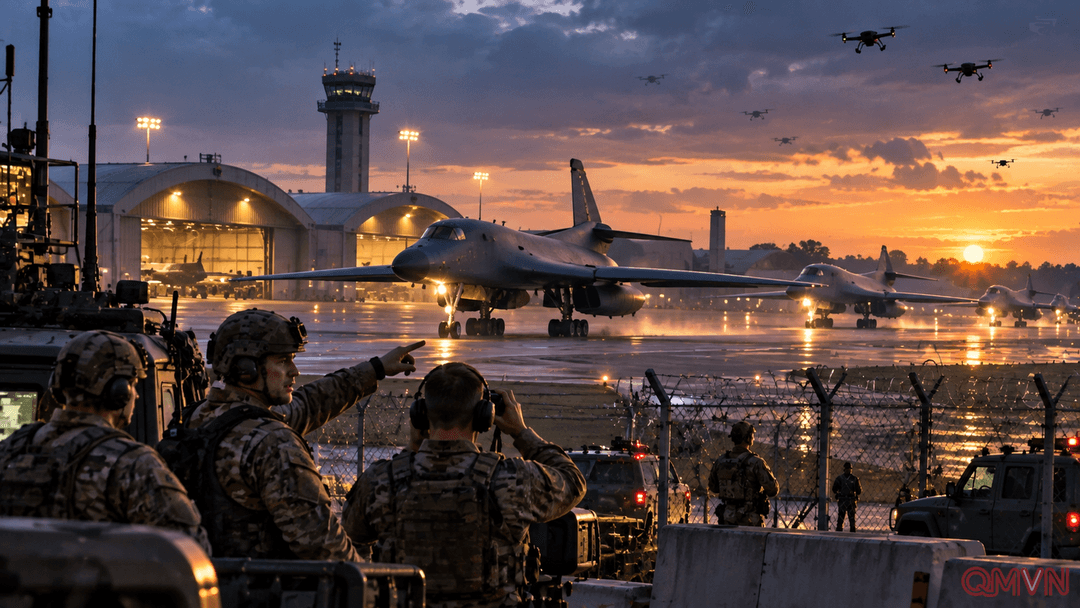
The Pentagon confirmed that all U.S. bombers deployed to RAF Fairford had returned to their home stations in the United States. Reuters reported that B-1s operating from the base had recently been used in missions connected to the war with Iran, and Fairford remains one of the few European locations able to support heavy U.S. bombers at scale. President Donald Trump said moving the aircraft was relatively inexpensive and sensible once Washington concluded there might be a threat.
The Wall Street Journal, citing U.S. and European officials, reported that the specific concern involved a coordinated drone attack that could target both aircraft and American personnel. Some officials believed the concept may have been loosely inspired by Ukraine’s 2025 deep-strike drone operation against Russian strategic aviation, in which drones were positioned close to targets before being launched. That remains an intelligence assessment, however, rather than a plot established in court.
“We had a threat, and if we’re going to be threatened, we just move them.” — Donald Trump
Differences in public messaging underline the uncertainty. Vice President JD Vance described the relocation as an abundance-of-caution measure, while Secretary of State Marco Rubio emphasized continued confidence in U.S. base security and cautioned against reading every aircraft movement as evidence of an escalating crisis. What is clear is that commanders chose to reduce the exposure of exceptionally valuable assets.