MAIN CONTENT
A classified directive meets public reassurance
The Washington Post reported on November 20 that Defense Secretary Pete Hegseth had circulated a classified memorandum imposing additional restrictions on military cooperation with Canada. Because the full text has not been made public, the precise reach of the instructions cannot be independently assessed from the statements released so far. That uncertainty has allowed a broad interpretation of the report to circulate even as officials describe more limited effects. The essential distinction is between rules governing who may attend a policy event and rules changing how troops, commanders and intelligence agencies carry out their missions.
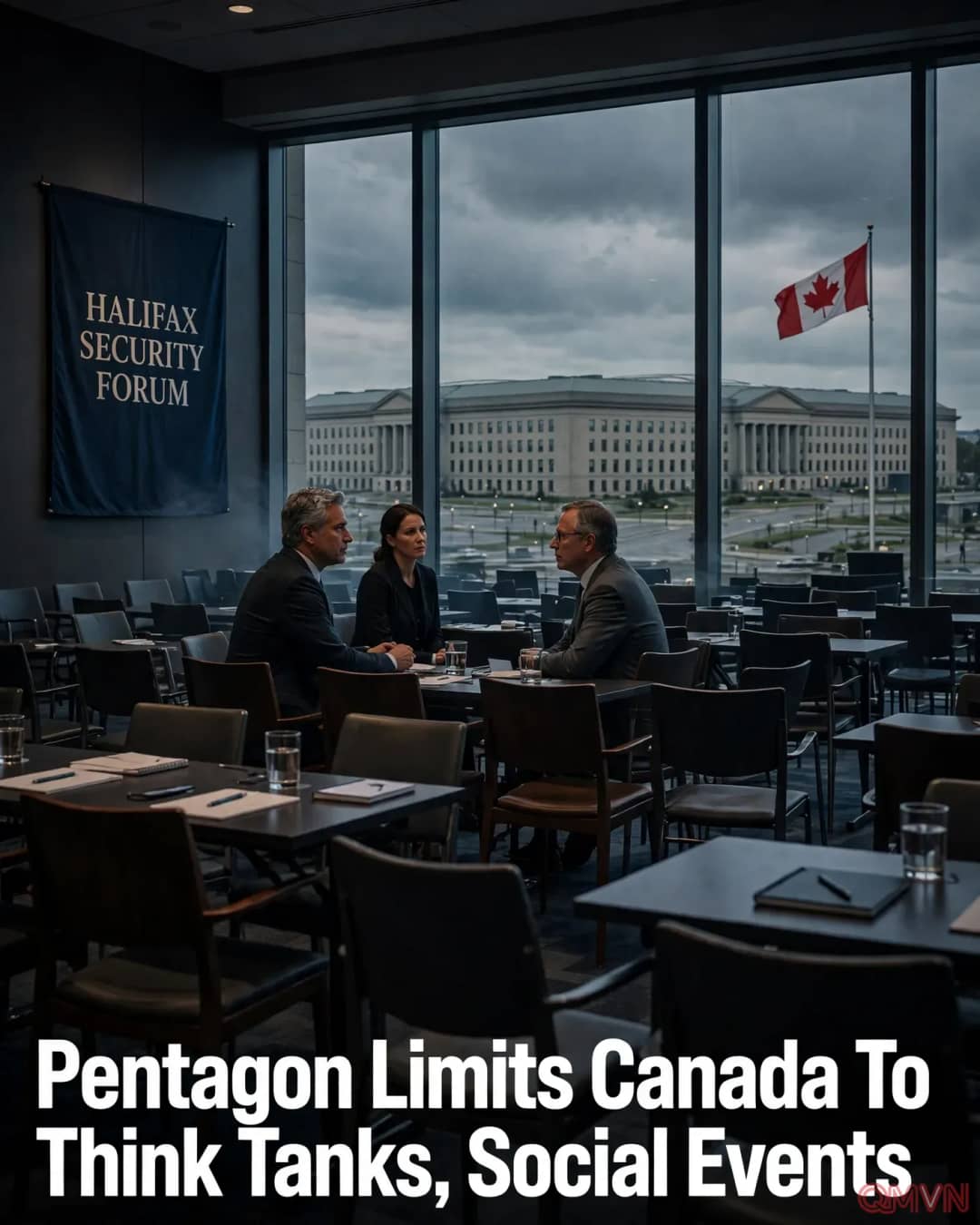
Rounds, speaking in Halifax, said information passed to the congressional delegation by its Pentagon liaison suggested that U.S. defense personnel would need permission for some think tank appearances and other engagements. He expected little practical change compared with recent practice. Parnell presented the move as an attempt to ensure that meetings advance U.S. defense objectives. Neither explanation resolves every question about the memorandum, but both point to a review of discretionary contact rather than an announced suspension of security commitments.
Halifax becomes a test of diplomatic access
The Halifax International Security Forum brings together lawmakers, military figures, diplomats and researchers for discussions that are not themselves military operations. Yet such meetings are valuable precisely because they allow allies to exchange assessments outside formal command channels.
Restrictions on participation can therefore have consequences beyond the conference schedule: they influence which perspectives are heard, which working relationships are renewed and how governments interpret each other’s political intentions.
The Trump administration had already barred Pentagon officials from the Halifax gathering under limits introduced in 2025 on participation in think tank events. The newly reported directive emerged against that background. Rounds called its disclosure unfortunate because members of Congress were trying to reassure Canada. Democratic Senators Tim Kaine and Chris Coons offered sharper criticism, with Coons warning against further damage to relations. Their disagreement was less about the mechanics of a conference invitation than the message sent to a longstanding partner.
Operations continue beneath political strain
Canadian Defense Minister David McGuinty said he had not reviewed the reported memorandum and had detected no change in military-to-military cooperation. As a concrete example, he cited Canadian vessels working alongside U.S. ships against drug trafficking in the Caribbean. His account does not establish what every provision of a classified document says, but it provides a current operational counterpoint to fears that existing joint missions have been halted.
NORAD is especially important to this distinction. Established in 1958, the binational command helps provide aerospace warning, aerospace control and maritime warning for North America. Parnell explicitly said the guidance did not change NORAD, NATO cooperation or defense intelligence exchange. Those statements are significant, though the durability of an alliance also depends on routine planning and political confidence that cannot be measured by whether a command remains formally in place.
Why the wording matters for allied confidence
The restrictions arrive amid wider disputes over trade and political rhetoric. President Donald Trump’s tariffs and repeated remarks about Canada becoming a U.S. state have sharpened sensitivities in Ottawa. As a result, even a measure characterized by Washington as administrative may be interpreted in Canada as part of a broader change in tone. Governments must distinguish what a directive legally or operationally does from what it communicates diplomatically.
There is no public evidence in the reports reviewed that the new guidance has ended intelligence sharing or joint defense activities. Nor has the classified text been released for independent comparison with previous rules. The clearest way to reduce speculation would be a fuller, authoritative explanation of its scope, exemptions and duration. Until then, reassuring statements and skeptical reactions will coexist, illustrating the challenge of maintaining trust when policy is announced through fragments.