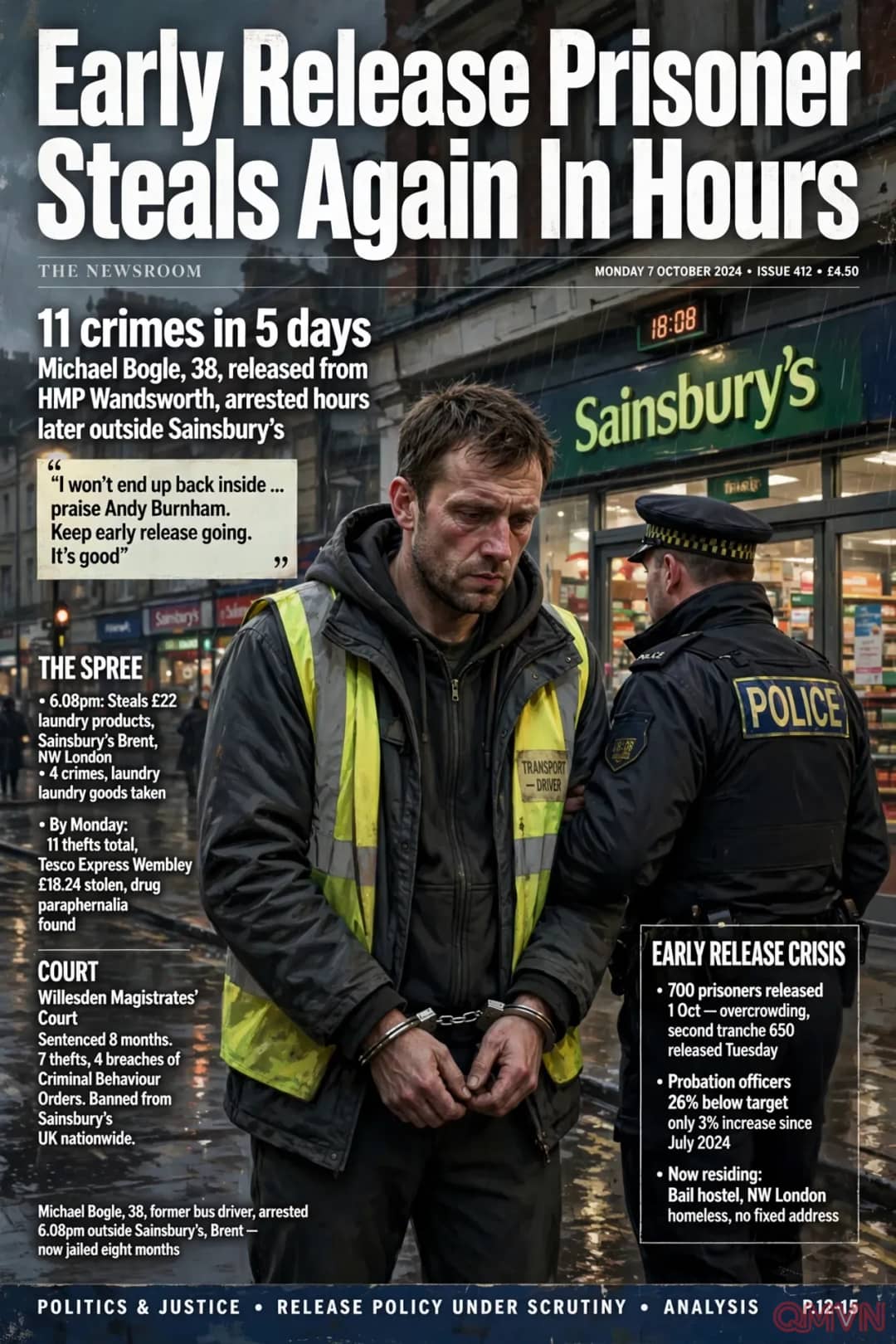
A promise at the prison gate, broken by evening
A former bus driver turned prolific shoplifter, Bogle had just served 11 weeks at Wandsworth for breaching a 32-week suspended sentence imposed for repeatedly stealing laundry detergent. Leaving shortly before midday, he admitted there was a risk he might shoplift again, “but hopefully not”.
“Keep the early release going. It’s good.” — Michael Bogle
That hope did not last until nightfall. At 6.08pm the same day, Bogle took £22 worth of laundry products from a Sainsbury’s in Brent, north-west London. By bedtime he had committed four offences. In the days that followed, Sainsbury’s and Tesco stores across the area became his regular targets, even though a court order banned him from every Sainsbury’s branch in the United Kingdom.
On the Monday he was arrested after taking £18.24 of laundry goods from a Tesco Express in Wembley, and was found carrying drug paraphernalia. The next day, Willesden Magistrates’ Court jailed him for eight months for seven thefts and four breaches of criminal behaviour orders.
Why laundry detergent?
Bogle said he stole to pay for food after becoming homeless. Yet police and retailers in Britain have long recognised detergent as an underground currency in the drug trade: valuable, long-lasting and easy to resell.