MAIN STORY
From radio static to an unprecedented order
At roughly 3:12 p.m. Eastern on November 13, pilots and controllers were reporting crackling radio channels and intermittent communications near Chicago, Indianapolis and elsewhere. Recordings and flight data assembled by The Wall Street Journal show how a disturbance that first looked localized spread across multiple air traffic facilities.
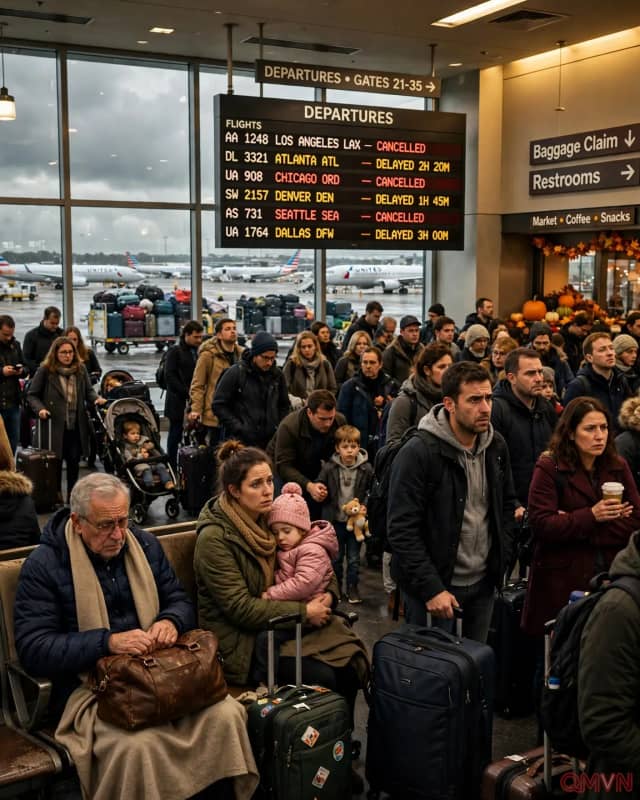
By about 3:47 p.m., individual control facilities were already restricting departures. At 3:54 p.m., the FAA ordered a nationwide ground stop to reduce pressure on the network and protect safe separation between aircraft. The measure primarily prevented departures; it did not mean every aircraft in the sky had to land at once. Controllers continued using available communications and contingency procedures to guide arrivals.
The cascading cost of four hours
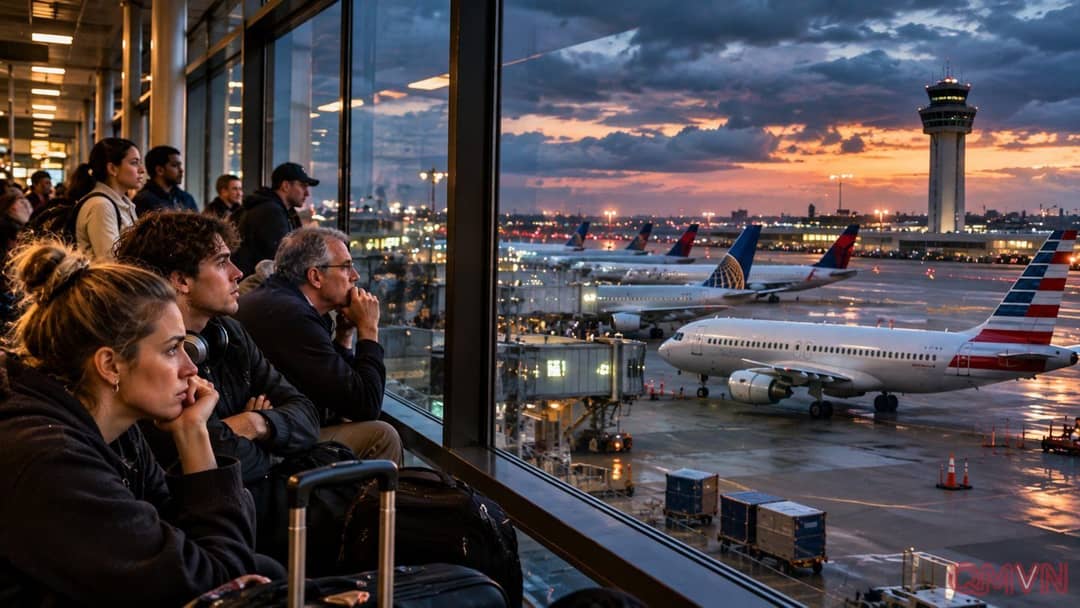
As departures stopped, occupied gates created an escalating parking shortage. Some arriving aircraft had to divert to alternative airports. Exchanges between airline dispatchers and cockpits described searches for available stands, revised fuel planning and itineraries interrupted before passengers could complete their journeys.