MAIN CONTENT
Two clocks, one race
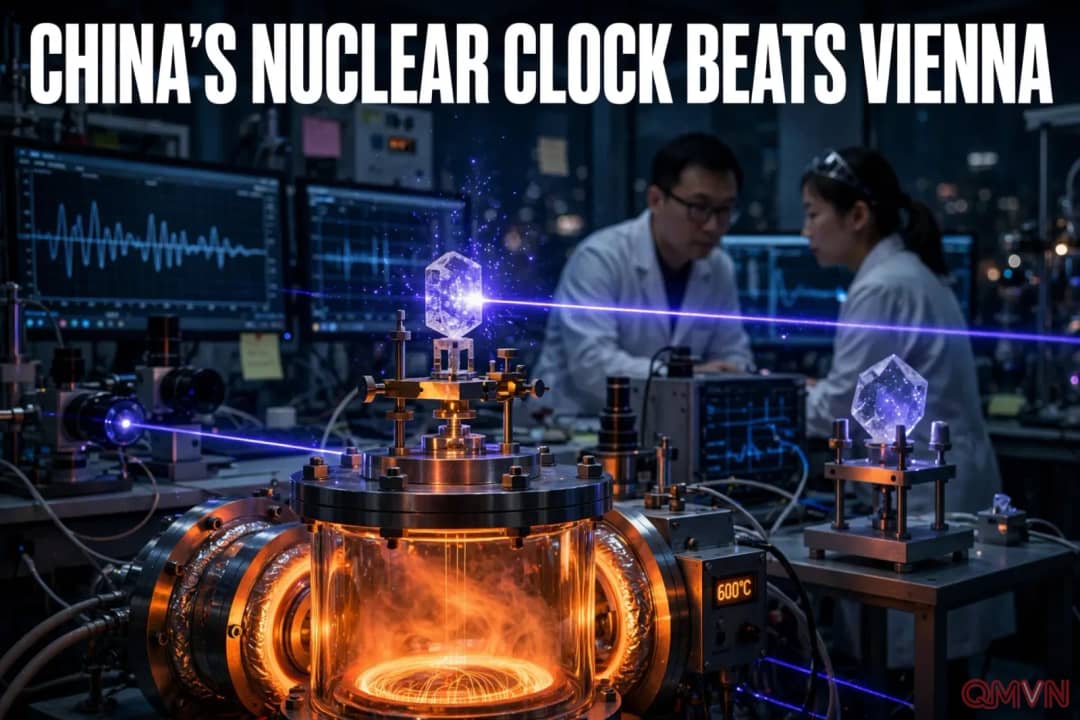
According to papers published in Nature this week, early results from the first two working nuclear clocks show the Chinese device to be about six times as stable as the one in Vienna. The two teams worked independently, but both used thorium-229 nuclei embedded in crystals to keep time through the oscillations of the atom’s core.
In June, when Nature reported that the two groups had built these novel devices, physicist Thorsten Schumm of the European team described a fierce yet friendly global competition. In the latest papers, the Beijing group demonstrated that its clock can be reproduced, while the Vienna team used its device to look for traces of dark matter, so far without result.
Why the nucleus?
Ding Shiqian, who led the Tsinghua team, explained that moving the clock’s tick from electrons to the nucleus matters because the nucleus is far smaller than the atom and less disturbed by stray electric and magnetic fields.
“In the long term, this could allow nuclear clocks to reach extremely high accuracy.” — Ding Shiqian