MAIN ARTICLE
From dependence to diversified partnerships
Negotiations over trade, critical minerals, defence and supply chains are producing overlapping diplomatic arrangements. A country may retain a security alliance with the United States while expanding investment and technology ties across Europe or Asia. This form of hedging is not automatically a rejection of traditional allies: it reflects the desire to reduce exposure to decisions made elsewhere.
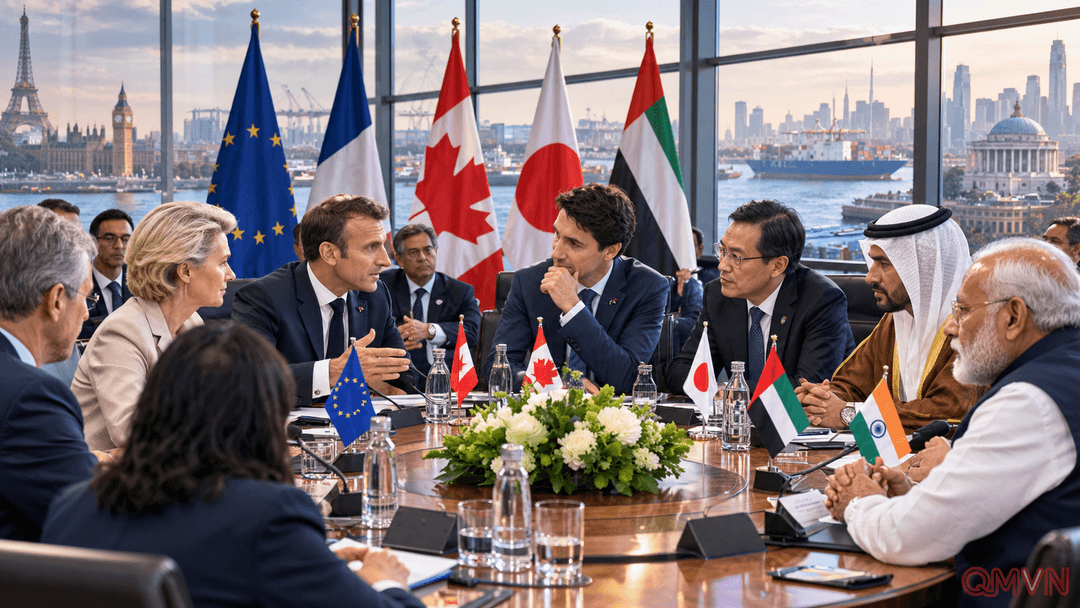
At Davos in January 2026, Canadian Prime Minister Mark Carney described the advantage of collective action by middle powers. His government has sought wider non-US markets. But diversification cannot remain a slogan: it requires workable shipping routes, investment rules, technical standards and institutions capable of cooperating under pressure.
“Middle powers must act together because if you are not at the table, you are on the menu.” — Mark Carney
Different regions, different calculations
European governments are weighing how to defend themselves if transatlantic security commitments become less dependable. Cooperation among major European militaries is under discussion, but budgets, defence-industrial capacity and political agreement remain difficult.