MAIN CONTENT
A race that began with the need for books
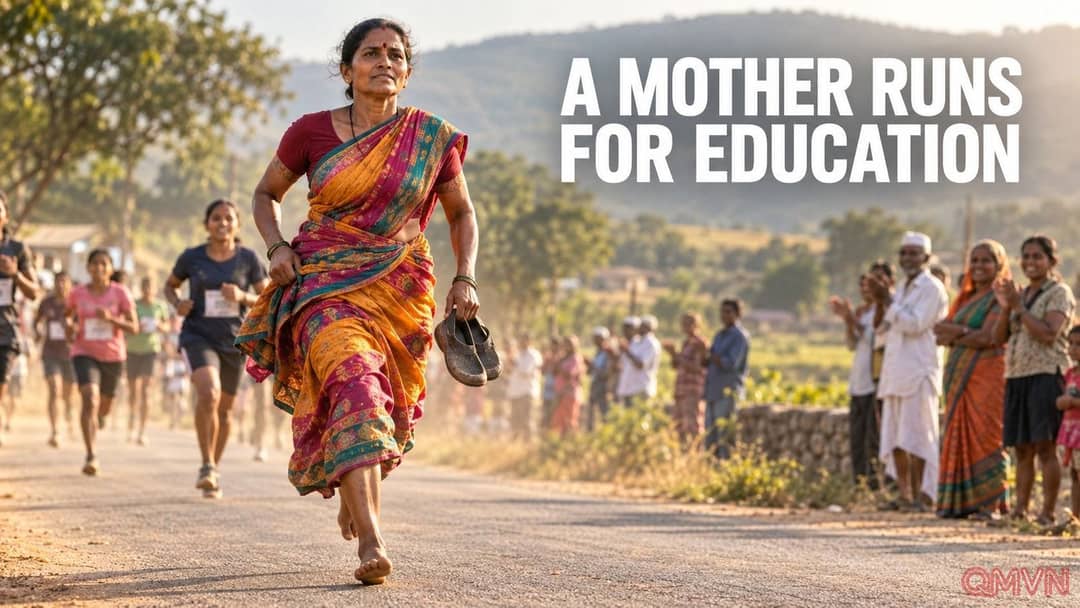
Ramabai entered the Amrit Daud with no athletic ambition. BBC News Marathi reported that her elder daughter, Pooja, invited her to join the community run, while her younger daughter, Arati, who lives in Nanded, was struggling to buy books. After Arati stopped speaking to her for eight days out of hurt and disappointment, the mother decided to try. Her flip-flops repeatedly slipped, so she removed them, gathered her sari and ran on the hot road. Despite having no training, she moved ahead of the other women aged 30 to 60 and collected the 3,000-rupee prize.
The victory offered something practical: several books, part of the required study material and reassurance that her daughters’ education had not been abandoned. Pooja also finished second in her own age category, but described her mother as the courageous one. Their shared moment of recognition changed the meaning of the event. It was no longer simply a contest of speed. It became a portrait of a family using solidarity, effort and affection to protect a fragile route towards a better life.
Behind the finish line, a widow’s working life
After her husband died in 2012, Ramabai became the family’s sole provider. She harvested soybeans and green gram on other people’s farms, processed and sold turmeric, and accepted whatever honest work she could find.