MAIN STORY
When distance turns an emergency into a race against time
In cardiac arrest, survival often depends on what happens before an ambulance arrives. South Western Ambulance Charity estimates that only around one in ten people experiencing an out-of-hospital cardiac arrest in the UK survive. It says that each minute without CPR and defibrillation when indicated can reduce the chance of survival by approximately 10%. This is a general public-health estimate, not a prediction for an individual patient, but it communicates the urgent value of early action.
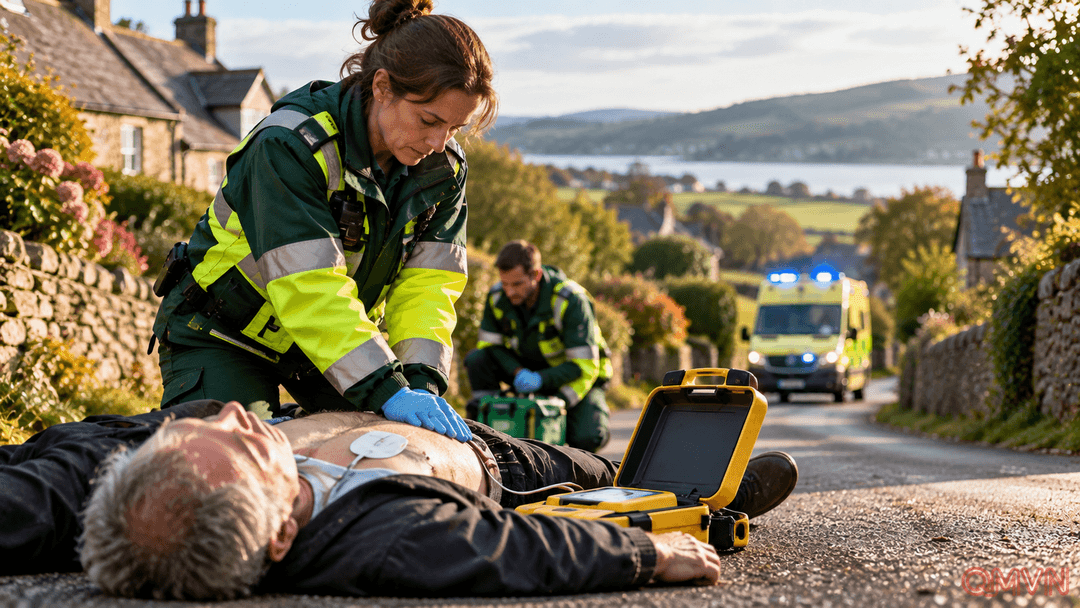
Volunteer Community First Responders can help bridge the gap in scattered villages and rural areas. Trained to assess patients and deliver immediate interventions including CPR and AED use, they are sometimes closer than the ambulance crew. Their role is not a replacement for professional emergency services: it is an earlier link in the chain of survival.
Better equipment, more useful information
The charity aims to purchase 288 newer ZOLL AED 3 devices to replace equipment currently used by its volunteers. It says the upgrades will provide additional clinical information and work more closely with the technologies used by ambulance teams, enabling a more efficient transfer of patient information and care. Such continuity can matter when responders have to make decisions rapidly.