The Attack at the Checkpoint
According to the Israeli military, Palestinian attackers struck a military checkpoint near Hebron, killing two soldiers and lightly wounding three others. The military said it had killed two attackers. Shortly afterwards, Prime Minister Benjamin Netanyahu said Israel would lock down Hebron, go house to house, demolish homes and launch a large-scale military operation in the West Bank, where Israeli forces regularly raid Palestinian cities and towns.
We will act to destroy this place, to change it completely.
Bulldozers Move Into Hebron
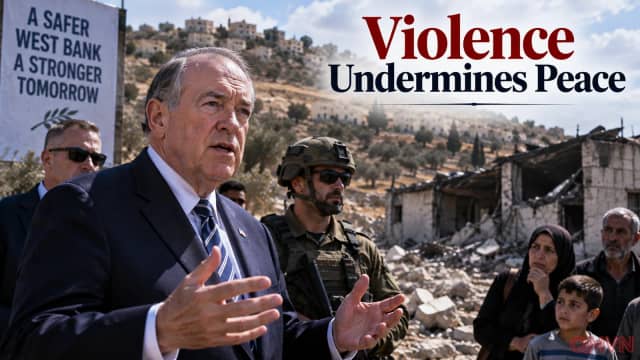
A Reuters reporter documented Israeli bulldozers beginning to demolish homes in Hebron near the site of the shooting. Local residents said the homes had no connection to the attackers.
The demolitions began after Finance Minister Bezalel Smotrich said on social media that he had ordered the immediate demolition of Palestinian buildings near the attack site.
Far-right National Security Minister Itamar Ben Gvir went further, calling for the dismantling of the Palestinian Authority and for all Palestinians in the West Bank to be banned from travelling by road. The measures announced or proposed by Israeli officials include:
- Locking down Hebron and searching every house.
- Demolishing Palestinian buildings near the site of the attack.
- Launching a large-scale military operation across the West Bank.
A Precedent From the Refugee Camps
Netanyahu and Defence Minister Israel Katz both compared the Hebron operation to the mass demolitions Israel carried out in Palestinian refugee camps in 2025, which expelled tens of thousands of people. Human Rights Watch later issued a report saying those mass expulsions amounted to war crimes and crimes against humanity.
In response to the report, Israel said it needed to demolish civilian infrastructure so that it could not be exploited by militants, but did not say when residents could return. Rights groups have long criticised punitive home demolitions as collective punishment of uninvolved people, while Israeli officials argue that they are a necessary deterrent to protect security.
Violence Escalates Ahead of the Election
The Hebron attack comes amid rising tension in the West Bank, where Israeli settler violence has surged in recent weeks. According to Israeli monitoring group Yesh Din, there have been at least 170 attacks since September 27, the start of the olive harvest; the Palestinian Health Ministry said at least four Palestinians had been killed and more than 100 injured since the harvest began. In his speech after the attack, Netanyahu praised settlers as “heroic” and said they were “standing in the breach”, although he had previously described settler violence as the work of a few dozen fringe youths.
The violence comes ahead of next week’s Israeli election, in which Netanyahu and his right-wing coalition have campaigned for expanding settlements and against the formation of a Palestinian state. UN bodies and most countries deem settlements on occupied land illegal under international law; Israel rejects this, viewing the territory as disputed. Amid hardline rhetoric on all sides, ordinary people in Hebron – Palestinians as well as Israeli soldiers and their families – continue to pay the heaviest price.