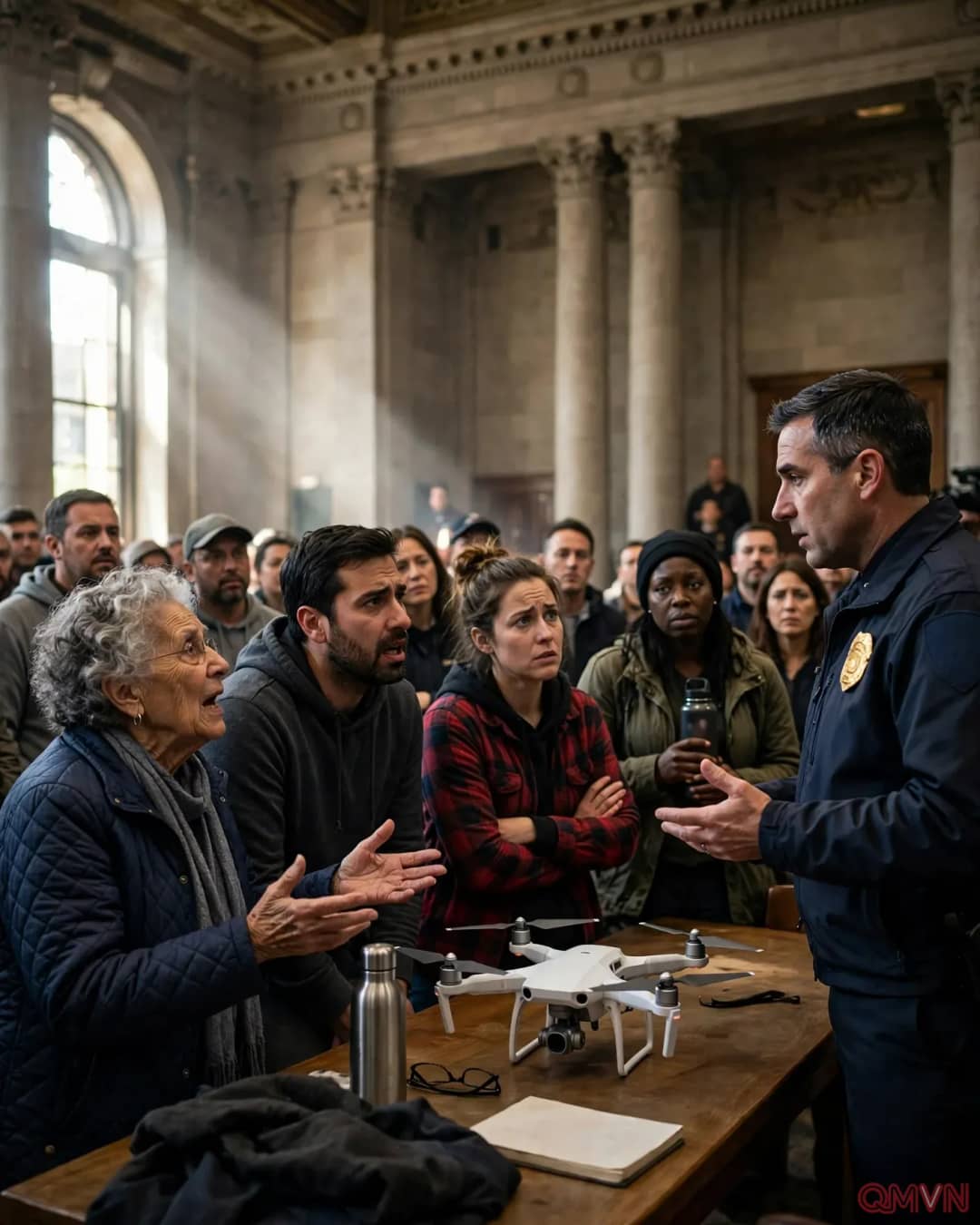
A packed room in San Francisco
Earlier this month, the San Francisco Police Department asked the police commission to approve a policy allowing drones for a wide range of uses, from public safety response and investigations to training and community outreach. The draft prohibits random surveillance and tracking of activities protected by the First Amendment, and sets a 30-day retention period for public footage unless tied to an investigation. Supporters argue the technology is essential for modern crime-fighting.
“Public safety and personal privacy shouldn’t be competing interests.” — Anna Carney
On the other side, members of the group DeFlock SF urged the commission to cancel the department’s contract with drone maker Skydio and, at minimum, to add a warrant requirement. The commission ultimately advanced the policy to labor negotiations without that requirement, but the tension in the room reflected a statewide debate.
A legal vacuum
According to the Los Angeles Police Department, nearly 60 law enforcement agencies in California run drone programs. The 2021 military equipment law requires public approval, but California still lacks a comprehensive statute governing police drone use, leaving localities to interpret Fourth Amendment case law, which protects against unreasonable search and seizure, on their own.
Sonoma County illustrates that uncertainty. Its drone program, launched in 2019 for code enforcement, carried out hundreds of flights over yards, homes and windows without warrants or a published policy, ACLU investigators found. After the ACLU of Northern California sued in 2025, the county settled last month, pledging to curb drone use, obtain warrants or consent before residential inspections, restrict data retention and notify residents whose property was surveilled from the air. Attorney Katie Inman, a drone policy expert, noted that the Supreme Court has allowed aerial surveillance from lawful altitudes, but drones can fly low, use thermal imaging and hover for long periods.
“But those were manned aircraft; they are not drones.” — Katie Inman
Multimillion-dollar contracts and unproven promises
The boom in police drones is tied to an aggressive push by defense and surveillance technology firms. Skydio, which began by making drones to film extreme sports athletes, pivoted to military and police markets after the US government labeled China’s DJI a national security risk in 2020. Notable investments include:
- Santa Ana approved $682,900 for a drone-as-first-responder program with Skydio.
- Stockton expanded a $3.15 million contract with Flock Safety to integrate six drones into its network of 120 license plate reader cameras.
- The San Francisco Police Department received a $9.4 million donation from crypto billionaire Chris Larsen to expand drones and surveillance systems.
Police say drones help them respond faster, de-escalate dangerous situations and improve clearance rates. But a February 2026 study by the UC Berkeley Criminal Law and Justice Center found that while drones can shorten response times, there is no evidence they reduce officer-involved shootings, lower overall use of force or improve case resolution rates.
A spreading backlash
Former police commissioner Jesus Gabriel Yanez read a passage from George Orwell’s novel “1984” at the San Francisco meeting before voicing his opposition, arguing drones should be used only for specific incidents that cannot be handled without endangering officers.
“No general routine patrol. No general surveillance.” — Jesus Gabriel Yanez
Opponents point to past cases in which California agencies illegally shared license plate data with federal immigration authorities, as well as a leak that exposed live police drone feeds online because of vendor misconfigurations. The backlash is not limited to California: Minneapolis’ city council rejected a Skydio drone contract after protests, and in New Orleans the group Eye on Surveillance defeated a proposal to allow weapons on police drones.