MAIN ARTICLE
A new route through a strained grid
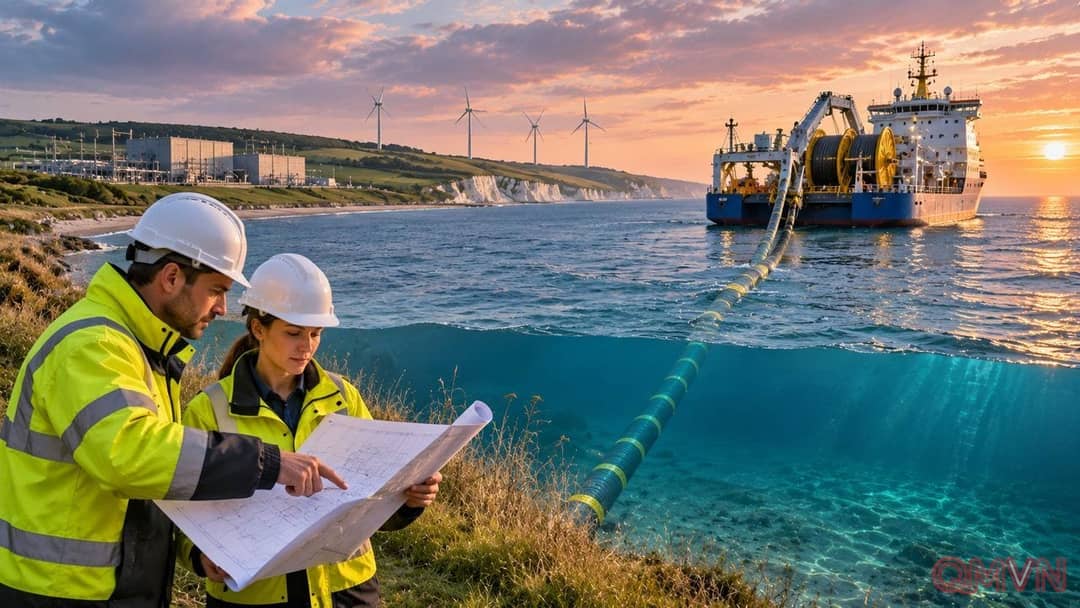
The development consent granted by the Department for Energy Security and Net Zero on October 30 moves Sea Link into its next phase. The proposed high-voltage direct-current connection will run between Suffolk in eastern England and Kent in the southeast, supported by converter stations that feed electricity into the existing network. Its offshore route provides extra capacity at a time when growing demand and renewable generation increasingly challenge transmission lines built around older patterns of electricity production.
The distinction matters: Sea Link is not a generating station. It is better understood as an additional transport corridor for electricity, allowing power produced in one location to reach consumers elsewhere. Its two-gigawatt rating describes maximum transfer capacity, not a guarantee that two million households will receive uninterrupted electricity from the link alone.
An industrial opportunity in Scotland
National Grid says Sumitomo Electric will manufacture the subsea cable at its new £350 million factory at the Port of Nigg in Scotland. Described as Britain's first domestic facility for high-voltage direct-current subsea cable, the plant is expected to create more than 200 direct skilled jobs and support wider supply-chain employment.