MAIN ARTICLE
One monument, competing meanings of respect
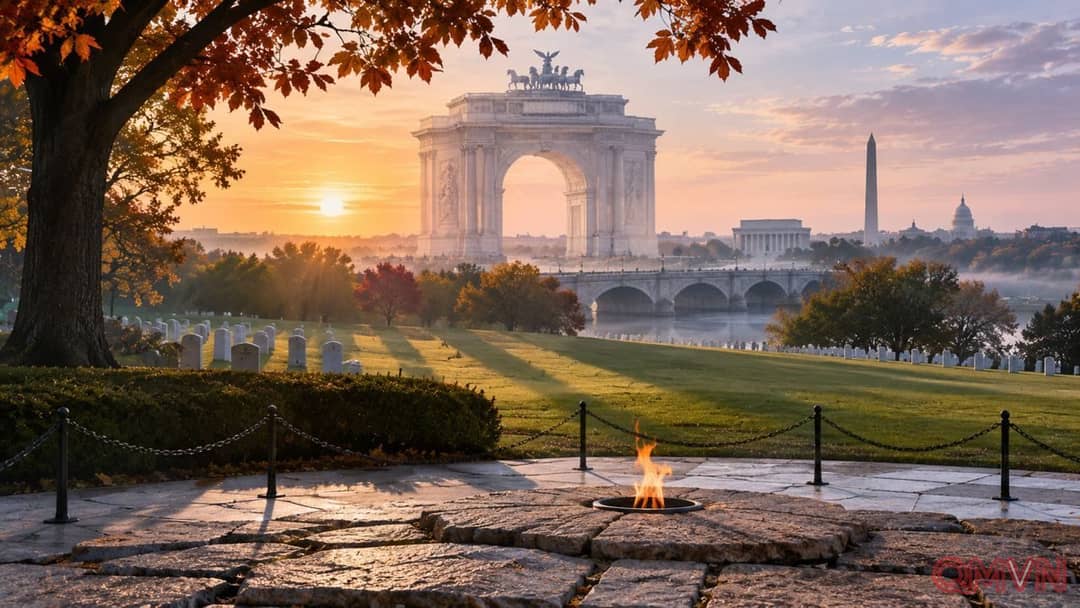
The proposed Independence Arch would stand at Memorial Circle near Arlington Memorial Bridge, along a carefully composed visual corridor between the Lincoln Memorial and the cemetery across the Potomac River. At an estimated 250 feet, it would become a commanding landmark in a setting whose sightlines were deliberately shaped over decades. The architectural ambition therefore presents a basic question: can a new national symbol be introduced without fundamentally altering the meaning of existing places of remembrance?
The nine Kennedy relatives object to more than a literal patch of shade. According to legal filings described by the Associated Press and CNN, they say the arch would permanently change the experience of visiting the graves and interfere with views associated with memorials to John F. Kennedy, Robert F. Kennedy and Edward M. Kennedy. Their argument treats landscape as part of remembrance itself. Arlington is also the resting place of hundreds of thousands of American service members, making its character a matter of public as well as family concern.
Two shadow models, strikingly different conclusions
The Washington Post built a scale three-dimensional model to estimate the projected structure’s shadow under changing sunlight conditions. Its analysis, invoked in the court challenge, indicates the shadow could touch the eternal flame on 18 days per year, affect the Kennedy memorial on 50 days, and reach burial areas somewhere in Arlington on 284 days. These are model-based projections, not observations of a completed monument. Their significance lies partly in the precision of the scenarios being debated.