An offer far outside precedent
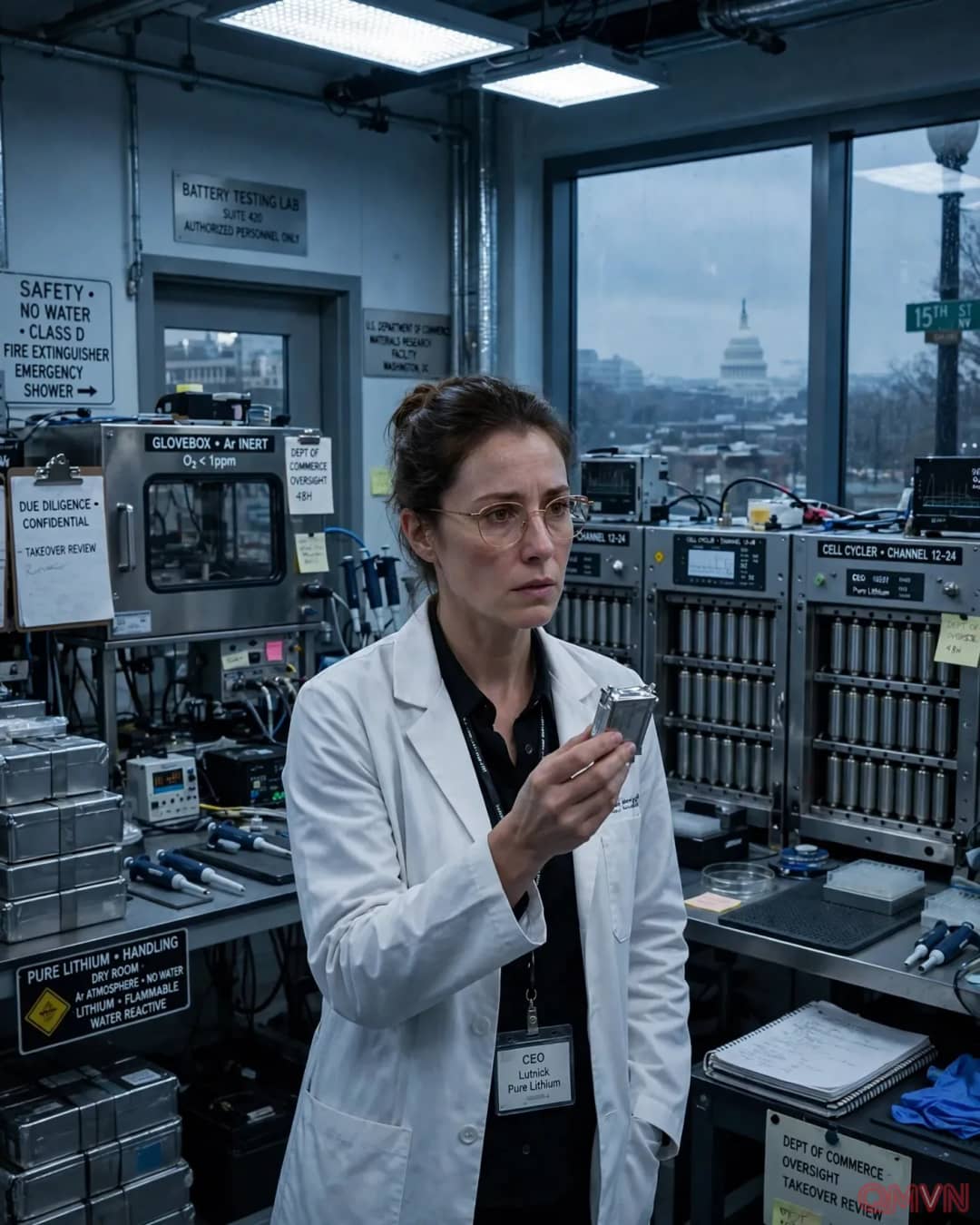
According to emails between Pure Lithium and the U.S. Commerce Department and a legal memorandum reviewed by Reuters, Lutnick proposed that Washington take 51% of the company. In return, the government would fund the construction of a manufacturing plant – but one that Pure Lithium would neither own nor control.
The unsuccessful attempt had not been previously reported. When asked, a Pure Lithium representative did not dispute the account, while the Commerce Department and the White House did not respond to Reuters’ questions.
51% is far outside precedent and invites scrutiny.
That was the assessment of law firm Skadden Arps, Pure Lithium’s legal counsel, in an Aug. 22 memorandum. The company argued that such a stake would likely draw public scrutiny, jeopardize future fundraising and outweigh any benefit to shareholders.
A 45-minute meeting in Washington
On July 29, Lutnick met Pure Lithium CEO Emilie Bodoin for roughly 45 minutes to discuss the company’s legal dispute with Japan’s Panasonic. The meeting was arranged by billionaire Robert Friedland, one of Pure Lithium’s largest shareholders; Friedland and senior Commerce Department adviser David Shapiro also attended.
There, Lutnick expressed interest in the efficiency of the lithium metal battery, which Pure Lithium says far outperforms traditional lithium-ion cells. Analysts say that, if mass-produced, the battery could change how the U.S. military and federal contractors power millions of devices. Lutnick said the government needed to control the company to make that possible, and suggested a takeover could also help Pure Lithium in its fight with Panasonic.
In March, Pure Lithium sued Panasonic, accusing it of reverse-engineering its battery technology – an allegation Panasonic disputes. A hearing on a preliminary injunction is set for January. Notably, I-Pulse, a company co-founded by Friedland, received $250 million from the Commerce Department in June. Reuters has no evidence that Lutnick holds a stake in either I-Pulse or Pure Lithium.
Contentious terms
According to the memo from Pure Lithium’s attorneys to Friedland, the Commerce Department’s proposal included:
Setting aside $1 billion from Japan’s $550 billion investment pledge to build a plant owned by a special-purpose vehicle controlled by Tokyo and Washington.
Pure Lithium would only be contracted to operate the plant and receive a share of revenue after debt servicing on the $1 billion, with no direct funding for the company.
The company would have to send 100 of its batteries to the Energy and Defense departments for testing.
Pure Lithium declined, saying the arrangement would cripple its ability to raise capital or pursue an IPO, and countered with a 9.9% stake. In August, the Commerce Department rejected that offer. The memo said the department remained fixed on 51% and was prepared to move on to other projects if Pure Lithium did not meet the mark.
A wave of government stakes in business
Since Donald Trump returned to the White House, the administration has taken stakes in several companies, including chipmaker Intel, USA Rare Earth and Korea Zinc – extending its reach into the private sector in a way recent administrations have not. Still, Washington has not taken a majority stake in any company. The largest it has agreed to is 15% of MP Materials, which would make the government its largest shareholder, while its most serious effort was a proposed rescue of budget carrier Spirit Airlines, which ceased operations in May.
It is not illegal for the government to acquire stakes in private companies, and the administration has defended these deals, particularly those using funds from the 2022 CHIPS Act. The White House has repeatedly said strategic investments in minerals and related sectors are critical to U.S. competitiveness. Opposing lawmakers, however, argue the law never authorized such ownership. No court has yet ruled on the question.