MAIN ARTICLE
One launch, two very different tests
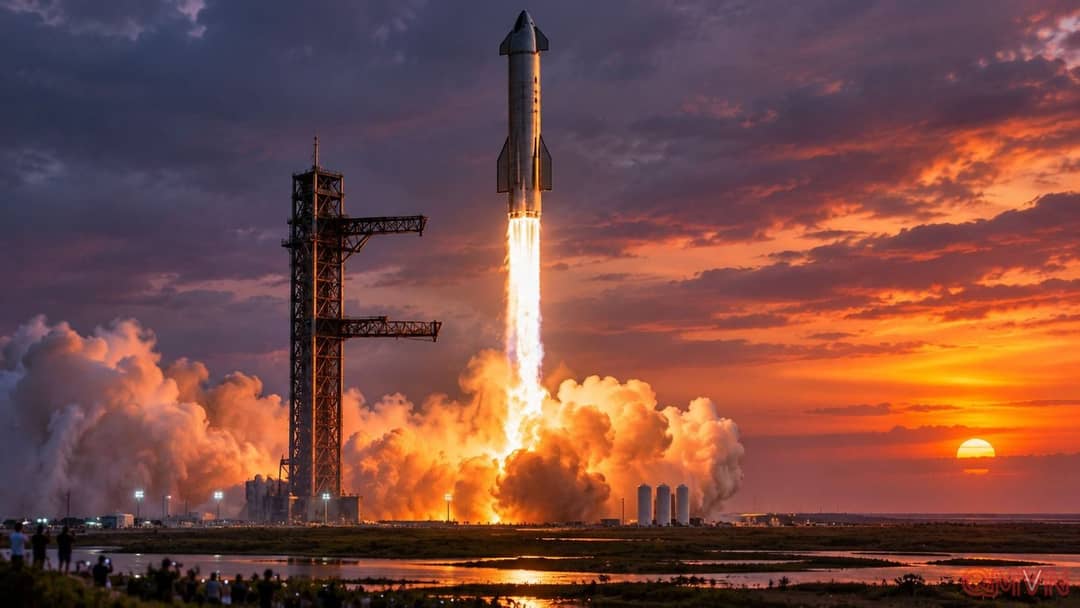
Standing about 124 metres tall, Starship combines the Super Heavy booster with an upper-stage spacecraft called Ship. At liftoff from Starbase, Texas, 33 Raptor engines on the booster power the assembly through the dense lower atmosphere. Stage separation then creates two distinct flight paths. The booster is supposed to reverse course and return within minutes, while Ship continues toward a prolonged orbital mission. That difference makes a single verdict of success or failure too blunt for such a complicated flight.
Reuters and the Financial Times reported that Super Heavy was diverted away from the tower, approached the sea and exploded. The precise technical explanation had not been fully established in the information available for this article. Its loss defeated the planned two-stage recovery, yet it did not prevent the upper stage from continuing. Identifying the underlying fault requires telemetry and engineering analysis rather than speculation drawn from footage of the explosion.
Why catching the spacecraft is harder
SpaceX has already demonstrated catches of several Super Heavy boosters using the enormous mechanical arms mounted on its launch tower. Catching Ship is a different class of challenge.