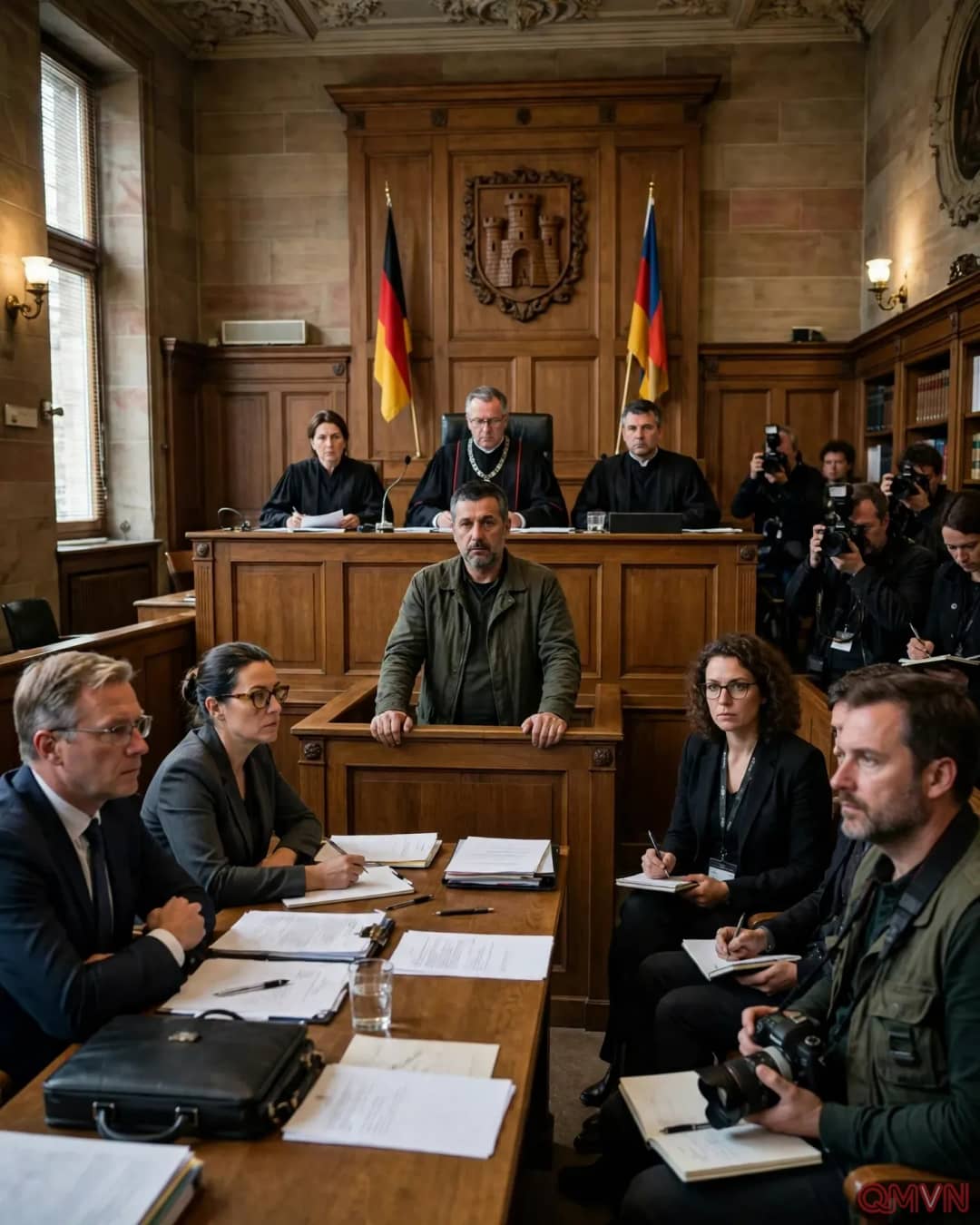
Decisive Judicial Ruling and Dismissal of Jurisdictional Immunity Claims
The high-stakes trial of Serhii Kuznietsov at the Hamburg state court advanced into its second day of deliberations with an uncompromising ruling from the bench. The federal prosecution has indicted the defendant on grave charges including causing an explosive detonation, property devastation, disruption of essential public services, and acting as an accomplice to war crimes.
The defendant’s legal defense is not curtailed under German jurisprudence, and the freedom to testify cannot be limited by foreign military service conditions.
Kuznietsov's legal team had sought an expedited dismissal of all indictments, maintaining that his status as an active Ukrainian serviceman subjected him to severe domestic secrecy oaths that legally silenced his testimony under penalty of treason. The judicial panel categorically rejected this jurisdictional shield:
Key procedural findings articulated by the presiding court encompass:
Reaffirming the absolute jurisdictional sovereignty of German criminal courts over major terror and sabotage offenses affecting domestic infrastructure.
Determining that foreign statutory secrecy requirements cannot be invoked to paralyze criminal proceedings or bar accountability under domestic law.
Ensuring a transparent and comprehensive trial process regarding attacks perpetrated against international public utility networks.
This ruling reinforces an essential legal precept: foreign sovereign service obligations cannot be weaponized as an impenetrable shield against serious international criminal liabilities.
Forensic Details of the Undersea Baltic Sabotage Operation
According to investigative dockets compiled by German federal prosecutors, Kuznietsov operated as the principal organizer of the specialized maritime commando team that sabotaged the pipelines linking Russian energy deposits directly to Western European consumers.
The synchronized explosions along the Nord Stream pipelines represent the most extensive sabotage against civilian infrastructure in postwar European history.
The coordinated deep-water detonations occurred on September 26, 2022, at depths ranging from 70 to 80 meters within international waters adjacent to the Danish island of Bornholm.
Forensic evidence presented by maritime investigators highlights extraordinary technical coordination:
Detonating at least four high-yield explosive charges weighing between 14 and 27 kilograms directly upon reinforced undersea pipeline casings.
Utilizing falsified international travel documents and a chartered civilian sailing vessel to covertly access remote maritime deployment coordinates.
Completely severing the primary Nord Stream 1 transit corridor and inflicting catastrophic structural damage on the uncertified Nord Stream 2 pipeline.
Following an extensive transnational manhunt, Kuznietsov was arrested by Italian authorities last year before being formally extradited to Germany in November to face indictment.
Geopolitical Ramifications and Transatlantic Legal Strains
The legal proceedings in Hamburg transcend conventional criminal justice, touching upon delicate diplomatic alignments between Berlin, Kyiv, and broader Western security architecture as the European continent navigates protracted conflict in Eastern Europe.
Ukraine has never had any involvement in the pipeline blasts, and any allegations suggesting state complicity are entirely baseless.
Although Ukrainian President Volodymyr Zelenskyy has consistently and forcefully denied state participation in the covert maritime operation, the German judicial process continues to generate profound geopolitical sensitivity across European capitals:
Complex international implications arising from the ongoing criminal trial include:
Navigating the legal demarcation between legitimate wartime military objectives and unlawful attacks against multinational civilian energy infrastructure.
Demonstrating the uncompromising institutional independence of the German judiciary amidst intense political and diplomatic scrutiny.
Preserving critical multilateral solidarity across Western European states committed to supporting Ukraine's sovereign defense.
Regardless of the trial's ultimate verdict, subjecting the Nord Stream bombings to open judicial examination demonstrates that the rule of law remains paramount across democratic societies.