Two weeks, two disguises
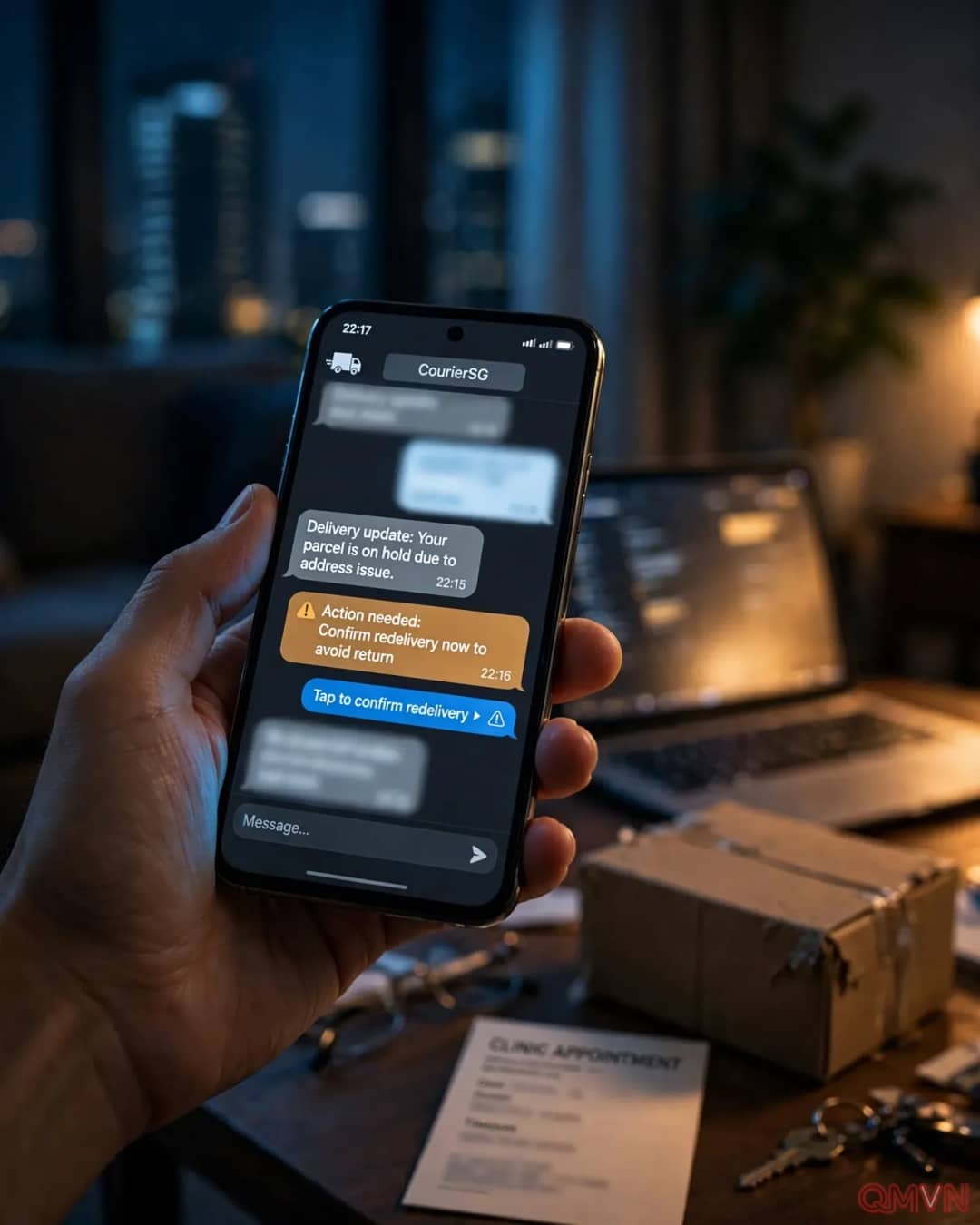
The police said in a statement on 14 November that the latest wave of scams followed two familiar scripts. In the first, recipients receive messages that appear to come from recognised courier companies, informing them that a parcel delivery failed because of incomplete information. In the second, the messages seem to come from SingHealth polyclinics and claim that the recipient has outstanding outpatient bills.
Both types of message contain phishing links that lead to fraudulent websites. Once there, victims are asked to enter personal details, banking credentials or credit card numbers, or to make a payment. A similar advisory on 3 November had already flagged a spate of scams using the names of couriers such as TracX Logis, uParcel and Park N Parcel, suggesting the campaign has broadened from parcels to healthcare.
Why iMessage has become a scammer’s shortcut
In Singapore, ordinary SMS messages pass through network-level anti-scam filters and the SMS Sender ID Registry, which tags unregistered senders as likely scams. iMessage, however, runs on Apple’s own ecosystem and is not covered by these safeguards.