MAIN CONTENT
Four hours on the ground, days of consequences
The FAA stopped departures shortly before 4 p.m. Eastern on Friday as communications problems disrupted the network linking air-route traffic control facilities. Aircraft already airborne were allowed to proceed under safety procedures, while those awaiting takeoff stayed at airports. Authorities began reopening the system around 8:15 p.m. A cautious restart made sense when controllers could not depend on uninterrupted information, but thousands of interlocking airline schedules had already unraveled.
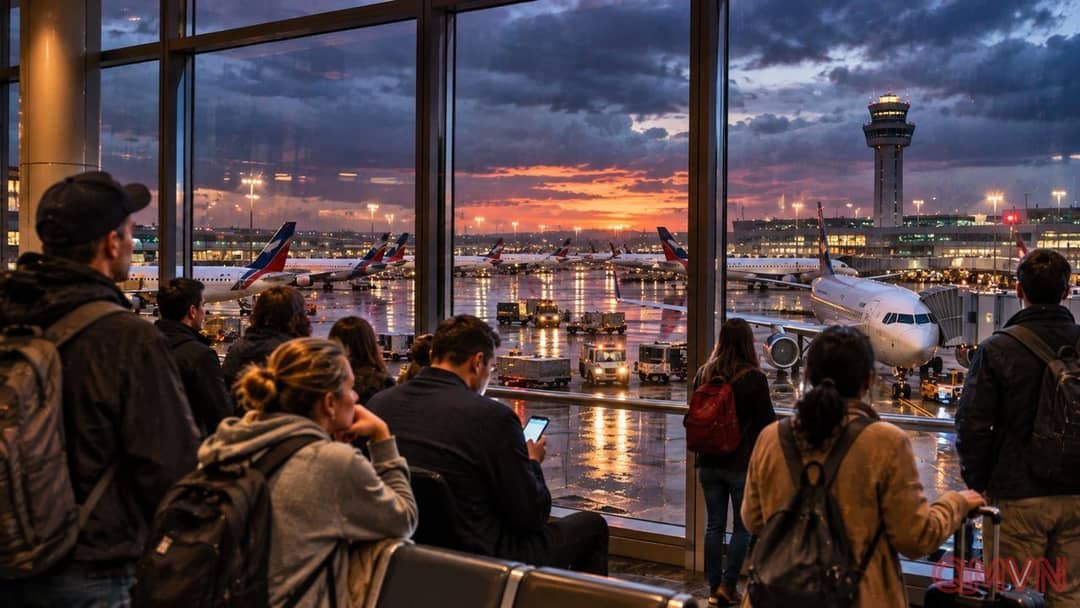
The Wall Street Journal reported roughly 8,600 cancellations Friday and almost 2,500 more scheduled for Saturday at the time of its update, figures that may continue to change. Hundreds of flights diverted or returned to their points of origin, filling gates and parking positions. Planes, pilots and cabin crews were left in the wrong cities for the following day. The resulting chain reaction explains why a four-hour network failure can produce disruption well into a weekend.
Behind the aggregate numbers are travelers with practical problems: missed connections, hotel expenses, family visits abandoned and hours spent searching for reliable updates. Airport information screens and airline applications became essential, yet a flight listed as operating did not guarantee an available crew or gate. Reopening an airspace network is an administrative action; rebuilding thousands of individual itineraries is a much slower logistical task.