MAIN CONTENT
A case of unprecedented scale
The offending came to light in July 2025, when a nurse at the Austin Hospital in Heidelberg discovered a phone hidden in a mesh bag inside a restricted staff toilet. Police later found that Cho had been recording colleagues at three hospitals over a period of years, storing and organising thousands of files by location.
Between 2024 and 2025, he filmed women using toilets and showers at the three hospitals, and he also recorded two young daughters of a hospital worker. Earlier, in 2021, he had stalked a housemate, secretly capturing large numbers of images of her and taking personal items and documents.
Even his own lawyer, Belinda Franjic, told the court that his actions were beyond belief and that there had been nothing of this nature or scale in the state of Victoria. She said the offending had been planned in a way rarely seen in criminal courts.
*“It was offending that was premeditated and planned.” — Belinda Franjic*
Victims speak of lasting harm
At the pre-sentencing hearing earlier this week, nearly 60 victims presented impact statements. Many were health professionals who had worked alongside Cho, and one described him as an abhorrent sexual predator.
They spoke of trauma, depression and anxiety. Some said they could no longer use the bathroom at work, while others described becoming hypervigilant in public toilets, an invasion that has followed them from the hospital into everyday life.
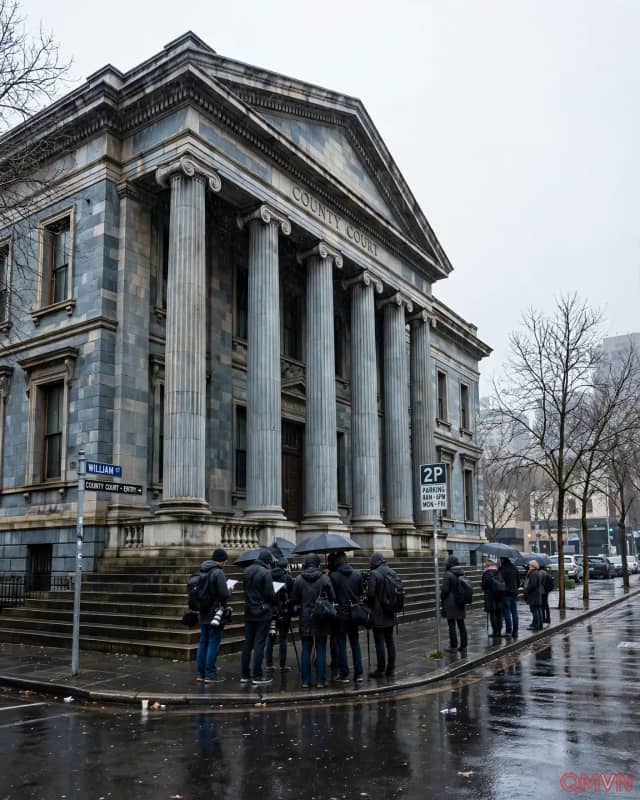
Nurse Courtney Whelan, who waived her right to anonymity, told reporters outside court that it had been painful to see Cho shield his face from the media when his victims had been given no such choice. Many victims smiled as he was led into custody.
Arguments over remorse and risk
Franjic told the court that Cho had been diagnosed with schizoid personality disorder and voyeuristic disorder, had expressed genuine remorse and had taken steps towards rehabilitation. She said he had become absorbed in his own fantasies and believed his victims would never find out.
Prosecutor Mark Gibson rejected that portrayal. He noted that Cho had told a psychiatrist that police were to blame for distressing the victims by informing them, which Gibson argued revealed self-pity rather than remorse. Citing a psychiatric report, he said Cho posed an above-average risk of reoffending.
Gibson also reflected on the scale of the loss. He said it was extraordinary that a young man on the verge of a successful medical career, after years of study, would risk everything in this way.
Custody, sentencing and the road ahead
Cho had been on bail for more than a year, living with his parents, who moved from Singapore to Melbourne during the proceedings. On Thursday, Judge Gabriele Cannon ordered that he be detained until sentencing in February.
The judge acknowledged that the victims would be anxious about the outcome but said she needed time to consider the complex nature of the offending. The plea agreement reduced more than 900 charges to 13 representative counts in exchange for guilty pleas, sparing victims the ordeal of a trial.
Cho, a Monash University medical graduate who had been living in Australia as a permanent resident, had his medical registration suspended after his arrest. The son of a Malaysian father and a Singaporean mother, he is expected to face deportation once his sentence ends.