MAIN CONTENT
Probe into Chen Jining raises scrutiny over state-backed projects and IPOs in Shanghai
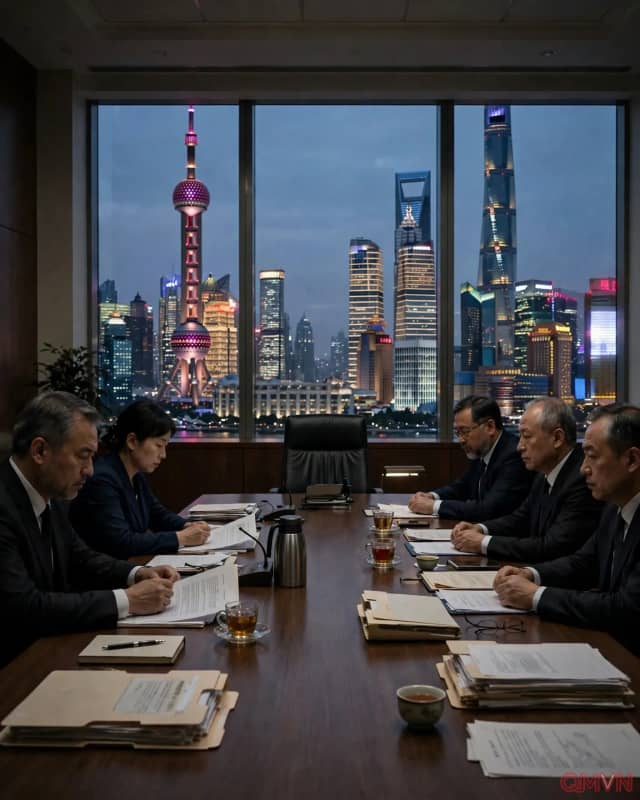
State media reported on Tuesday, November 24, 2026, that Shanghai Communist Party chief Chen Jining, 62—a Politburo member once tipped for higher office—had been placed under investigation for suspected "serious breaches of discipline and law," making him the fourth member of the ruling party's elite decision-making body investigated since the current term began in 2022.
Qiu Mingda, senior analyst at political risk consultancy Eurasia Group, said Chen's downfall creates short-term political uncertainty around firms and projects closely associated with his backing, noting that Chen used his endorsements and coordination to accelerate policy rollout and mobilize local state capital. Decisions tied to those investments—as well as AI supply chain companies granted expedited initial public offerings during his tenure—could now face heightened scrutiny.
"His downfall could surely create short-term political uncertainty around projects and firms most closely associated with his personal backing, particularly those that received visible support from Shanghai during his tenure" — Qiu Mingda, senior analyst at Eurasia Group.
Shanghai's structural tech ecosystem and central government backing remain intact
A former president of Tsinghua University, environment minister, and mayor of Beijing, Chen took charge of China's premier financial hub in 2022, courting foreign executives including Tesla CEO Elon Musk in 2023 and Apple chairman Tim Cook last month, accompanying President Xi Jinping on a local AI hub inspection last year, and overseeing a July 2026 municipal policy roadmap for AI innovation, foundational breakthroughs, and expanded computing clusters.
Rui Ma, tech analyst and founder of the Tech Buzz China newsletter, said Shanghai's tech ecosystem—host to the annual World Artificial Intelligence Conference and home to AI developers MiniMax and StepFun as well as top contract chipmaker SMIC—already possessed deep structural strengths before Chen's arrival, while Omdia chief analyst Su Lian Jye noted that AI and semiconductors are embedded in China's five-year plan and central directives.
Shanghai's municipal party leadership reiterated its commitment to national strategic priorities immediately after the probe was announced, and in September the Ministry of Industry and Information Technology unveiled a plan targeting 9,800 exaflops of intelligent computing capacity by 2030 backed by 3.8 trillion yuan ($570 billion) in cumulative information infrastructure investment between 2026 and 2030.
"There's no reason to believe there is any big policy shift" — Rui Ma, tech analyst and founder of Tech Buzz China.
Tech stock volatility and local execution caution
On Wednesday, November 25—the first trading day after Chen's investigation was announced—the Shanghai Composite Index fell 2% with semiconductor stocks dropping 7.9%, while Hong Kong's Hang Seng Tech Index slid 2.6% as Shanghai-based chip firms Biren Technology, Iluvatar CoreX, and Hua Hong tumbled 24.7%, 18.5%, and 17.3% respectively, AI developer MiniMax fell 13.8%, and SMIC lost 7.6%, before mainland and Hong Kong tech stocks recouped part of their losses on Thursday, November 26.
Ma cautioned against blaming any further cooling in AI funding solely on Chen's ouster, noting funding had already moderated for months due to a gap between investor expectations and commercial realities, while Qiu said the most immediate risks for companies and investors lie in policy execution—including project reviews, delays in Shanghai's industrial hubs, and greater risk aversion among local officials.