MAIN CONTENT
A symbolic appearance, a concrete financial plan
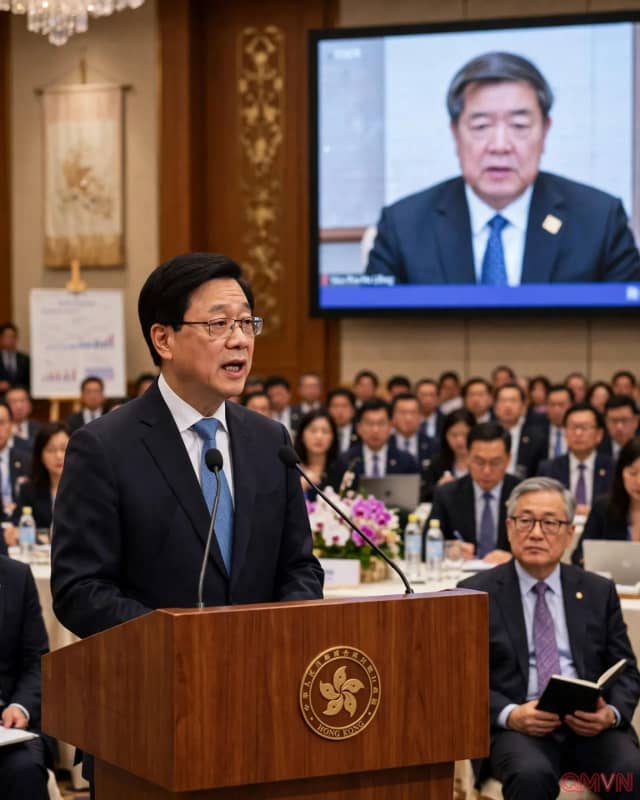
The images of Ma meeting employees attracted attention because he relinquished the chairmanship of Alibaba in 2019. His presence does not establish a return to management or a change in corporate governance. It nevertheless puts a spotlight on a division whose importance extends beyond the group's traditional online retail operations. SCMP, which is owned by Alibaba, reported the visit on November 26; the company had not immediately responded to its request for comment.
A more tangible development is the proposed flotation. Alibaba disclosed on November 10 that the Hong Kong exchange had allowed it to proceed with the proposed separation and that T-Head had confidentially filed its application on September 11. Reuters also reported the filing on November 10. Neither this procedural milestone nor the visit establishes that the listing will be completed. Investors still need details on profitability, financing needs and the eventual terms of the offer.
From processors to cloud services
T-Head, established in 2018, sits at the hardware end of Alibaba’s integrated AI strategy. Chief executive Eddie Wu Yongming said on a recent earnings call, according to SCMP, that the company was using internally designed processors to train its next generation of models.
The approach could help Alibaba coordinate hardware and software development rather than depend entirely on suppliers whose products may be affected by export restrictions.
However, semiconductor design is not synonymous with semiconductor independence. Fabrication, memory, packaging and software all contribute to the performance and cost of a computing system. A commercially successful processor must operate reliably over long workloads and be supported by tools familiar to engineers. Internal demand from Alibaba may offer a starting point, while wider adoption would depend on whether customers find the technology useful and economical.
The economics of computing at scale
Guangdong’s new computing plan encourages the use of Chinese-designed processors, according to the supplied report. It also emphasizes systems connecting many chips. Such an architecture can increase total computing capacity, but networking delays, electricity consumption and the difficulty of distributing workloads matter alongside the capabilities of individual processors.
For investors, the distinction between technological achievement and financial return is important. A separate share listing can make capital allocation easier to observe, yet the costs of research and infrastructure may remain substantial. Customers need dependable services rather than simply a greater number of chips. The meaningful measures of progress will include utilization, reliability and the cost of performing real tasks. Neither the planned flotation nor Ma’s appearance provides those answers on its own.