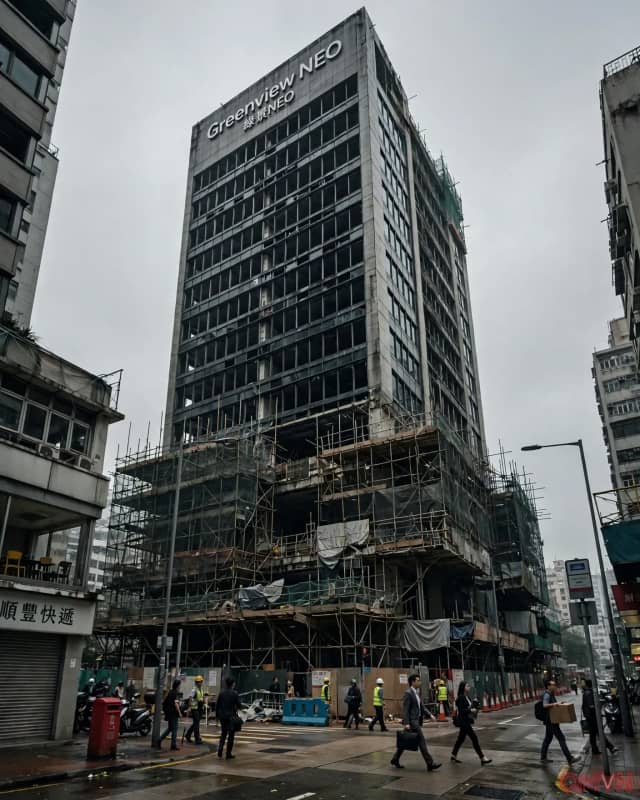
A subsidiary’s resources under pressure
The transactions took place between December 2020 and August 2021, when the developer was experiencing mounting financial strain. According to HKEX, the property services business placed deposits as security for financing obtained by third parties, with proceeds benefiting the parent. The arrangements were revealed publicly in March 2022 after banks enforced the pledges. The amount, equivalent to about US$2 billion in the supplied South China Morning Post report, was substantial enough to make the case a major test of corporate accountability.
The economic substance matters more than the labels attached to a transaction. When one listed company commits its resources to support another, shareholders need to understand whose risks they are assuming. A parent company’s urgent need for cash does not automatically establish that assistance is in the interests of its subsidiary. The distinction is especially important when the subsidiary has outside investors.
The responsibility of directors
HKEX issued statements of director unsuitability against Hui, Xia Haijun, Pan Darong, Zhao Changlong, An Lihong and Zhen Litao. It also censured Hu Liang and issued a statement concerning prejudice to investors’ interests.
The exchange found serious failures of oversight. Hui maintained that he had relied on senior executives and denied knowing about the pledges; the exchange concluded that the evidence did not support his defence.
Board approval should be an exercise of judgment rather than a procedural formality. Directors need sufficient information about the purpose, financial consequences and conflicts inherent in major transactions. Delegation of day-to-day work is necessary in a large company, but it does not remove the duty to question unusual commitments or monitor deteriorating liquidity. Effective internal controls depend on people being willing and able to challenge decisions.
What the sanctions can and cannot do
The disciplinary action is separate from the mainland criminal proceedings in which Hui received a life sentence in August, as reported by Associated Press. It also differs from the liquidation process and litigation to recover funds. Reuters reported in January 2025 that courts had ordered repayment of the deposit guarantees. An order to repay, however, does not by itself establish that the money has been recovered.
For investors, the practical questions extend beyond the identity of those sanctioned. They include the availability of assets, the progress of recovery proceedings and the quality of disclosures from companies that remain listed. Regulatory findings help clarify responsibility, but cannot independently restore the value that creditors and shareholders may have lost.