MAIN CONTENT
What the survey found
The 2025 Global Public Opinion Index was conducted between May and August 2025 in 36 countries across six continents, gathering 23,257 valid responses, including 1,012 from American adults. Researchers Xu Di and He Ruoxi analysed the US data in a paper published in the peer-reviewed Chinese journal Future Communication.
Beyond technology, the economy and the military, 56.7% of Americans said China had overtaken or would surpass the US in cultural strength, and 52.7% said the same of political systems. Xu said the lack of confidence was concentrated in the material domains that most directly shift the balance of power.
Internationally, the picture was even starker. Among respondents in 35 countries outside China, 79.3% expected China to lead in technology and 78.6% in economic strength. The survey's technology index also placed China ahead of the US for the first time, rising from 63.2 in 2023 to 70.4 in 2025 while the US score fell from 69.4 to 65.4.
Perception, not capability
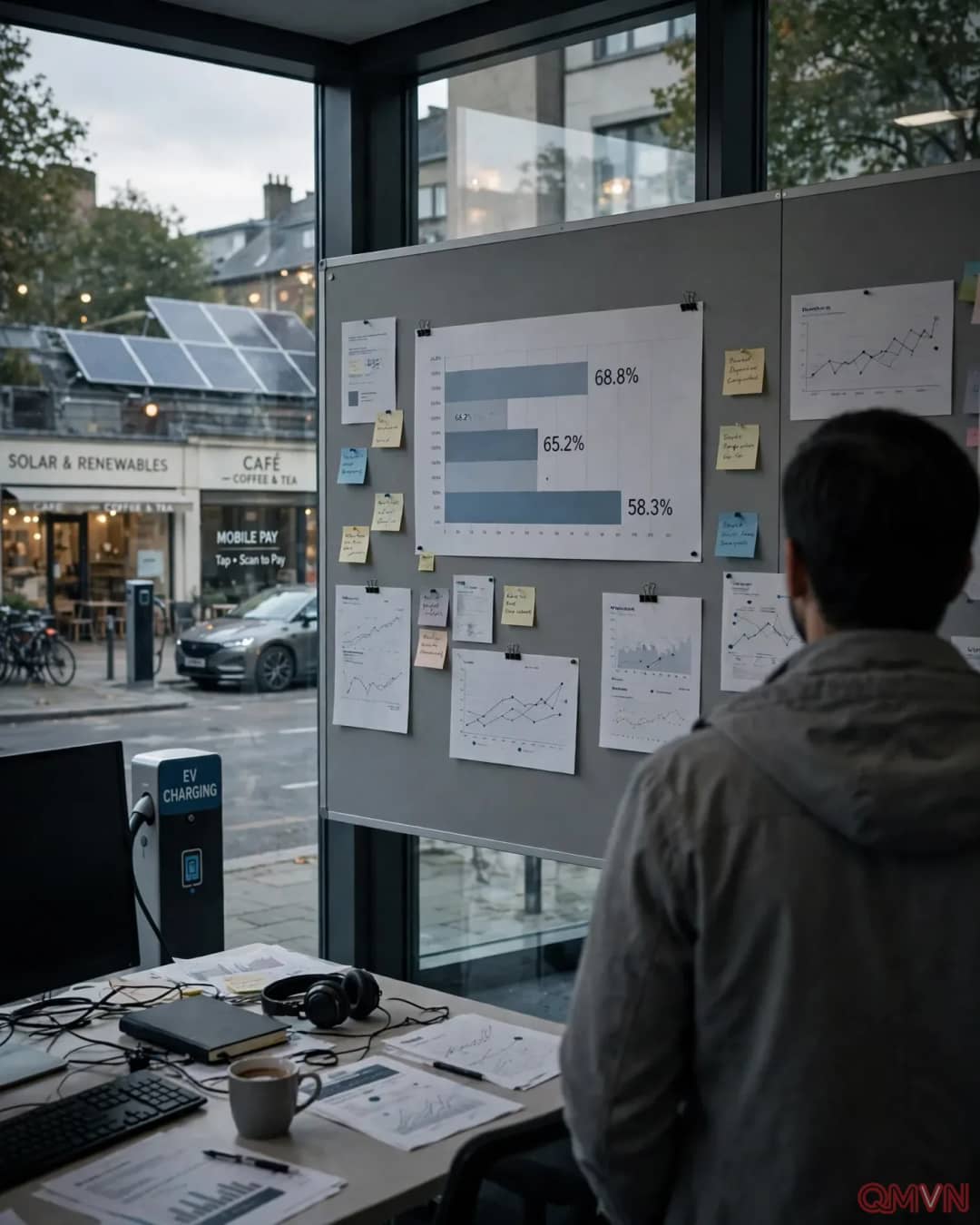
Xu stressed that the headline figure of 68.8% reflects how ordinary Americans see the world rather than an objective measurement of technological strength. Its significance, she argued, lies in showing that US leadership is no longer assumed by the public.
The researchers also cautioned about methodology. The American sample was collected online using demographic quotas rather than random selection, and the study identified statistical associations rather than causes. Differences between questionnaires also limit comparisons with a 2018 survey, which found lower expectations of Chinese military parity.
Xu attributed shifting perceptions to the growing presence of Chinese electric vehicles, renewable energy, mobile payments, short-video platforms and artificial intelligence models, as well as to US debates over chip restrictions and reshoring that frame American leadership as something under threat.
*“Chinese technology has become far more visible in Americans’ daily lives.” — Xu Di*
Confidence and threat are not the same
One of the study's more nuanced findings concerns the link between strength and fear. Xu said American concern about China depends less on how strong China appears than on how secure Americans feel about their own position.
The researchers identified two competing effects. Believing the US is still ahead strengthens national identification, which makes people more watchful of China, but it also gives a sense of control that turns China's rise into manageable competition. In their data, the second effect was stronger.
Perceptions of threat were higher among men, people aged 35 and over, Republican supporters, white Americans and those who closely follow international affairs. Xu concluded that the idea that a stronger China automatically produces greater American fear is too linear.
A softer public mood
Independent research points in a similar direction on sentiment, if not on the specific question of who leads. A Pew Research Center survey in March 2026 found that 27% of Americans viewed China favourably, nearly double the 14% recorded in 2023, although 71% still held unfavourable views.
Globally, Pew's spring 2026 survey across 37 countries found a median of 51% holding favourable views of China, and in many countries China was now viewed more positively than the US. Analysts at the Council on Foreign Relations argued that this shift says more about declining US soft power than a Chinese surge, and noted that such opinions can change quickly.
Xu said American public opinion appeared more independent and moderate than the elite consensus in Washington. For Beijing, the findings raise questions about how openly to promote its technological ambitions without provoking resistance, a dilemma that has shaped its diplomacy for decades.