Megaspeed says Alice Huang left the company in August 2025 amid a national security storm involving former Nvidia CEO Jensen Huang
Singapore-based cloud-computing company Megaspeed said on Sunday, November 15, that Chinese businesswoman Alice Huang, whose ties to former Nvidia chief executive Jensen Huang have raised US national security concerns, officially left the company on August 30, 2025, and has no current role there. Megaspeed, an Nvidia business partner in the Asia-Pacific region, has been in the spotlight after reports that Jensen Huang had an affair with the former executive, whom US authorities suspect of being a Chinese spy. The company dismissed media reports about its business and supply chain as “not supported by verifiable evidence”, insisting it operates lawfully and has hired outside counsel to conduct an internal investigation. China has denied the allegations, and Megaspeed has not been found to have violated US export-control rules.
Tiếng Nói QUANG MINH·2 min read · 4 min listen·15 November 2026, 09:45 EST·
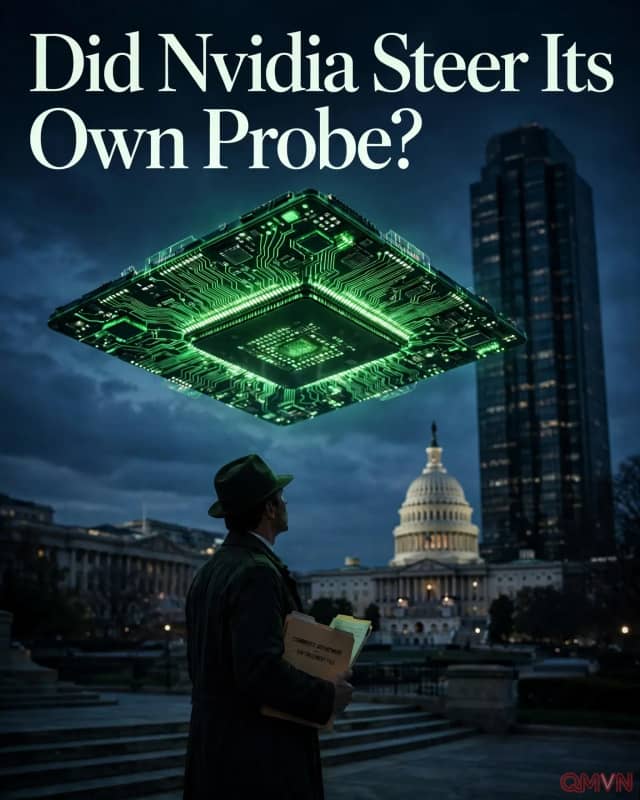
AI-generated illustration
A statement from Singapore
In its statement on Sunday, Megaspeed said Alice Huang officially left on August 30, 2025, and no longer holds any role. On her private life, the company firmly kept its distance:
Megaspeed does not comment on Ms Huang’s personal and private matters.
According to Washington-based research group C4ADS, which reviewed corporate records, Alice Huang became the controlling shareholder of Megaspeed in March 2023.
Advertisement
300 × 250
The US government and Nvidia did not immediately respond to Reuters requests for comment on Megaspeed’s statement.
Rejecting the allegations
In October 2025, the New York Times reported that Megaspeed was under US investigation over whether it helped Chinese customers obtain Nvidia computer chips subject to Washington’s export controls. China has denied the allegation, and Megaspeed has not been found to have violated the rules. In its new statement, the company stressed:
Megaspeed is aware of recent media reports containing assertions about our business, supply chain and global operations that are not supported by verifiable evidence.
The company said it conducts “legitimate and lawful business”, has retained external legal counsel to carry out a thorough internal investigation, and that its operations and supply chain controls are designed to comply with applicable laws, including US export-control requirements.
A major customer under scrutiny
Megaspeed, originally incorporated in 2015 as 7Road International, a Chinese video game developer, has bought more than $4 billion of Nvidia chips by some analyst estimates, making it one of the largest buyers of Nvidia chips in Asia. Senator Tom Cotton wrote in October 2025 urging an investigation into whether the company was skirting US export laws.
In October this year, Jensen Huang described Nvidia’s relationship with Megaspeed as “normal and not unusual”, saying Nvidia had examined the company’s GPU deployments. China’s Foreign Ministry has called the allegations against Alice Huang “groundless speculation”.
Shockwaves at Nvidia and in Washington
On November 8, Jensen Huang emailed employees acknowledging he had been unfaithful to his wife and apologising to his family and colleagues; the same day, Nvidia’s board launched an independent investigation following reports that he had been the target of a foreign intelligence effort. The espionage allegations remain unproven. Reuters now refers to Huang as Nvidia’s former CEO.
The affair has also exposed rifts within the Trump administration. According to Axios, Treasury Secretary Scott Bessent pressed Commerce Secretary Howard Lutnick at a White House Situation Room meeting on November 5 over why Megaspeed had not been added to the Entity List. In November, Nvidia has shed about $700 billion in market value.
EVENT BACKGROUND
The story is rooted in the US-China technology rivalry. Since late 2022, the United States has restricted exports of advanced AI chips to China, and data centres in Southeast Asia have since become a sensitive grey zone where US officials fear chips could be diverted to China.
Megaspeed, which runs data centre projects in Southeast Asia for customers including Chinese clients, rose rapidly in the three years after Alice Huang took control. The October 2025 US-China trade truce paused a rule that would have extended Entity List restrictions to any company at least 50% owned by a listed entity.
Hawks in Washington argue the case shows the need for tighter controls on AI chip exports. Megaspeed and Nvidia insist they comply with the law, while Beijing calls the affair a smear campaign. The crux lies in separating unproven allegations from verifiable evidence.
Key takeaways
In the technology age, the private life of those who hold power can become a matter of national security.
A denial carries weight only when it is backed by transparent evidence.
Trust built over decades can be shaken in a single week of turmoil.
Subscribe to the QMVN newsletter
A daily morning digest - only stories worth reading, no spam.