MAIN ARTICLE
An unexpected archive inside a leg bone
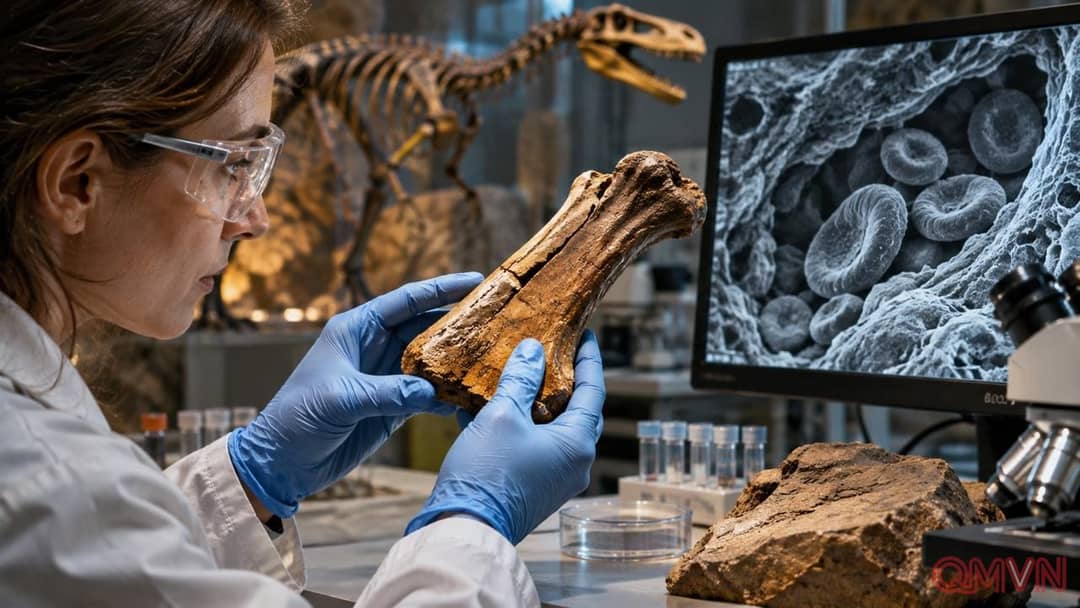
The specimen emerged from a gypsum mine in Ceará state in northeastern Brazil in 2008. It belonged to Aratasaurus museunacionali, a two-legged predatory dinosaur from the Early Cretaceous. Reuters reports that the animal was about 3.1 metres long and approximately four years old when it died. Portions of its right hind limb were preserved and later examined by researchers who were looking beyond the obvious anatomy of the bones. What seemed a familiar fossil became an archive of microscopic structures hidden within tissue once supplied by blood vessels.
Electron microscopy revealed clusters of oval bodies in the fossil’s vascular canals. Their position made an interpretation as former blood cells intriguing, but appearance is only one part of the scientific argument. Minerals, microbes and changes during burial can all produce deceptive shapes. The researchers therefore combined imaging with chemical analysis rather than assuming that a cell-shaped object must have originated as a cell. That combination is central to why the study has attracted attention well beyond specialists in dinosaur anatomy.
A chemical fingerprint that survived burial
The study reports high-performance liquid chromatography and mass spectrometry signals associated with heme B and altered forms of this blood-related molecule. Raman spectroscopy and transmission electron microscopy supplied additional, spatially resolved evidence connecting chemical signatures to the oval microstructures.