MAIN CONTENT
An agreement without a majority
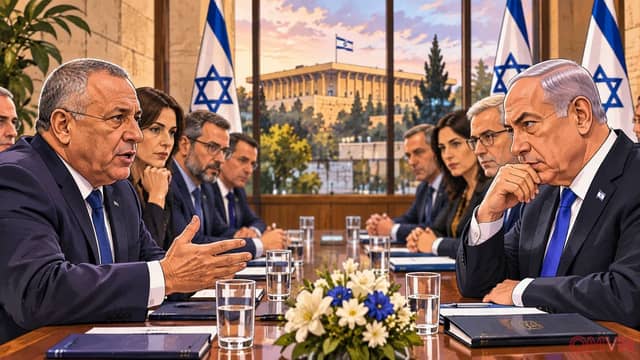
The Democrats had temporarily withdrawn from negotiations because they opposed discussions with Likud about a possible unity government. Their return removes an immediate disagreement within Eisenkot’s prospective alliance. The parties announced an agreement in principle, while the Democrats said they would receive four ministerial portfolios covering public security, labour and social affairs, communications, and culture and sport. Parliamentary positions were also part of the arrangement.
The commitments provide a starting point for cooperation rather than proof of a functioning cabinet. Political parties must still settle their wider programme, establish how disagreements will be handled and secure sufficient parliamentary backing. Ministerial allocations matter because they determine which parties will oversee implementation of shared policies, but they cannot substitute for agreement on the policies themselves.
The arithmetic of parliamentary support
Reuters reported that Eisenkot and his presumed allies hold 48 of the Knesset’s 120 seats, while Netanyahu’s traditional alliance holds 53. Neither reaches the conventional absolute-majority threshold of 61.