MAIN CONTENT
The loophole between a chip and its computing power
The central issue is a changing business model. An advanced chip may be prohibited from being shipped directly to a particular customer, yet that customer could still rent processing capacity from a data center in a different country. The hardware stays abroad while its performance is delivered through the cloud. Consequently, policing a physical shipment is not necessarily equivalent to controlling access to the computing it enables. Reports from the Washington Post and Associated Press on November 16 described new American restrictions aimed at that distinction.
The Commerce Department’s Bureau of Industry and Security says the interim rule seeks to prevent sensitive capabilities from being reached through third-country computing arrangements. It adds scrutiny of end users, ownership and control and introduces licensing requirements for certain transactions. Those requirements depend on the equipment, destination and customer; the announcement does not establish a universal prohibition on cloud services in Southeast Asia. Implementation details and the behavior of regulated companies will determine how much disruption follows.
Two competing definitions of national interest
Bessent approaches the question from the standpoint of national security and technological advantage. If a restricted entity can hire the computing power it cannot legally import, limits on advanced chips may prove less effective than their wording suggests.
As AP reported on November 13, he publicly challenged why Commerce had not acted sooner regarding Megaspeed, emphasizing that his department did not hold the final authority over the relevant export decisions.
Lutnick has been portrayed as more concerned about a confrontation with Beijing and the commercial costs of broad controls. That concern does not necessarily mean dismissing security risks. Overly sweeping measures might penalize American suppliers, complicate relationships with partner economies and encourage customers to develop alternatives. The disagreement pits short-term commercial exposure against the long-term cost of losing technological leverage. Neither viewpoint, by itself, establishes wrongdoing by an official.
A policy argument moves into public view
An unusually revealing sentence appeared in the Bureau of Industry and Security announcement: the rule was prepared at the direction of the Treasury Department and the National Security Council. Analysts interpreted the wording as evidence that the agencies had not reached an easy consensus. Still, the release alone cannot establish every conversation behind closed doors. Commerce remains responsible for publishing and administering its export-control requirements.
The argument intensified amid allegations about Megaspeed and former Nvidia chief Jensen Huang. Reports have raised questions about suspected intelligence ties and potential chip diversion. Such allegations must remain separate from proven findings. Megaspeed has said that its operations are lawful. Members of Congress have meanwhile requested preservation of export-licensing records, bringing a dispute between advisers into a wider debate about oversight, commercial influence and government accountability.
What the dispute means beyond Washington
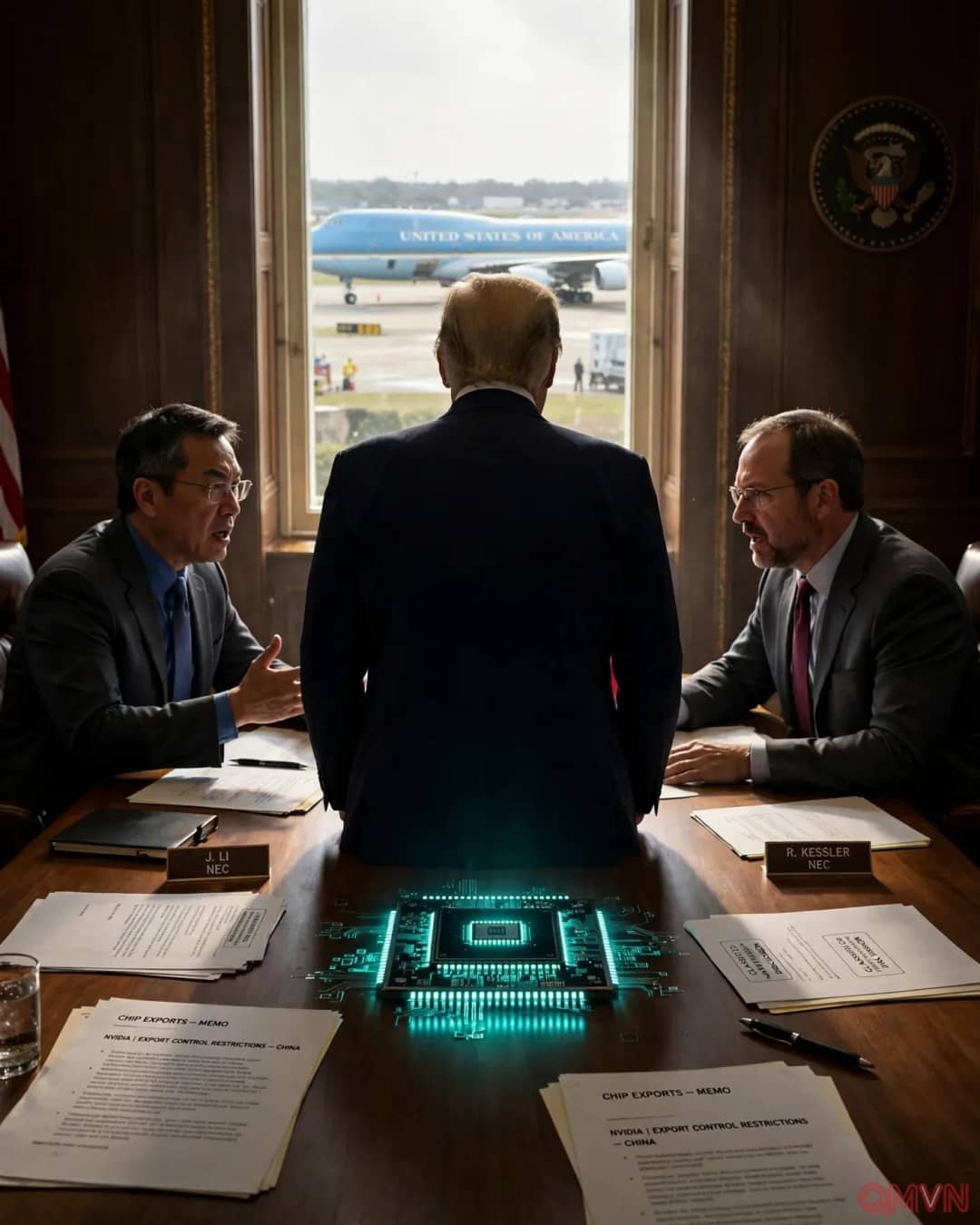
Before travel to the Philippines and China, Trump recognized what he characterized as two understandable approaches. He wants to avoid antagonizing Beijing while keeping powerful technology from prohibited users. Both secretaries were expected to join his delegation, meaning that foreign counterparts would be watching their coordination as well as the public language of the trip. China’s eventual response cannot be confidently inferred from the announcement alone.
For overseas data-center operators, the immediate questions concern customer screening, licensing timelines and consistency of enforcement. For the United States, the dilemma is larger: can it promote an American-led AI ecosystem abroad while limiting the most sensitive uses of that ecosystem? Export rules may be issued quickly, but durable trust among businesses, allies and negotiating partners is built much more slowly. The effectiveness of this policy will be measured in both security outcomes and unintended economic consequences.